Sinkevičius says he will lead reshuffled Lithuanian government following coalition turmoil
Sinkevičius to Lead Reshuffled Lithuanian Government Amid Coalition Reorganization Sinkevičius says he will lead reshuffled - Following recent upheaval in

Sinkevičius to Lead Reshuffled Lithuanian Government Amid Coalition Reorganization
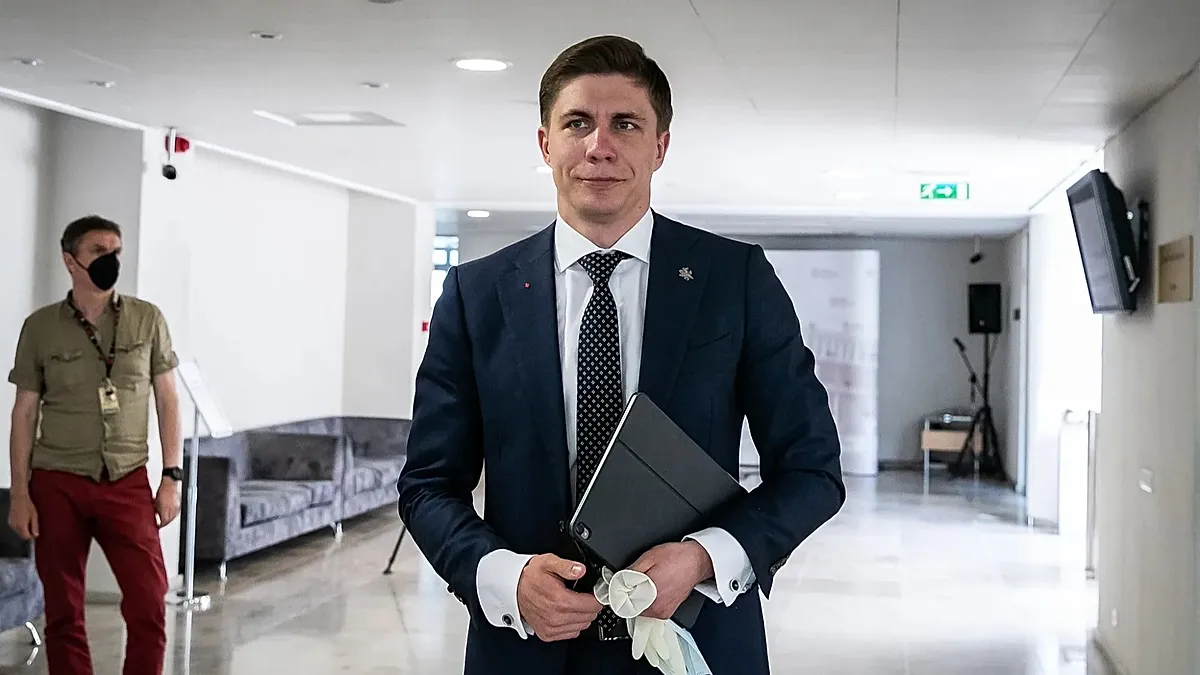
Poinews.com – Following recent upheaval in Lithuania’s political landscape, Mindaugas Sinkevičius, a prominent figure in the Social Democratic Party, has confirmed his intention to lead the country’s newly reshuffled government. This decision comes after the populist Nemunas Dawn party was expelled from the coalition, marking a significant shift in the nation’s political alignment. Sinkevičius, who previously served as economy minister, took to social media to announce his leadership, stating, “Sinkevičius says he will lead” the new administration, which will replace the current prime minister, Inga Ruginienė.
The Roots of Coalition Turmoil
The political realignment was driven by internal disagreements within the governing coalition, which had been struggling to maintain unity. The Social Democrats, the largest party in the alliance, decided in early June to remove the Nemunas Dawn from their partnership. Their reasoning centered on the party’s controversial rhetoric, particularly statements made by its leader, Remigijus Žemaitaitis, which were perceived as inflammatory. Žemaitaitis had been previously convicted by a Vilnius court for inciting hatred against Jews and downplaying the Holocaust, a conviction that intensified scrutiny of his role in the coalition. Despite the Social Democrats’ stance, Žemaitaitis argued that the removal lacked sufficient justification, highlighting the contentious nature of the political maneuvering.
“I confirm my commitment to take responsibility for forming the new Government and to serve as Prime Minister,” Sinkevičius said in a Facebook post. He emphasized that his leadership would be guided by a clear vision to address the nation’s challenges, adding, “Sinkevičius says he will lead” with renewed focus on stability and progress. His announcement was met with mixed reactions, as some viewed the reshuffle as necessary for cohesion, while others questioned its timing and impact on policy continuity.
A New Political Direction for Lithuania
The new coalition, now composed of three parties, represents a strategic realignment of Lithuania’s political forces. The Social Democrats, who remain the dominant party, have partnered with the Lithuanian Farmers, Greens and Christian Families Union and the Democrats “For Lithuania” to form a centre-left alliance. This coalition secures 75 seats in the 141-seat parliament, providing a slim majority for Sinkevičius to push through his agenda. The agreement outlines key priorities, including maintaining high defence spending, a critical factor for Lithuania’s position as a NATO and EU member state. With Ukraine’s ongoing conflict as a backdrop, the new government is expected to emphasize national security and economic resilience.
The formalization of the coalition is scheduled for 18 June, when the parties will sign a binding agreement. Once finalized, the document will be submitted to the country’s president for approval, a procedural step that could determine the success of the reshuffle. Analysts suggest that the timing of the agreement reflects both a response to internal dissent and an attempt to solidify support for Sinkevičius’s leadership. The new government will face the challenge of balancing domestic priorities with international commitments, particularly in light of Lithuania’s strategic role in Eastern Europe.
Sinkevičius’s leadership is expected to bring a more centrist approach to governance, though his economic background may influence his focus on fiscal discipline and infrastructure development. In his statement, he highlighted the importance of “Sinkevičius says he will lead” the nation through its current crossroads, stressing the need for decisive action on both economic and social issues. His government will also need to address public concerns about the sudden removal of the Nemunas Dawn party, which had been a vocal advocate for certain policies, and explain how the new coalition will better serve the country’s interests.
Political observers note that the coalition turmoil underscores the challenges of maintaining a stable majority in a fragmented parliamentary system. While the Social Democrats have secured a majority, their partners may require compromises to ensure legislative support. This dynamic could shape the new government’s approach to policymaking, potentially leading to a more collaborative but also more cautious administration. The reshuffle also reflects broader trends in Lithuanian politics, where shifting alliances and ideological realignments are becoming increasingly common.