Industrial zones attract manufacturers and logistics investment
Industrial Zones Attract Manufacturers and Logistics Investment Industrial zones attract manufacturers and logistics - Uzbekistan's network of special

Industrial Zones Attract Manufacturers and Logistics Investment
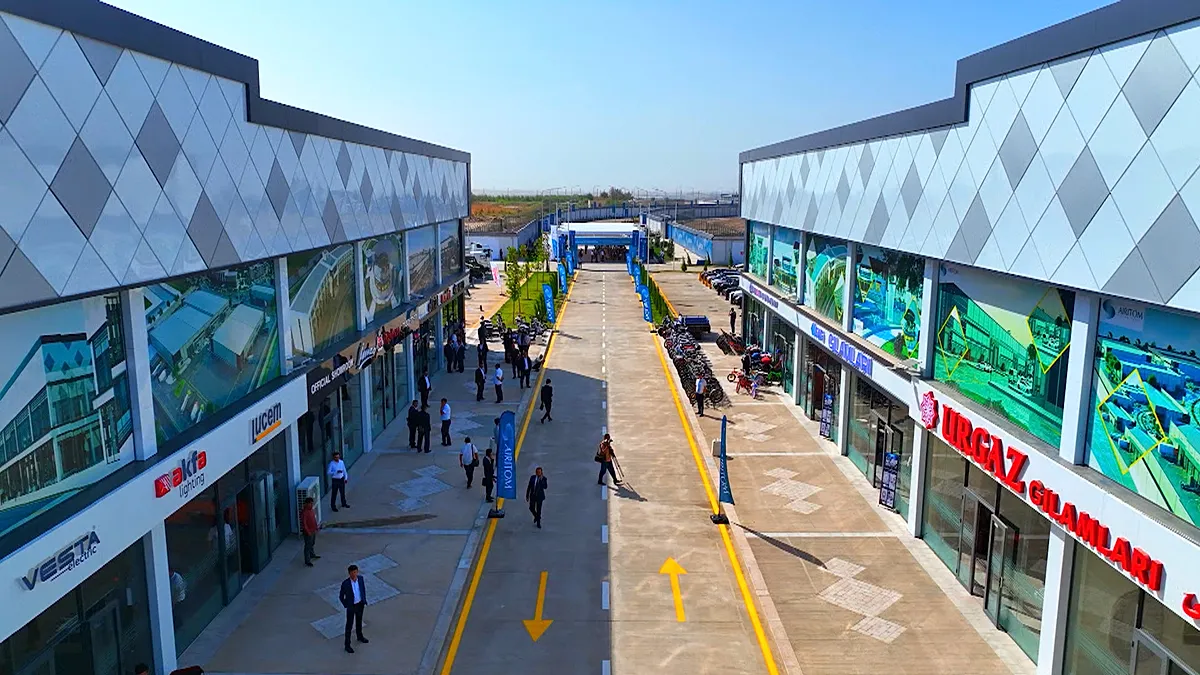
Poinews.com – Uzbekistan’s network of special economic zones has emerged as a critical strategy for fostering foreign investment and expanding industrial output. These zones, which range from export-focused industrial parks to logistics hubs connecting Europe, Asia, and the Middle East, are increasingly drawing international businesses seeking growth opportunities. Recent statistics reveal that industrial production within these zones reached nearly €3.12 billion in the first nine months of 2025, marking a 42.7% surge compared to the prior year.
Infrastructure and Energy Expansion
Government initiatives to bolster infrastructure and industrial capacity are driving a rise in foreign direct investment. As demand from global firms intensifies, authorities are prioritizing the development of industrial land, transport networks, and energy supply systems. Additionally, efforts to integrate renewable energy projects are gaining momentum, reflecting a broader shift toward sustainable growth. “More attention is being paid not only to infrastructure but also to green energy,” stated Sahib Saifnazarov, head of the Department of Free Economic Zones at the Ministry of Investments, Industry and Trade. He further noted that engaging experienced international management companies is a key focus area.
“Annual foreign direct investment inflows are growing by around 20 to 25 percent,” said Saifnazarov. “Growing investor interest is increasing demand for industrial land, transport infrastructure, and energy supply, while authorities are also promoting renewable energy projects and seeking greater involvement from experienced international management companies.”
Navoi: A Hub for Manufacturing and Transit
Navoi Free Economic Zone, one of Uzbekistan’s largest industrial hubs, has become a focal point for production and logistics. Currently hosting over 90 projects valued at approximately €2.2 billion, the zone has already activated 73 operational initiatives, generating more than 8,000 jobs. Deputy director Ma’murjon Murodullayev highlighted upcoming plans: “Between 2026 and 2029, another 18 major projects are planned, which are expected to create nearly 2,000 additional jobs.”
“Seventy-three projects have already been launched, creating more than 8,000 jobs,” said Murodullayev. “Between 2026 and 2029, another 18 major projects are planned, which are expected to create nearly 2,000 additional jobs.”
The zone’s strategic location has enabled it to export nearly €132 million in goods to CIS countries, Europe, and China in 2025, with projections of surpassing €141 million in 2026. Navoi is also transforming into a multimodal transport hub, as outlined by Alisher Klichov, director of Navoi International Airport. “Our strategic goal is to create a central Eurasian transit hub in Navoi capable of competing with major hubs in the UAE, Kazakhstan, and the Caucasus,” Klichov explained. Construction of a new cargo terminal, express shipment facilities, and an aircraft maintenance center is underway, set to open by 2029.
Tashkent Region: A Magnet for Foreign Enterprises
The Tashkent region’s Special Economic Zone is also gaining traction as a destination for foreign manufacturers. Eldor Ko’chimov, a chief specialist at the zone’s administration, reported that 71 foreign firms operate there, with Chinese investors representing the largest contingent. “Chinese companies account for the largest share, with 31 projects, while 14 involve Russian investors,” Ko’chimov noted. Discussions are ongoing with Japanese and Korean partners as well.
“Chinese companies account for the largest share, with 31 projects, while 14 projects involve investors from Russia,” said Ko’chimov. “Negotiations are also ongoing with Japanese and Korean partners.”
Since its establishment in 2012, the zone has attracted 119 enterprises totaling €1.3 billion in investment. Construction of 112 additional projects, valued at around $1.2 billion, is progressing, with over 11,000 new jobs anticipated. Products manufactured here are shipped to nearly 30 countries globally.
Termez: A Gateway to Regional Trade
Further south, Termez International Trade Center near the Afghan border is solidifying its role as a vital commercial gateway. Launched in August 2024, the center now accommodates more than 255 entrepreneurs. Its proximity to Afghanistan positions it as a strategic link for regional trade, with potential to amplify Uzbekistan’s economic connectivity.
Among the active investors is Showaib Mirzoi, whose firm is developing a beverage production project in Angren. “Our planned investment is around €112 million, and it is expected to increase further,” Mirzoi said. “We plan to add PET lines, glass lines, CO2 gas production, and plastic packaging facilities.” He noted that the company already operates similar ventures in Afghanistan but chose Uzbekistan for its industrial potential and expanding market.