Who will miss the 12 August eclipse: geography, clouds or work
Spain is preparing to witness one of nature's most spectacular displays. The upcoming total solar eclipse on August 12 promises to create a dramatic division

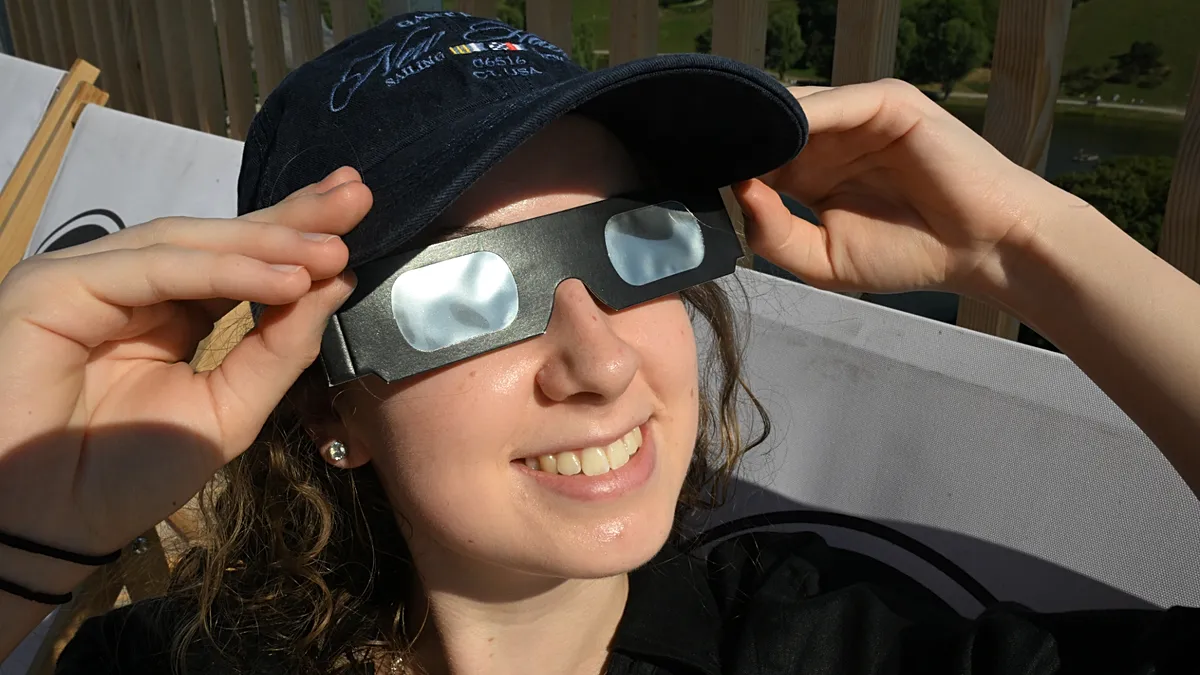
Table of Contents
Spain’s Eclipse Dilemma: Geography, Weather, and Work Schedules
A Nation Divided by the Moon’s Shadow
Poinews.com – Spain is preparing to witness one of nature’s most spectacular displays. The upcoming total solar eclipse on August 12 promises to create a dramatic division across the Iberian Peninsula. According to experts in both meteorology and astronomy, this celestial event will literally separate the country into two distinct experiences. Residents within the narrow path of totality will watch the Sun vanish entirely, while those just outside this corridor will miss the complete darkness by mere moments.
The eclipse’s central track stretches from west to east across the peninsula, encompassing several major provincial capitals. La Coruña, Oviedo, León, Bilbao, Zaragoza, Valencia, and Palma all sit directly within this zone of complete coverage. Meanwhile, communities outside this corridor will observe a partial eclipse, with the depth of coverage varying according to distance from the central line.
Madrid and Barcelona stand out as notable exceptions. These two metropolitan centers find themselves positioned between the eclipse’s path, meaning their inhabitants will experience an afternoon where the Sun becomes nearly invisible—reaching up to 99% coverage in certain areas—yet will never witness those precious seconds of total darkness that define the experience.
Even locations on the periphery face challenges. Huesca and Zamora rest precisely on the boundary of totality, where the Moon’s irregular edge may render the crucial moment difficult to identify without optical assistance. The entire southern portion of the peninsula will settle for a partial viewing experience.
Weather Uncertainties and Travel Considerations
Positioning oneself within the eclipse’s path offers no absolute guarantee of success. The Cantabrian coastline—encompassing Galicia, Asturias, and Cantabria—carries a somewhat disappointing meteorological reputation during this season. Research indicates that clear-sky probabilities in these regions occasionally fall below 50%. A single misplaced cloud hovering on the western horizon can transform hours of travel into disappointment within moments.
Recent atmospheric models suggest improved conditions for western and interior Galicia, Castilla y León, and the Balearic Islands. However, forecasters caution that predictions remain fluid until the final hours. This uncertainty echoes experiences from the 2024 eclipse observed in Arlington, Texas, where weather played a decisive role in viewer satisfaction.
For those who have journeyed hundreds of kilometers seeking totality, timing becomes everything. The DGT has implemented special traffic management operations to address anticipated congestion in high-traffic zones, meaning transportation workers will face an unusually demanding afternoon.
Workplace Realities During the Eclipse
Unlike some nations that grant special leave for astronomical events, Spain offers no particular exemption from employment obligations. Current labor legislation does not classify the eclipse as a force majeure situation. Consequently, drivers, hospitality employees, and construction personnel scheduled for duty will continue their responsibilities while their surroundings pause to observe the sky.
Employers and employees may negotiate to incorporate the brief totality period—lasting approximately one minute in optimal locations—into the 15-minute break mandated by the Workers’ Statute for shifts exceeding six hours. Such arrangements require advance coordination between parties.
Protecting Your Eyes: Safety Guidelines
Observing the eclipse without proper protection carries significant risks. Ophthalmologists have emphasized for weeks that even brief exposure to direct sunlight through inadequate filters can trigger solar retinopathy. This condition involves retinal burning that produces no immediate pain, remains unnoticed initially, and manifests as a central vision darkening within four to 48 hours.
Ordinary sunglasses, X-ray films, and homemade filters prove insufficient for safe viewing. Only glasses certified to ISO 12312-2 standards provide adequate protection. The ONCE Social Group has distributed approximately two million certified pairs nationwide to minimize accidents. Medical societies particularly recommend that children observe the event only under direct adult supervision.
Individuals lacking approved eyewear face two secure alternatives: complete avoidance of direct viewing or following the event through live broadcasts. Using binoculars remains another viable option for those with appropriate filters.
Live Streaming Options for Viewers
For those unable to witness the eclipse firsthand or preferring to avoid eye strain, multiple streaming services will provide comprehensive coverage. ESA will broadcast two distinct live feeds. The primary stream originates from the Javalambre Astrophysical Observatory in Teruel, featuring live interviews, educational content, imagery, and eclipse information. This English-language broadcast will capture totality at 20:31 and remains accessible through ESA Web TV and YouTube.
The secondary ESA stream delivers unedited telescope footage without commentary, offering pure visual documentation of the celestial event, also available on YouTube.
NASA will contribute its own streaming service beginning at 19:15, presenting varied perspectives as the eclipse progresses along its trajectory across the landscape.
For anyone who has travelled hundreds of kilometres in pursuit of totality, a single badly placed cloud on the western horizon can ruin in seconds what geography had granted them.
Ophthalmologists have been insisting for weeks that looking at the Sun without ISO 12312-2 certified eclipse glasses, even for a few seconds, and not even with ordinary sunglasses, X-ray films or homemade filters, can cause solar retinopathy: a burn on the retina that does not hurt, goes unnoticed at the time and can take between 4 and 48 hours to appear as a dark patch in the centre of vision.
Related Reading
Frequently Asked Questions
What is Who will miss the 12 August?
Who will miss the 12 August is the main topic of this guide. The article explains the context, practical details, and next steps readers should understand.
Why does Who will miss the 12 August matter?
Who will miss the 12 August matters because readers are looking for a useful answer, not just a short summary. Good content should match search intent and help them decide what to do next.