Tashkent International Investment Forum ends with €37.6bn in deals
Tashkent International Investment Forum Concludes with €37.6bn in Agreements Tashkent International Investment Forum ends with 37 - The fifth Tashkent

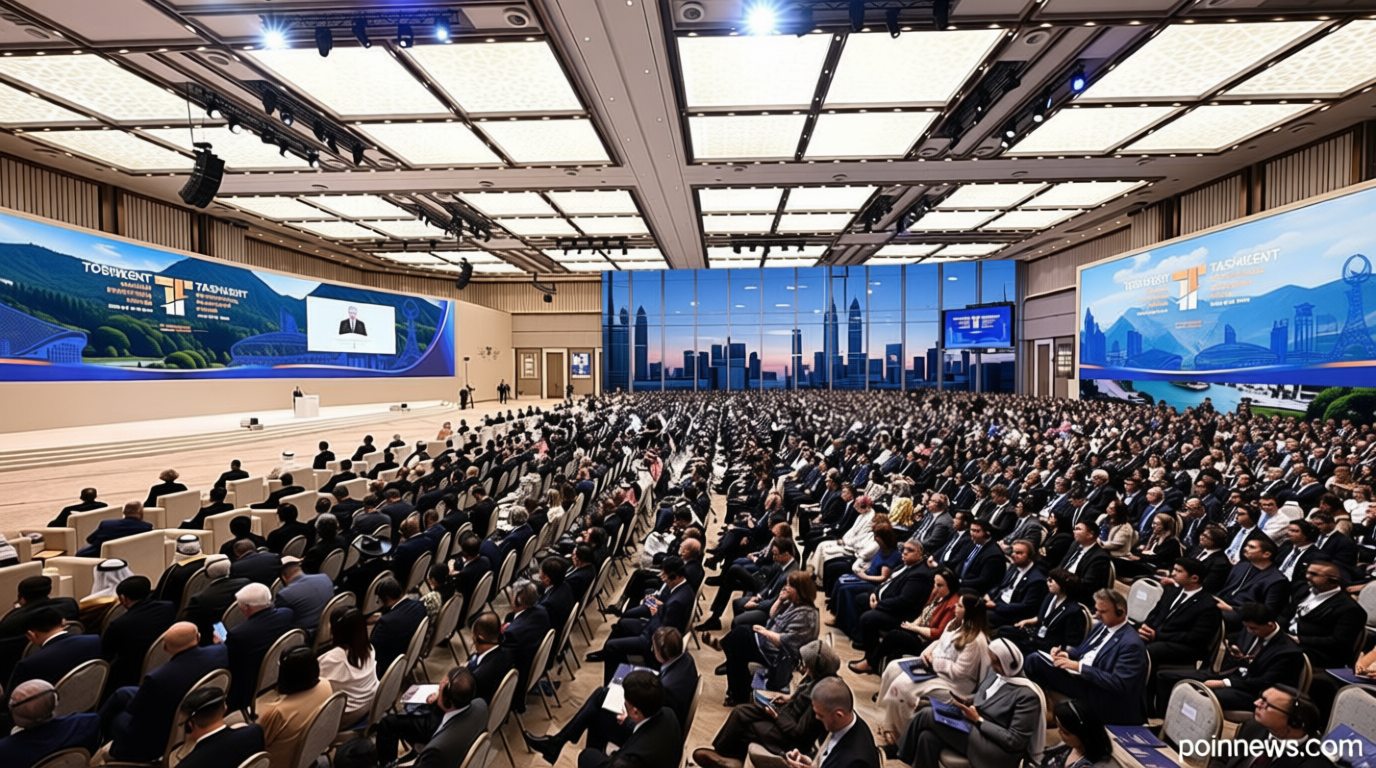
Tashkent International Investment Forum Concludes with €37.6bn in Agreements
Poinews.com – The fifth Tashkent International Investment Forum wrapped up its three-day session, resulting in 166 agreements totaling $43.1bn (€37.6bn). Of these, 139 new initiatives were announced, valued at $31.8bn (€27.7bn). The event attracted over 10,000 attendees, with 3,802 international participants from 102 nations.
Key highlights included the forum’s expanding global influence and the focus on future growth. Uzbekistan’s President Shavkat Mirziyoyev emphasized that investment goes beyond capital inflows, serving as a driver for technological innovation, skilled labor, and sustainable development.
Reform Momentum and Capital Market Expansion
Investors highlighted the importance of Uzbekistan’s long-term reform efforts in attracting continued investment. “The reform agenda needs a proven track record,” noted Julia Hoggett, CEO of the London Stock Exchange. “People need to see consistent progress, and we’ve had years of evidence to support that.”
The National Investment Fund (UzNIF), managed by Franklin Templeton, demonstrated the government’s commitment to financial integration. Its dual listing in London and Tashkent generated over $2.8bn (€2.44bn) in demand, raising nearly $700mn (€610mn). Marius Dan, Franklin Templeton’s Central Asia CEO, suggested this could signal the growth of a more robust domestic capital market.
International Engagement and Strategic Partnerships
The forum overlapped with high-level visits by German President Frank-Walter Steinmeier and Albanian President Bajram Begaj, alongside officials from Central Asia and neighboring countries. A U.S.-Uzbekistan business forum brought together representatives from 193 American firms, including Boeing, Visa, and Meta, fostering discussions on trade and energy cooperation.
Uzbekistan aims to leverage improved infrastructure to enhance regional connectivity. Projects like the China-Kyrgyzstan-Uzbekistan railway, the Middle Corridor across the Caspian Sea, and the Trans-Afghan route are designed to connect the landlocked region to Europe, Asia, and southern ports. These efforts are also expected to bolster the tourism sector, according to Abdulaziz Akkulov, head of the Tourism Committee.
Green Energy and Digital Transformation
The government plans to increase green energy production to 54% of total electricity generation and attract investments in smart grids, storage, and AI. Digital Technologies Minister Sherzod Shermatov reported that IT exports grew from less than $1mn (€871,200) in 2017 to $1bn (€872mn) the previous year. Rajit Nanda of DataVolt stressed that capital, expertise, and energy are vital for AI adoption.
Minister Laziz Kudratov of Investment, Industry, and Trade stated that reforms since 2017 have streamlined tax systems and allowed free currency conversion. “Investors can enter, operate, and withdraw profits within a single day,” he said, signaling Uzbekistan’s openness to foreign participation.
Central Asia’s Economic Ascent
“Central Asia is now one of the most impressive regions for economic growth,” remarked Marek Mora, vice-president of the European Investment Bank. “It’s only a matter of time before we refer to these countries as the Central Asian Tigers.” This optimism reflects Uzbekistan’s goal to transform increased trade and investment into higher-value industries and export growth.