Financial sovereignty, digital euro and payment roaming: EU seeks alternatives to US cards
European leaders are prioritizing financial sovereignty digital euro and payment independence as they seek alternatives to American card networks. For years

EU Payment Independence: Digital Euro and Financial Sovereignty
Poinews.com – European leaders are prioritizing financial sovereignty digital euro and payment independence as they seek alternatives to American card networks. For years, Visa and Mastercard have dominated global card transactions, with European nations sending billions of euros through these non-European channels. This dependence creates both economic and geopolitical vulnerabilities that policymakers now consider urgent priorities.
Why Europe Needs Payment Alternatives
The European Central Bank warns that reliance on overseas payment networks exposes the continent to political pressure and unexpected disruptions. Christine Lagarde’s institution has highlighted scenarios where American leadership could theoretically disable systems enabling European consumers to complete daily purchases. Such disruptions would prove widespread and damaging to European economies.
Real-world precedent exists in Russia, where businesses depend on Visa and Mastercard for approximately 60 percent of all transactions. When American sanctions compelled these companies to withdraw their services, everyday citizens found themselves unable to access funds or purchase essential goods.
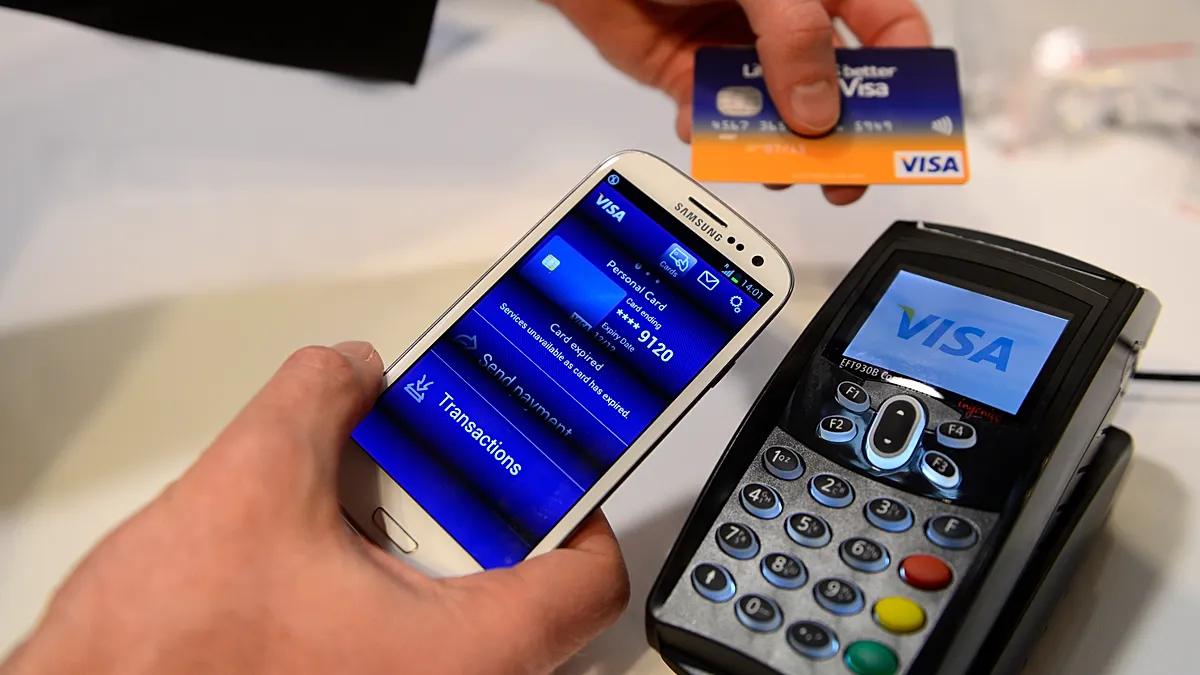
According to ECB statistics, Visa and Mastercard collectively handle 61 percent of card payments within the eurozone and process nearly every cross-border card transaction. Each time consumers use a physical card or smartphone to complete a purchase, transaction data exits the European Union and resides in foreign jurisdictions—primarily the United States—where it contributes to consumer profiling activities.
Economic Costs and Strategic Autonomy
Operational expenses represent another dimension of the problem. Retail operators report that network fees have climbed considerably over recent years. These charges follow commercial terms established beyond European borders. Consequently, direct bank-to-bank transfers could enhance market competition while reducing costs for enterprises and shoppers alike.
Diminishing reliance on American payment structures aligns with Ursula von der Leyen’s broader objective. The European Commission president supports recommendations from Mario Draghi and Enrico Letta, who emphasize that Europe must strengthen its competitive position against large corporations from nations including the United States and China.
Mario Draghi, the former ECB president, observed that global interdependence has evolved from a mechanism of mutual restraint into an instrument of influence and control. Deep economic integration creates strategic dependencies that nations outside traditional alliances can exploit as leverage.
The Digital Euro: A European Solution
Across the Atlantic, the digital euro represents a concrete step toward implementing strategic autonomy for the European Union. This electronic currency would establish an EU-wide payment framework built on European technology and infrastructure.
“All these potential geopolitical tensions and the transformation of every existing instrument into a weapon are clearly increasing the level of risk. That strengthens the need for a European payment system that meets all needs and is built on European technology and infrastructure, in other words a system that is entirely under our control,”
Piero Cipollone, a member of the ECB’s executive board, delivered these remarks to the Spanish newspaper El País in January. He emphasized that geopolitical tensions are elevating risk levels and reinforcing the necessity for a payment system designed to serve European needs while remaining under European control.
International Recognition of Payment Sovereignty
These warnings extend beyond European borders. A mounting consensus recognizes that payment systems have become central to national sovereignty amid growing geopolitical fragmentation. Canadian Prime Minister Mark Carney articulated similar concerns during his address at the World Economic Forum in Davos earlier this year.
“The great powers have started to use economic integration as a weapon, tariffs as leverage, financial infrastructure as coercion and supply chains as vulnerabilities to be exploited. You cannot live under the illusion of mutual benefit through integration when that integration becomes the source of your subordination.”
FAQ: Understanding Europe’s Payment Transformation
What is the digital euro and how does it support financial sovereignty? The digital euro is an electronic currency being developed by the European Central Bank. It would establish an EU-wide payment framework built on European technology and infrastructure, reducing dependence on American card networks like Visa and Mastercard.
Why is payment roaming important for European consumers? Payment roaming allows European consumers to use their payment methods seamlessly across borders. With the digital euro initiative, this service would operate within European infrastructure rather than relying on American networks, supporting both convenience and financial sovereignty.
How much of European card payments do US companies control? According to ECB statistics, Visa and Mastercard collectively handle 61 percent of card payments within the eurozone and process nearly every cross-border card transaction, making European payment independence a strategic priority.
What geopolitical risks does payment dependence create? European leaders warn that dependence on overseas payment networks exposes the continent to political pressure and unexpected disruptions. The scenario extends beyond military considerations, with potential for American leadership to theoretically disable systems enabling European consumers to complete daily purchases.