North Korea fires intermediate-range missile, claiming evasive flight and AI features
North Korea fires intermediate range missile capabilities were put on display in a launch from the Wonsan area on the country’s east coast early Saturday

Table of Contents
North Korea Fires Intermediate Range Missile in Latest Test
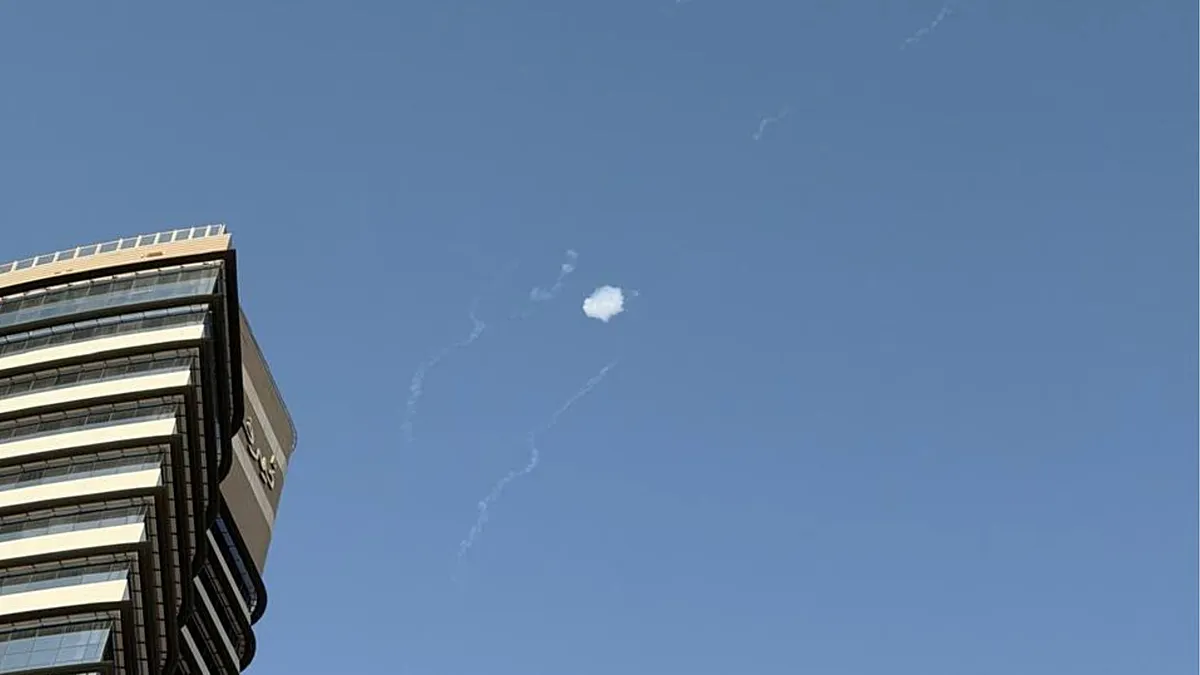
Poinews.com – North Korea fires intermediate range missile capabilities were put on display in a launch from the Wonsan area on the country’s east coast early Saturday. Pyongyang said the intermediate-range ballistic missile was designed to alter its course during flight, potentially complicating efforts by regional missile-defence systems to track it.
Kim Yo Jong, the sister of North Korean leader Kim Jong Un and a senior official in Pyongyang, said Kim supervised the test. She described the weapon as “strategic,” a term North Korea commonly uses for systems it says are intended to carry nuclear warheads.
North Korea said the missile could manoeuvre at low altitude using a “wavelike trajectory mode.” Kim Yo Jong also claimed it had artificial intelligence-related features, but did not explain how those capabilities worked or provide evidence to support the assertion.
“Whenever we applied the wavelike trajectory mode to missiles, the enemy failed to track the targets from their first skip points,” Kim Yo Jong said. “There is no way to avoid this attack.”
South Korea and Japan report different flight estimates
South Korea’s Joint Chiefs of Staff said the missile travelled more than 700 kilometres after launch from the Wonsan coastal region. Japan’s Defence Ministry estimated a flight distance of about 680 kilometres and said the projectile landed in waters outside Japan’s exclusive economic zone.
Kim Yo Jong cited the different assessments as evidence that authorities in Seoul and Tokyo could not accurately follow the missile’s flight. South Korean officials have repeatedly accused North Korea of exaggerating the technical performance of its weapons programmes.
The latest North Korea intermediate-range missile test follows a broader run of military activity that has included missile launches, live-fire drills and the commissioning of a new warship. Wonsan was also the site of a 20 September test involving what state media described as a hypersonic missile system.
Why North Korea’s Missile Development Matters
North Korea has been developing weapons intended to make interception more difficult for South Korea, Japan and the United States. Its arsenal includes solid-fuel intermediate-range missiles first unveiled in 2024, shorter-range systems that can threaten regional targets, and longer-range missiles that could potentially reach the US mainland.
The claim that North Korea fires intermediate range missiles with evasive flight profiles is significant because missile-defence systems depend on reliable tracking and predictions of a weapon’s trajectory. Claims made by Pyongyang, however, are difficult to independently verify.
Landmine dispute adds to border tensions
The launch came a day after Kim Yo Jong rejected South Korean demands for an apology over landmine explosions on 21 September. The blasts happened about 10 metres south of the military demarcation line and injured three South Korean soldiers.
A joint inspection by South Korea and the US-led United Nations Command concluded that North Korea had planted the mines. The command later said Pyongyang had violated the armistice that halted the 1950-53 Korean War.
Seoul has urged North Korea to stop reinforcing the border with mines and anti-tank barriers. Construction has accelerated since Kim Jong Un abandoned the long-standing goal of reconciliation in 2024 and declared South Korea a permanent adversary.
Kim Yo Jong called Seoul’s demands “utterly pathetic” on Friday.
She denied North Korean responsibility for the explosions and warned of retaliation if South Korea fired at North Korean troops working near the border. The dispute underlines the risk that activity near the demarcation line can rapidly intensify wider tensions on the Korean peninsula.
Diplomacy Remains Stalled
South Korea has stepped up surveillance for possible further launches and is sharing information with the United States and Japan. The US Pacific Command said the test did not pose an immediate threat to American personnel, US territory or allied nations.
Kim Jong Un has largely rejected renewed engagement with Washington and Seoul since his nuclear diplomacy with President Donald Trump collapsed in 2019. North Korea has instead focused on expanding its nuclear-capable missile force and strengthening ties with Moscow.
Pyongyang has sent thousands of troops and substantial weapons shipments to support Vladimir Putin’s war in Ukraine. The growing relationship has coincided with more intensive weapons testing and sharper rhetoric towards South Korea and the United States.
In August, Trump reduced the scale of a major joint US-South Korean military exercise in an apparent effort to reopen dialogue. North Korea rejected the overture and maintained that Washington’s policies had not changed.
Frequently Asked Questions
Where did the missile land?
Japan’s Defence Ministry said the missile landed in waters outside Japan’s exclusive economic zone after travelling about 680 kilometres. South Korea estimated that it travelled more than 700 kilometres.
What does North Korea mean by an evasive trajectory?
North Korea says the missile can change course at low altitude and follow a “wavelike” flight path. Such manoeuvres could make tracking and interception more difficult, although the claims have not been independently verified.
Did the launch pose an immediate threat?
The US Pacific Command said the test did not pose an immediate threat to US personnel, US territory or allied countries. South Korea, the United States and Japan continue to monitor the situation for further launches.