EU budget: Sweden, part of the ‘frugal’ camp, is about to turn even more hawkish
Magdalena Andersson, head of Sweden's Social Democratic Party, is poised to assume the role of prime minister. Despite her centre-left political background

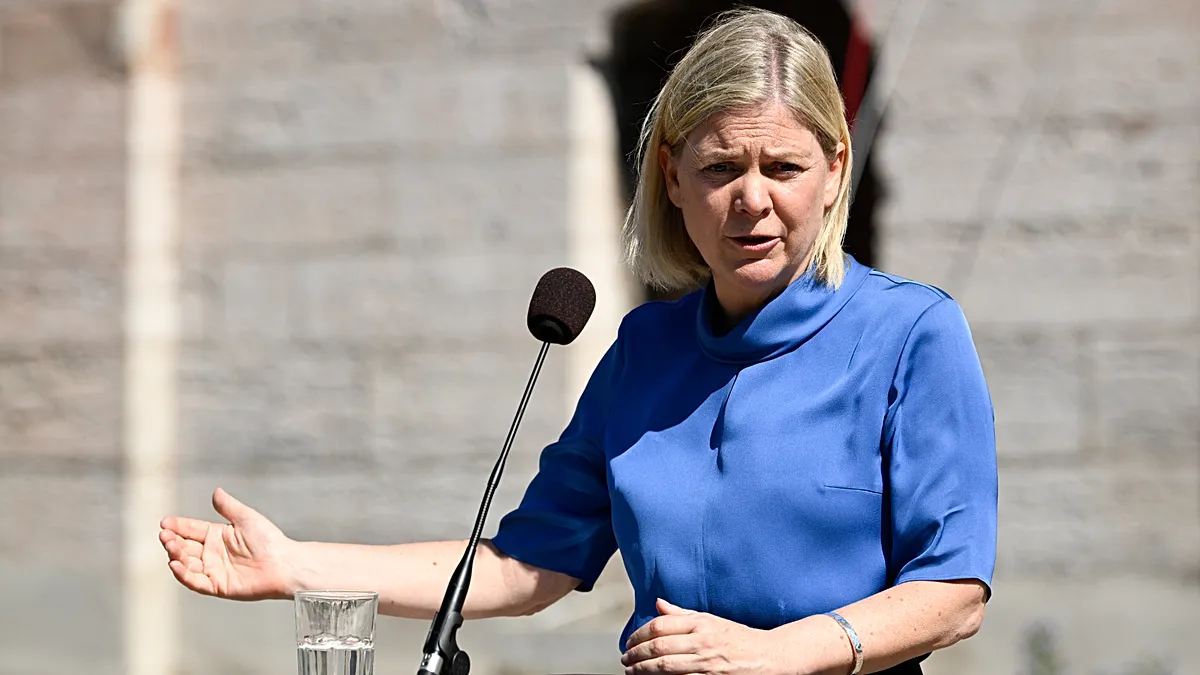
Table of Contents
Sweden’s Incoming Leadership to Maintain Tough EU Budget Stance
Poinews.com – Magdalena Andersson, head of Sweden’s Social Democratic Party, is poised to assume the role of prime minister. Despite her centre-left political background, she is expected to maintain a firm position during forthcoming European Union budget discussions. The Social Democrats are projected to secure victory in the September 13 election, with current polling showing 32% support. This places them significantly ahead of the national-conservative Sweden Democrats at 20% and the centre-right Moderate Party, led by incumbent Ulf Kristersson, which sits at 17%.
A Progressive Shift with Conservative Budgetary Views
Sweden would join a small group of EU nations moving toward progressive governance, as centre-left administrations currently exist only in Spain, Denmark, and Malta. Most other European countries are trending toward radical right movements. However, expectations that Stockholm will moderate its position in long-term budget negotiations may prove premature. Sources indicate the incoming administration could adopt an even more demanding approach than the present government.
“The next Swedish government is likely to be much tougher,” a Swedish official told Euronews, speaking on condition of anonymity as they were not authorised to comment publicly.
“During the parliamentary hearings they always ask why the current government is not doing more to oppose the budget proposal.”
The Frugal Bloc’s Resistance to Expansion
Alongside Germany and the Netherlands, Sweden forms the “frugal” bloc—net contributors who pay substantially more into EU coffers than they receive. Stockholm has expressed strong opposition to the European Commission’s €2 trillion proposal, even in its scaled-back version presented by the Cypriot presidency. Swedish representatives are advocating for budget restraint to minimize financial pressure on Swedish taxpayers.
Officials calculate that the Commission’s initial proposal would raise Sweden’s contribution by approximately 60%. This increase comes at a challenging moment, as public finances face pressure from rising defense expenditures and military assistance directed toward Ukraine.
Protecting the Rebate and Fiscal Space
At a March session of the Committee on EU Affairs, Social Democrat MP Matilda Ernkrans criticized the existing administration for exhausting national resources. She emphasized that further budget expansion would prove problematic for upcoming policy initiatives.
“Against this background, an increase in the EU fee of the magnitude now being discussed is completely unacceptable,” she said, pointing in particular to the need to maintain the so-called rebate: a discount Sweden secured in the previous budget negotiations.
Andersson’s tenure as finance minister from 2014 to 2021 covered negotiations for the prior seven-year budget cycle. During this period, she personally obtained an annual rebate exceeding €1 billion—a benefit she now intends to safeguard.
“The Social Democrats are focused on domestic policies and do not want to sacrifice their social agenda to Brussels,” the Swedish official said, adding that some form of rebate will likely be necessary to reach a final agreement.
Divergence Within Centre-Left Camp
Sweden’s effort to reduce EU spending to preserve domestic social policy options creates tension with fellow centre-left parties in the Socialists and Democrats (S&D) group within the European Parliament. These colleagues frequently find Swedish positions overlooked during budget deliberations. The S&D has supported expanding EU-level borrowing following the NextGenerationEU framework, which served as Europe’s post-pandemic recovery mechanism.
While Andersson initially resisted this approach during her time in office, her government eventually endorsed it. Her stance on broader EU debt has evolved as well. She has championed collective borrowing for European defense enhancement and military support for Ukraine, stating in 2025 that “this needs to happen at a furious pace and all countries must do it, even those with worse economic conditions.”
Nevertheless, Stockholm remains cautious about EU-level borrowing due to interest rates that exceed Sweden’s domestic borrowing costs, rendering such arrangements less economically appealing.
Historical Precedent and Future Outlook
An S-sponsored report highlights Sweden’s longstanding commitment to fiscal prudence.
“Sweden has long adhered to the mantra of being ‘the most frugal in Europe’. This negotiating position yielded particularly good results in the negotiations on the EU’s joint pandemic recovery fund,” reads an S-sponsored report on the EU budget.
“Sweden succeeded in limiting the level of grants to member states, securing a Swedish rebate of around 11 billion Swedish krona per year and establishing a conditionality mechanism based on the principles of the rule of law,” the report continues.
The incoming Swedish government is expected to maintain its skeptical approach toward deeper EU integration, particularly regarding financial commitments and borrowing mechanisms.
Related Reading
Frequently Asked Questions
What is EU budget?
EU budget is the main topic of this guide. The article explains the context, practical details, and next steps readers should understand.
Why does EU budget matter?
EU budget matters because readers are looking for a useful answer, not just a short summary. Good content should match search intent and help them decide what to do next.