Ash from Mount Etna volcano forces closure of Sicily’s busiest airport during peak holiday week
Ash from Mount Etna volcano has forced the closure of Catania's airport for the fifth consecutive day, leaving hundreds of holidaymakers stranded during the

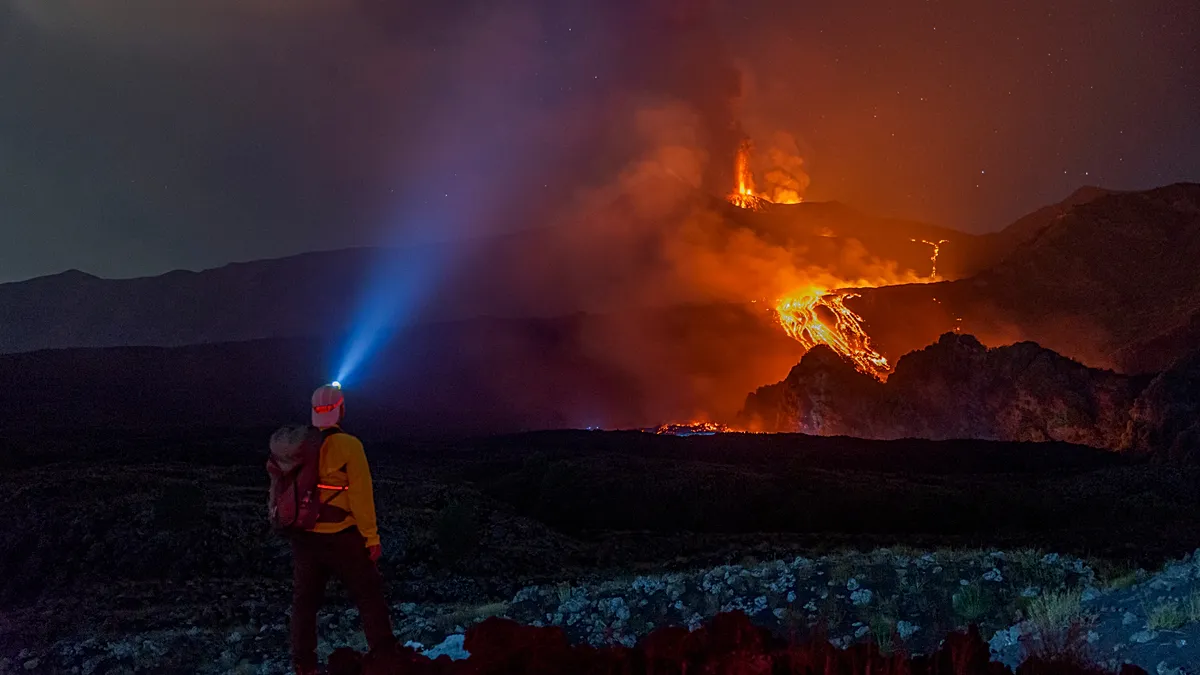
Table of Contents
Ash from Mount Etna Volcano Closes Sicily’s Main Airport During Peak Season
Poinews.com – Ash from Mount Etna volcano has forced the closure of Catania’s airport for the fifth consecutive day, leaving hundreds of holidaymakers stranded during the most critical travel week of the year. The Italian island’s busiest airport will remain shut until early Saturday, coinciding with Ferragosto—the traditional Italian holiday that marks the peak of summer tourism when millions of visitors flock to coastal destinations and mountain resorts across the country.
While volcanic activity from Etna frequently disrupts flights at the airport, situated approximately 30 kilometres south of the volcano’s summit, this represents the most extended emergency closure since 2002. The persistence of ash emissions has created unprecedented challenges for both passengers and airline operators navigating the crisis.
Understanding the Volcanic Threat to Aviation
“Volcanic ash poses a significant risk to aircraft operations,” explained Boris Behncke, a senior researcher at the National Institute of Geophysics and Volcanology’s Etna Observatory. “Ash particles can be drawn into jet engines and cause them to stall completely. This is precisely why aviation authorities exercise extreme caution when volcanic ash emissions are detected.”
Etna stands as Europe’s largest active volcano, and its recent behavior has been particularly noteworthy for sustained ash production rather than explosive eruptions. Northerly wind patterns have carried light ash deposits as far as Malta and northern African coastlines, though the primary impact remains concentrated on Sicily’s aviation infrastructure.
“We have experienced numerous shorter disruptions and more powerful eruptions throughout recent decades,” Behncke noted. “However, this particular event distinguishes itself through the remarkable persistence of ash emission from Etna’s summit crater.”
Travel Disruptions and Economic Impact
The airport closure has triggered widespread rerouting of flights to alternative Sicilian destinations, creating secondary effects on local transportation markets. According to Corriere della Sera newspaper, taxi services and car rental companies have significantly increased their rates to meet heightened demand. The Codacons consumer protection organization has announced plans to lodge a formal complaint with Italy’s competition authority regarding alleged price gouging during the crisis.
SAC, the airport operator, reported that 36% of nearly 2,000 flights scheduled to arrive in Catania between August 6 and 12 had been cancelled. More than 600 flights were diverted to airports in Palermo, Trapani, and Comiso within Sicily, as well as Lamezia Terme in Calabria. While flights managed to depart Catania over the weekend, the airport officially closed to both incoming and outgoing traffic on Monday. Comiso airport experienced a brief closure as well.
Italy’s national railway company, Trenitalia, responded by adding six additional trains along the Palermo-Messina-Catania corridor to alleviate ground transportation pressure. The federation of Italian travel agencies and tour operators, FIAVET, has established a dedicated task force to coordinate responses to Mount Etna-related disruptions. FIAVET President Gian Mario Pilieri emphasized that while operators work continuously to assist passengers with cancellations and alternative arrangements, they cannot indefinitely absorb structural deficiencies in airline management systems.
What Travelers Should Know
Passengers affected by the closure are advised to monitor their flight status regularly through airline websites and airport applications. Those with connecting flights should contact their airlines immediately to explore rebooking options. Ground transportation alternatives, including the expanded train services, provide viable options for travelers needing to reach Catania or depart from the region.
“Operators are working around the clock to provide assistance, cancellations and alternative travel arrangements, but they cannot bear the burden of structural shortcomings and the management responsibilities of others,” said FIAVET President Gian Mario Pilieri.
Frequently Asked Questions
When will Catania airport reopen? The airport is scheduled to reopen early Saturday following the fifth consecutive day of closure due to persistent ash emissions from Mount Etna.
Which flights have been cancelled or diverted? Approximately 36% of nearly 2,000 flights scheduled for August 6-12 have been cancelled, with over 600 flights diverted to Palermo, Trapani, Comiso, and Lamezia Terme.
Are there alternative transportation options? Yes, Trenitalia has added six trains on the Palermo-Messina-Catania route to help accommodate displaced travelers seeking ground transportation alternatives.
How long has this closure lasted? This represents the longest emergency closure since 2002, with the airport remaining shut for five consecutive days due to sustained ash emissions.