Lagarde defends ECB interest rate hike as ‘robust across three scenarios’
Lagarde defends ECB interest rate hike as ‘robust across three scenarios’ Lagarde defends ECB interest rate hike - European Central Bank President Christine

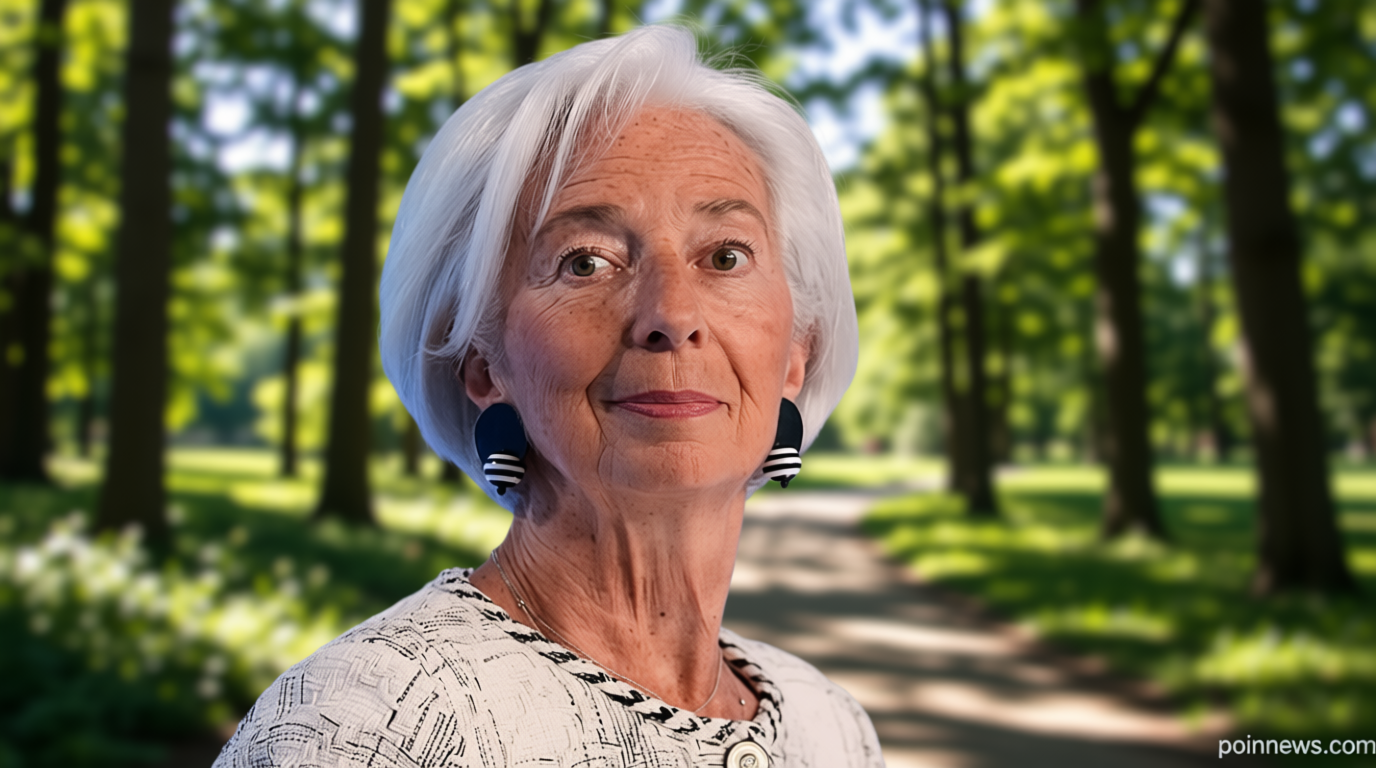
Lagarde defends ECB interest rate hike as ‘robust across three scenarios’
Poinews.com – European Central Bank President Christine Lagarde has firmly supported the recent decision to raise interest rates, asserting that the move is justified by the ECB’s comprehensive analysis of three distinct economic scenarios. This rate hike, which follows a period of cautious monetary policy, comes amid rising inflationary pressures and global economic uncertainty. Lagarde emphasized that the central bank’s approach remains data-driven, with the current adjustment designed to stabilize price levels and maintain long-term economic growth. By aligning the ECB’s actions with its strategic outlook, Lagarde aims to reassure stakeholders that the decision is both necessary and well-considered, particularly in light of the evolving economic landscape.
ECB’s Strategic Response to Inflationary Challenges
The European Central Bank’s interest rate increase of 0.25% in June 2026 marks a pivotal shift in its monetary strategy, driven by the persistent threat of inflation. This decision follows a series of hikes in 2023, which were prompted by the surge in energy prices after Russia’s invasion of Ukraine. Lagarde has consistently defended the ECB’s stance, highlighting that the rate hike is not merely a reactive measure but a proactive step to ensure price stability across varying economic conditions. With the Eurozone inflation rate reaching 3.2% in May—its highest level since September 2023—such moves are critical to curbing the upward trend in consumer prices and safeguarding the bloc’s economic resilience.
Recent data underscores the severity of the inflationary pressures facing Europe. Energy costs, which had initially spiked due to geopolitical tensions, have continued to rise, with a 10.9% increase in the first quarter of 2026 alone. This has led to a contraction in the EU economy, with GDP growth slowing to 0.2% during the same period. Lagarde’s defense of the ECB’s interest rate hike comes as a response to these challenges, aiming to prevent further economic stagnation. By maintaining a firm grip on inflation, the ECB seeks to preserve purchasing power and support sustainable growth, even as external shocks threaten to disrupt stability.
Three Scenarios for Inflation and Growth Outlook
To demonstrate the robustness of its decision, the ECB has outlined three potential economic scenarios for the period 2026–2028. These scenarios are based on different assumptions about global energy markets, inflation trends, and domestic economic performance. In the mild scenario, energy prices stabilize, leading to a gradual decline in inflation. The ECB projects that this path would allow inflation to fall below the 2% target by 2027, with GDP growth rebounding to 1.4% in the same year. In contrast, the adverse scenario envisions continued energy price volatility, pushing inflation to 3.3% in 2026 and 3.0% in 2027. The severe scenario, however, suggests a prolonged energy crisis, which could slow GDP growth to 0.5% by 2027 before a modest recovery in 2028.
Each of these scenarios highlights the ECB’s preparedness to adapt its strategy to different economic conditions. Lagarde reiterated that the bank’s interest rate hike is a measured response to inflation risks, regardless of which scenario materializes. “The ECB’s rate decisions are calibrated to address inflationary pressures while keeping the door open for economic growth,” she stated. This flexibility is essential in a period of uncertainty, as the central bank balances the need to control inflation with the goal of supporting employment and investment across the Eurozone.
One of the key arguments in favor of the rate hike is its potential to reinforce the ECB’s commitment to price stability. By raising interest rates, the central bank aims to curb excessive spending and reduce demand-driven inflation. This approach aligns with the ECB’s mandate to maintain a stable inflation rate of around 2%, a target that has been increasingly difficult to achieve in the face of energy shocks and global supply chain disruptions. Lagarde’s defense of the ECB’s interest rate hike underscores the central bank’s resolve to act decisively, even when the economic outlook is uncertain.
Impact on European Productive Sectors
While the ECB’s interest rate hike is designed to combat inflation, it has sparked debate about its broader implications for the European economy. Critics, such as Calvin Vella from Positive Money Europe, argue that higher interest rates may place additional strain on productive sectors, particularly those reliant on energy-intensive industries. Vella contends that the hike will not directly reduce energy prices but will instead increase the cost of borrowing, making it more expensive for businesses to invest in clean energy solutions. This, he warns, could slow the transition to sustainable energy and weaken Europe’s long-term economic competitiveness.
Lagarde, however, maintains that the ECB’s approach is necessary to prevent inflation from spiraling out of control. “If we allow inflation to run unchecked, it becomes significantly harder to bring it back to the desired level,” she explained. The central bank’s strategy prioritizes price stability as a foundation for economic growth, even if it means temporarily increasing borrowing costs. Lagarde’s emphasis on the ECB’s interest rate hike as a proactive measure reflects a broader effort to maintain confidence in the European economy, despite the challenges posed by the Middle East conflict and other external factors.
The decision also signals a shift in the ECB’s policy direction. After years of accommodative measures, the bank is now adopting a more tightening stance to counter inflation. This is part of a larger effort to ensure that the Eurozone remains resilient in the face of global headwinds. While some economists caution that the rate hike could lead to a slowdown in growth, others argue that it is the right step to prevent a more severe economic downturn. Lagarde’s defense of the ECB’s interest rate hike highlights the central bank’s confidence in its ability to navigate these challenges effectively.
As the Eurozone continues to grapple with inflation and economic uncertainty, the ECB’s interest rate hike serves as a clear statement of its commitment to maintaining price stability. Lagarde’s emphasis on the robustness of the decision across three scenarios underscores the central bank’s data-driven approach and its ability to adapt to changing conditions. While the move may have short-term implications for businesses and consumers, the ECB remains focused on its long-term objective of fostering a stable and sustainable economic environment. This strategy is likely to shape the next phase of monetary policy in Europe, as the bank prepares to address the evolving challenges ahead.