Made in Uzbekistan: Local brands look to new markets
Uzbekistan's factories and workshops are producing more than ever, and the goods leaving those facilities are increasingly carrying a domestic label rather

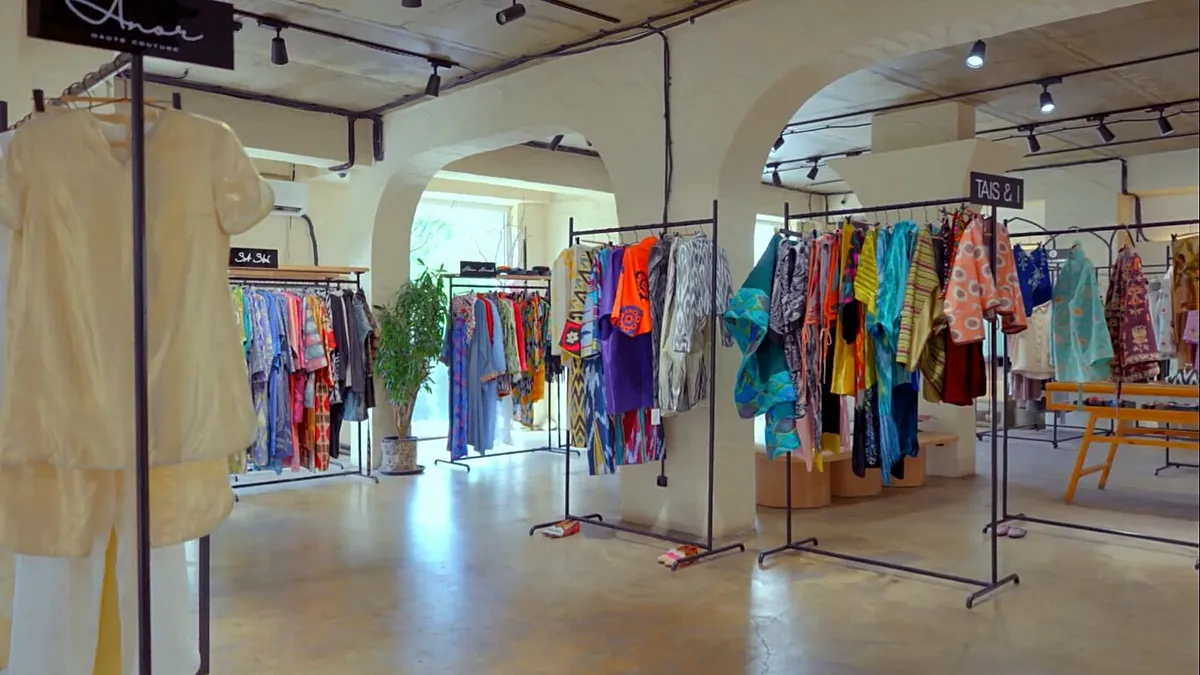
Table of Contents
Uzbekistan’s Homegrown Brands Push Beyond Borders
Poinews.com – Uzbekistan’s factories and workshops are producing more than ever, and the goods leaving those facilities are increasingly carrying a domestic label rather than a foreign one. Industrial output climbed 6.8 percent in 2025, and total exports surged 24 percent to roughly €29 billion, figures released by the National Statistics Committee. Behind those macro numbers sits a quieter but equally significant transformation: entrepreneurs and designers are converting locally sourced materials and inherited techniques into branded products aimed at both home shoppers and overseas buyers.
The phenomenon spans textiles, electronics, household appliances, food items, and traditional crafts. Yet no sector illustrates the shift more vividly than the creative economy, where independent makers have moved from informal home-based operations to structured businesses with retail presence, digital storefronts, and international distribution ambitions.
From Street Market to Permanent Platform
Teplo Store, a collective founded by Charos Kamalova and Timur Kamolov, began in 2018 as a rotating marketplace where local designers could display and sell their work. Over the following years the project grew into a fixed retail location, a series of design festivals, and, most recently, an online marketplace. The physical store now carries work from approximately 100 designers, while its festival events draw as many as 150 participants at a time. In total, more than 200 designers have passed through the platform since its inception.
Kamalova describes a marked shift in consumer perception over that period. At the project’s launch, Uzbek-made goods were typically read as either folk-craft souvenirs or low-cost mass-market items. Independent designers, she argues, have since carved out a third category defined by originality of concept, presentation quality, and material integrity.
“Today it became kind of cool to support local brands,” Kamalova said. “People are coming here, buying this stuff and showing others that, look, I’m supporting local brands.”
Heritage Techniques, Contemporary Applications
Traditional craftsmanship remains a cornerstone of Uzbek design identity, but the way it is deployed has changed. Gulnoza Jo’rayeva, a designer who has spent more than twelve years working with adras — a silk-and-cotton textile rooted in Uzbek weaving tradition — and natural silk, exemplifies this evolution. Her operation began in a home setting and has since grown into a business represented in seven locations across the country. Production still relies heavily on manual processes and time-honoured techniques, carried out by young seamstresses, artists, and designers trained in those methods.
Demand for Jo’rayeva’s work now extends well past Uzbekistan’s borders. The company ships internationally and has fielded customer requests to open additional points of sale in other cities. For Kamolov, this heritage base constitutes a genuine competitive edge — provided it is translated into forms that modern consumers actually want.
“The key competitive advantage for our brands would be the craftsmanship that we have,” he said.
Kamolov stresses that traditional techniques must be reinterpreted within contemporary, practical product categories if Uzbek designers hope to compete on global stages. Equally important, he notes, is the need for stronger internal business processes that convert creative projects into scalable, repeatable enterprises.
Testing International Waters
Several local brands are already probing foreign demand. Teplo ran a six-month pop-up store in London’s Soho district and took part in the London Design Biennale, placing products from Uzbek independent designers directly in front of international audiences. Kamalova reported that the project drew visitors from numerous countries and signalled appetite for Uzbek design well beyond the domestic market.
“We saw people from around the world, not only locals in London, that showed huge interest,” she said. “We think that our designers have great potential there.”
Digital commerce offers a parallel pathway. Teplo has since built an online platform enabling customers outside Uzbekistan to purchase directly from local designers. Broader e-commerce marketplaces are simultaneously opening additional channels for producers across multiple sectors to reach overseas consumers without the overhead of physical retail abroad.
The Practical Gap Between Making and Selling Abroad
Scaling from local production to cross-border sales, however, introduces a cluster of operational hurdles. For the London pop-up, Teplo had to manage logistics, customs clearance, and documentation on behalf of participating designers — tasks that fall outside most independent creators’ core competencies. Kamolov observes that these trade-administration processes are especially taxing for makers whose expertise lies in design and fabrication rather than international commerce.
The difficulty is not confined to creative industries. Data presented by President Shavkat Mirziyoyev following a recent survey of exporters revealed that 40 percent of respondents reported trouble identifying foreign buyers, while 36 percent struggled to bring products into compliance with international standards and certification regimes. An additional 37 percent cited inadequate financial instruments tailored to export operations, and 33 percent flagged gaps in market intelligence, marketing capability, and branding know-how.
In response, new policy measures were announced in August during a presidential address, aimed at strengthening the institutional and financial infrastructure that exporters require. The underlying logic is straightforward: Uzbekistan’s manufacturing base has grown rapidly, and the next phase of growth depends on whether the country’s producers can navigate the administrative, financial, and informational complexities of selling across borders. The creative sector, with its emphasis on design differentiation and cultural storytelling, may prove an early proving ground for that transition.
Related Reading
Frequently Asked Questions
What is Made in Uzbekistan?
Made in Uzbekistan is the main topic of this guide. The article explains the context, practical details, and next steps readers should understand.
Why does Made in Uzbekistan matter?
Made in Uzbekistan matters because readers are looking for a useful answer, not just a short summary. Good content should match search intent and help them decide what to do next.