QatarEnergy extends LNG cancellations into November as Hormuz disruption drags on
The Strait of Hormuz blockade has pushed QatarEnergy's force majeure declarations deep into autumn, with the state-owned gas giant now telling European and

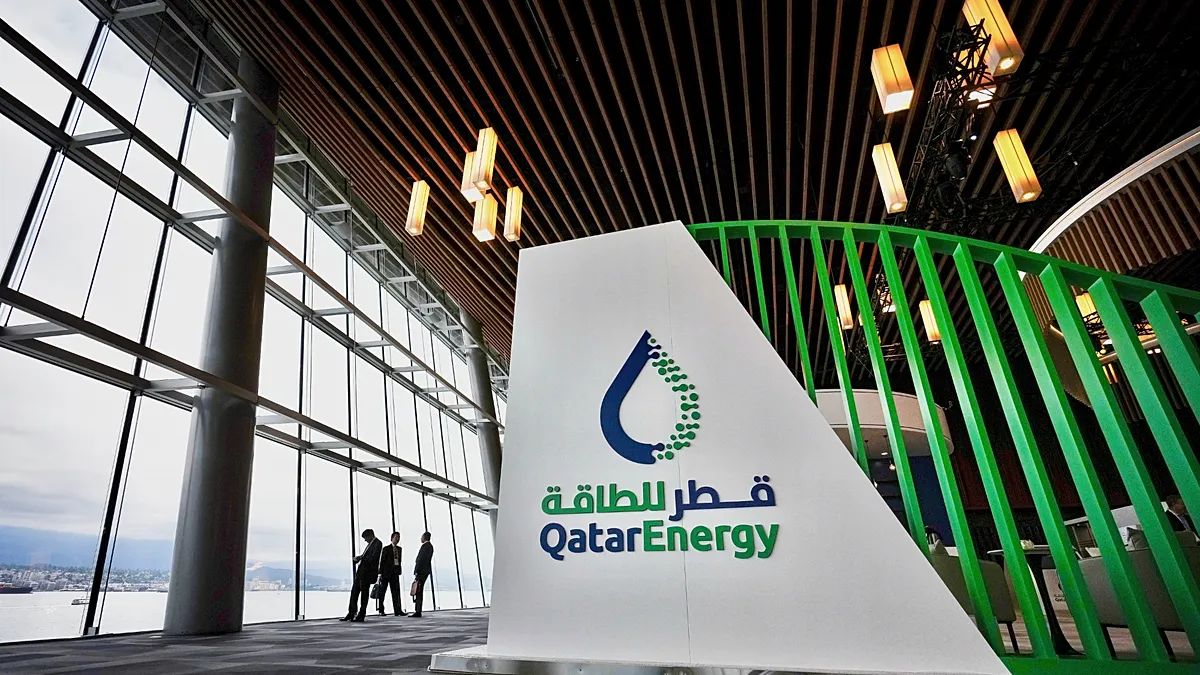
Table of Contents
Qatar’s LNG Supply Freeze Stretches Past November, Deepening Global Energy Strain
Poinews.com – The Strait of Hormuz blockade has pushed QatarEnergy’s force majeure declarations deep into autumn, with the state-owned gas giant now telling European and Asian buyers that liquefied natural gas shipments will remain suspended at least through early November. The prolonged halt in one of the world’s most critical maritime chokepoints continues to reshape trade flows, pricing, and energy security calculations across three continents.
Edison’s Contract Takes a 29-Cargo Hit
Italian utility Edison confirmed that QatarEnergy will be unable to deliver five additional LNG cargoes originally scheduled between late September and early November. The announcement pushes the total number of missed deliveries under the Edison agreement since April to 29, a figure representing roughly 3.8 billion cubic metres of natural gas. Edison stated that it had already sourced replacement volumes for 21 of those cargoes — approximately 2 billion cubic metres — and maintained that it could continue honouring its own downstream supply obligations to Italian customers.
The Italian episode is not isolated. Buyers in Pakistan have been informed that cancellations will persist into October, while Bangladesh faces continued supply shortfalls beyond September. Additional European purchasers have begun receiving comparable force majeure notices, signalling that the disruption’s reach is broadening rather than narrowing.
A Month-by-Month Renewal With No End Date
QatarEnergy first invoked force majeure in March, and has since renewed the declaration on a monthly basis as the Hormuz closure has outlasted every initial buyer forecast. The company has not provided a firm timeline for resuming normal export operations.
“Absent any political resolution or one of the main stakeholders blinking first, we are still likely to be there for quite some time,” said Anne-Sophie Corbeau, a global research scholar at Columbia University’s Center on Global Energy Policy.
Corbeau explained that the month-by-month extensions reflect the absence of any reliable date on which normal export corridors could reopen. QatarEnergy did not respond to requests for comment on the latest extension.
The Scale of the Supply Shock
The disruption has effectively removed the bulk of Qatari LNG from global trade. ICIS data show that Qatar shipped just 18 cargoes during the first six months of the current conflict, compared with 509 over the same window a year earlier. Analysts estimate the lost sales at approximately $24 billion (€20.7 billion) in gas revenue.
Before the Iran war, the Strait of Hormuz carried roughly one-fifth of all global LNG trade. While some oil tankers have continued transiting the waterway, LNG carriers present a far more constrained picture: they are fewer in number, more specialised in design, and considerably harder to substitute. This leaves Qatar with very few practical alternatives for moving its gas to market.
Partial Substitution, Persistent Shortfall
Other exporters have stepped in to fill part of the gap. Corbeau noted increased LNG flows from the United States and Canada, including from facilities that only began production within the past year. Output gains have also been recorded in Nigeria and Malaysia. Nevertheless, replacement volumes have not closed the entire shortfall created by the Qatari and Emirati losses.
In response, some Asian markets have trimmed consumption or pivoted to alternative fuels. Europe, meanwhile, has drawn more heavily on gas stored in underground and above-ground facilities rather than competing aggressively for premium-priced spot cargoes.
“Available cargoes are going to the buyers bidding for them,” Corbeau observed, adding that certain Southeast Asian purchasers had remained active in the market despite elevated LNG prices.
Uneven Regional Exposure
The knock-on effects are not distributed evenly. EU LNG imports between April and August ran below year-earlier levels. Chinese arrivals also declined, though the magnitude of the drop fluctuated month to month. Corbeau identified the countries most at risk as those with heavy structural dependence on Qatari or Emirati LNG that have not locked in sufficient replacement volumes. Importers reliant on short-term, spot-market purchases face the sharpest exposure.
Corbeau singled out Pakistan, Bangladesh, and India as particularly vulnerable. Japan, by contrast, is better insulated: it purchases relatively little LNG from Qatar and maintains a broader portfolio of long-term contracts indexed to oil or US gas prices. China has so far absorbed the loss of a substantial volume of Qatari supply, while Europe has coped partly by accelerating storage withdrawals — a strategy that leaves national stockpiles thinner heading into winter.
Recovery Timelines and Future Capacity
Corbeau cautioned that the sustained absence of Qatari and Emirati LNG could push global trade volumes lower in 2026 even as output expands elsewhere. New export terminals under construction in the United States, Canada, Australia, and Nigeria are expected to add incremental non-Qatari supply over time. However, she estimated it could take until 2028 for the global market to return to the more comfortable supply-demand equilibrium that had been anticipated by mid-2026.
On the production side, QatarEnergy has indicated it expects to bring its 12 undamaged LNG trains back online within roughly two months once it is satisfied the strait is secure. Repairs to two additional units damaged in attacks on the Ras Laffan complex, however, are projected to require between three and five years.
A brief resumption of limited LNG movements followed a June memorandum between the United States and Iran, but the recovery proved short-lived as renewed hostilities again elevated shipping risks.
“The brief restart showed that Qatar could restore exports relatively quickly,” Corbeau noted, underscoring that the bottleneck is geopolitical rather than technical.
For energy-importing nations, the extended force majeure period compounds existing pressures: thinner storage inventories, elevated spot prices, and the absence of a clear diplomatic off-ramp all point toward a prolonged period of market tightness well into the coming year.
Related Reading
Frequently Asked Questions
What is QatarEnergy extends LNG cancellations into November?
QatarEnergy extends LNG cancellations into November is the main topic of this guide. The article explains the context, practical details, and next steps readers should understand.
Why does QatarEnergy extends LNG cancellations into November matter?
QatarEnergy extends LNG cancellations into November matters because readers are looking for a useful answer, not just a short summary. Good content should match search intent and help them decide what to do next.