EU expected to lobby member states to give Patriot interceptors to Ukraine
European capitals that still command meaningful reserves of Patriot interceptor missiles are set to come under direct pressure from the European Commission to

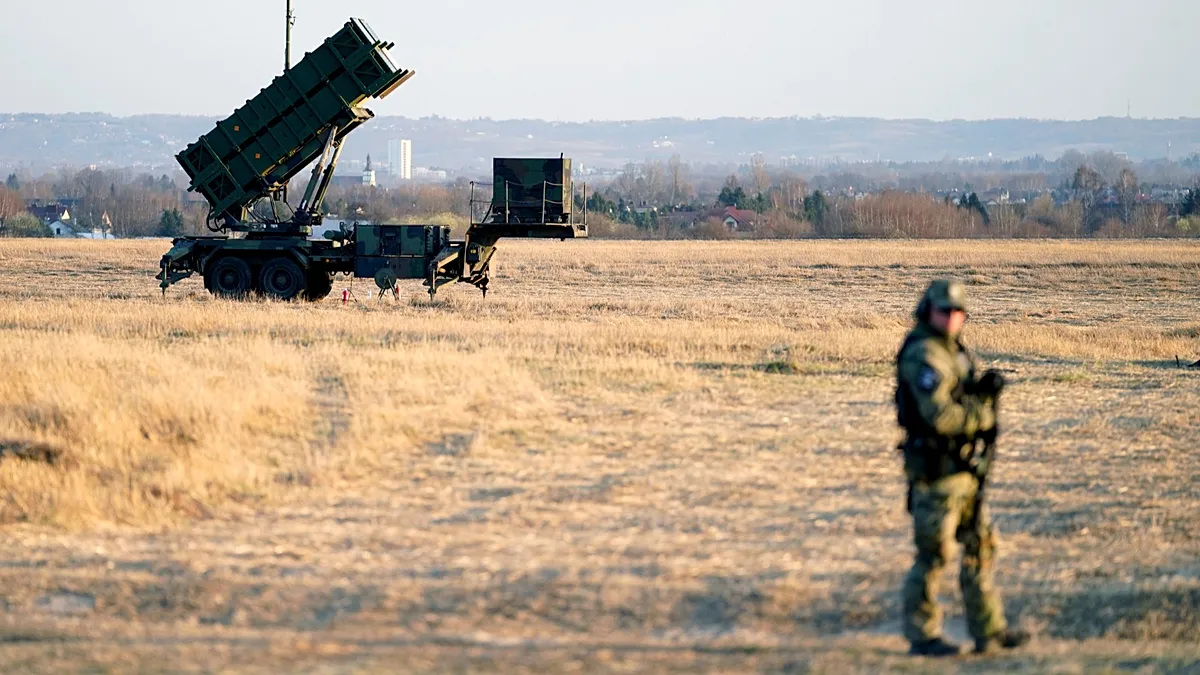
Table of Contents
Brussels Pushes Allies to Release Patriot Missiles as Ukraine Faces a Winter Air-Defence Crisis
Poinews.com – European capitals that still command meaningful reserves of Patriot interceptor missiles are set to come under direct pressure from the European Commission to hand over portions of those stocks to Kyiv. The urgency behind the push is stark: Ukrainian leadership has warned that incoming interceptor deliveries have slowed at precisely the moment Russian missile barrages have intensified, leaving the country exposed heading into what promises to be another brutal winter of full-scale invasion.
The pressure is expected to crystallise at a defence gathering taking place Tuesday in County Wicklow, Ireland, where senior officials from across the continent will convene. While the session is informal and no formal conclusions are anticipated, the atmosphere around the table is anything but relaxed. Three EU diplomats, speaking on condition of anonymity given the diplomatic sensitivity, described Ukraine’s interceptor shortfall as a “big issue” with no obvious quick fix.
Zelenskyy’s Winter Warning
President Volodymyr Zelenskyy made his case explicit in late August, noting that Patriot interceptor deliveries had dropped off even as the cadence of Russian strikes on Ukrainian cities climbed. He put a figure on the gap: roughly 300 interceptors are needed to shield the country through the coming cold months. That number dwarfs what most individual European arsenals can spare without gutting their own layered air-defence architecture.
The complication is that Washington itself has been drawing heavily on its Patriot reserves to support operations tied to the war with Iran. The result is a shrinking global pool of interceptors available to replenish allies at exactly the moment Kyiv’s requirement peaks. Every round the United States expends narrows the margin Europe might otherwise tap.
Madrid’s Pledge and Athens’s Resistance
Spain and Greece sit at the centre of the diplomatic friction. Prime Minister Pedro Sánchez pledged earlier this year that Madrid would donate five Patriot missiles to Ukraine amid the shortage. Yet the broader question of how much more Spain will release remains open, and Brussels is expected to press the issue in Wicklow.
Greece, by contrast, has drawn a firmer line. Prime Minister Kyriakos Mitsotakis stated publicly that Athens has “resisted” repeated calls to transfer any of its six Patriot batteries to the war-torn neighbour. His justification is straightforward: those batteries are deemed indispensable for defending Greek airspace itself. Recent months of heightened tension with Turkey have only reinforced that calculus in Athens.
“What this will look like, I am not sure,” one EU diplomat told reporters, underscoring that the Tuesday session is informal and unlikely to yield any binding commitments.
The same diplomat, speaking anonymously, noted that the question of Madrid and Athens guarding their interceptor stocks closely is nothing new. What has changed, however, is the tempo. With Zelenskyy voicing ever-louder requests and the Patriot system becoming what one official called the “debate of the summer,” the issue has moved from the margins of defence planning to its centre.
Looking Beyond Europe
The European External Action Service, the EU’s diplomatic arm, is currently in dialogue with Japan and South Korea, seeking to persuade both Asian capitals to share portions of their interceptor inventories with Kyiv. Diplomats are nonetheless cautious. Potential friction with China is expected to constrain how generously Tokyo and Seoul will part with hardware that also underpins their own deterrence postures.
Greece’s reluctance is compounded by its own bilateral calculus. Rising tensions with Ankara in recent months make any drawdown of Greek air-defence assets a politically fraught decision in Athens, regardless of what Brussels might prefer.
Moldova’s Drone Incursions Sharpen the Debate
The Wicklow talks arrive against a backdrop of fresh hybrid-threat incidents in Europe’s eastern neighbourhood. Moldova, an EU candidate country, was shaken in late August when five unmanned aerial vehicles crossed into its airspace on 27 August. President Maia Sandu issued a defiant public statement in response, underscoring how quickly the threat environment can shift for states on the continent’s periphery. The effectiveness of Europe’s own layered defences, particularly in the wake of such incursions, is expected to feature prominently in Tuesday’s discussions.
The Ratcliffe Moscow Trip and Baltic Calculations
Media reports have also revealed that CIA director John Ratcliffe undertook a secret trip to Moscow. The visit reportedly centred on delivering a warning to the Kremlin against any form of aggression directed at the Baltic states. In its aftermath, regional leaders insisted their threat assessments regarding a possible Russian strike on Latvia, Estonia, or Lithuania remain unchanged.
Former Estonian president Toomas Hendrik Ilves went further, expressing scepticism that Ratcliffe was dispatched primarily to warn Russia against escalation. He argued that Washington’s attention remains more firmly fixed on Iran, a reading that complicates the broader European security calculus.
Filling the Gap: Funding and Procurement
On the financial side, one European Commission official disclosed that Kyiv is weighing whether to channel the next tranche of its €90 billion support loan toward purchasing anti-ballistic systems. The options under consideration include additional Patriot batteries or the Franco-Italian SAMP/T NG system, a next-generation surface-to-air missile programme.
Separately, the EU executive recently approved a €6.1 billion defence procurement package designed to supply Ukraine with air and missile defence systems, missiles, ammunition, and radar assets. That instrument, while substantial, addresses only part of the interceptor shortfall and does not eliminate the need for existing European stocks to be released.
The net effect is a continent grappling with a structural dilemma: how to reinforce a neighbour’s air shield without hollowing out its own, at a moment when American strategic bandwidth is consumed elsewhere and the winter months promise sustained pressure on Ukrainian infrastructure. Tuesday’s Wicklow meeting will not resolve that dilemma, but it will define the terms on which the debate continues.
Related Reading
Frequently Asked Questions
What is EU expected to lobby member states?
EU expected to lobby member states is the main topic of this guide. The article explains the context, practical details, and next steps readers should understand.
Why does EU expected to lobby member states matter?
EU expected to lobby member states matters because readers are looking for a useful answer, not just a short summary. Good content should match search intent and help them decide what to do next.