Nawrocki invites four presidents to informal summit amid dispute with Zelenskyy
Nawrocki Invites Four Presidents to Informal Summit Amid Zelenskyy Dispute Nawrocki invites four presidents to informal - Polish President Karol Nawrocki has

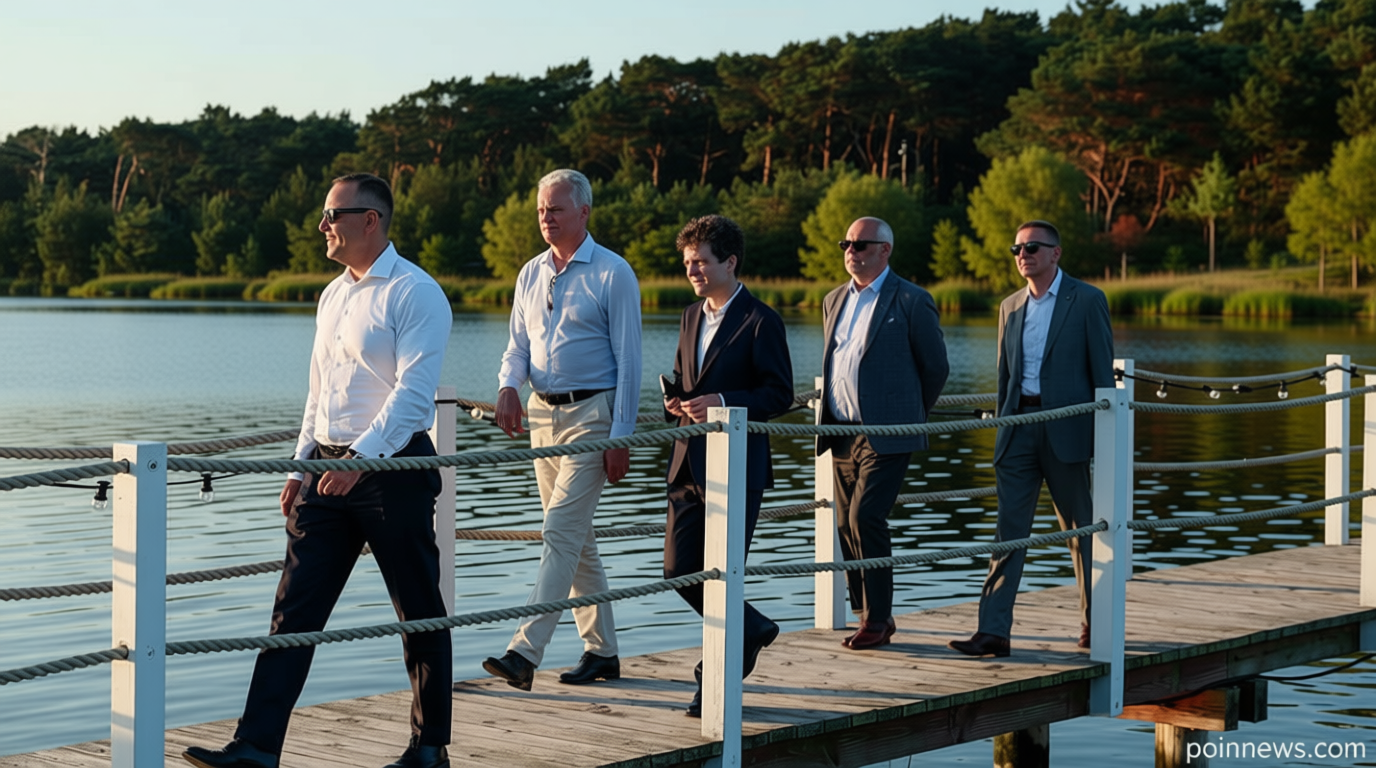
Nawrocki Invites Four Presidents to Informal Summit Amid Zelenskyy Dispute
Poinews.com – Polish President Karol Nawrocki has extended an invitation to leaders from Poland, Lithuania, Latvia, Estonia, and Romania for an informal summit at Jurata’s presidential residence, a gathering that underscores the group’s commitment to addressing critical regional challenges. The focus keyword—Nawrocki invites four presidents to informal summit—anchors the event as a key moment in strengthening transatlantic unity and consolidating efforts to bolster security in the Baltic and Black Sea regions. This summit, set against the backdrop of a recent disagreement with Ukrainian President Volodymyr Zelenskyy, aims to foster dialogue and alignment on shared priorities, including NATO cohesion and infrastructure development.
Strategic Goals and Regional Collaboration
The informal summit is expected to serve as a platform for in-depth discussions on enhancing defense capabilities and ensuring the stability of Eastern Europe. With the looming NATO summit in Ankara, Turkey, participants will seek to harmonize strategies to counter Russian influence and secure collective security. Among the topics to be explored are the continued development of the Three Seas Infrastructure project, which aims to connect the Baltic and Adriatic nations through energy and transport networks, and the Bucharest Nine initiative, a group of nine European Union member states dedicated to strengthening political and economic ties in the Eastern Partnership.
Leaders from the participating countries are likely to emphasize the importance of maintaining strong transatlantic partnerships, particularly in light of the ongoing war in Ukraine. The summit also provides an opportunity to address the delicate balance between historical grievances and contemporary cooperation. While the focus keyword Nawrocki invites four presidents to informal summit encapsulates the core event, the discussions will span a broader range of issues, from energy security to cybersecurity, reflecting the diverse interests of the attendees.
Historical Dispute Background
The summit’s discussions are further complicated by the historical dispute between Poland and Ukraine, which centers on the legacy of the Organization of Ukrainian Nationalists (OUN) and Ukrainian Insurgent Army (UPA) during World War II. These groups are associated with the ethnic cleansing of Polish populations in Volhynia and Eastern Lesser Poland, events that have left a lasting impact on Polish-Ukrainian relations. The recent naming of a military unit by Zelenskyy as “Heroes of the UPA” has reignited debates over the historical narrative, prompting Poland to express concerns about the potential revision of the UPA’s role in the conflict.
As the summit proceeds, the historical issue will be a focal point, with Nawrocki and his counterparts aiming to bridge differences while reinforcing their shared commitment to a unified Eastern Europe. The tension highlights the challenge of reconciling past conflicts with present alliances, particularly as the war in Ukraine continues to shape geopolitical dynamics. This focus keyword Nawrocki invites four presidents to informal summit will be central to the dialogue, ensuring that the historical dispute is addressed in a manner that strengthens regional solidarity.
“The informal summit offers a unique chance to engage in candid discussions about our common challenges, including the historical legacy of the UPA and its implications for current cooperation,” noted Latvian President Egils Levits. He emphasized the need for a balanced approach that acknowledges both the contributions of Ukrainian forces and the historical suffering of Polish communities. “While the past is important, our priority must remain the security and prosperity of our nations today,” Levits added, underscoring the summit’s practical objectives.
Tensions with Ukraine and Diplomatic Efforts
The dispute with Zelenskyy has been a point of contention for Poland, with leaders accusing Ukraine of downplaying the UPA’s role in wartime atrocities. In response to Zelenskyy’s decision, Nawrocki revoked the Order of the White Eagle, Poland’s highest honor, from the Ukrainian president. This gesture was seen as a symbolic move to highlight the perceived historical bias. However, Zelenskyy has since returned the decoration to Poland via courier, indicating a willingness to engage in diplomatic reconciliation.
Despite the gesture, the underlying tensions persist, reflecting broader disagreements over the interpretation of historical events. The informal summit provides a setting for these leaders to address the issue directly, with the goal of finding a mutually acceptable resolution. By bringing together four presidents, the event aims to foster a collaborative environment where historical narratives can be discussed alongside current geopolitical priorities, ensuring that the focus keyword Nawrocki invites four presidents to informal summit remains relevant throughout the proceedings.
As the summit concludes, its outcomes will likely influence future interactions between the participating nations and their partners. The discussions are expected to lay the groundwork for stronger regional alliances and coordinated responses to emerging threats. With the Three Seas Infrastructure project and the Bucharest Nine initiative as key pillars, the focus keyword Nawrocki invites four presidents to informal summit will serve as a reminder of the collective efforts to secure Europe’s future. This event marks a critical step in maintaining unity amid complex historical and political challenges.