SpaceX lands investment-grade credit ratings as shares tumble from record high
SpaceX Gains Investment-Grade Credit Ratings Amid Stock Drop SpaceX lands investment grade credit ratings - Elon Musk’s aerospace and AI venture, SpaceX, has

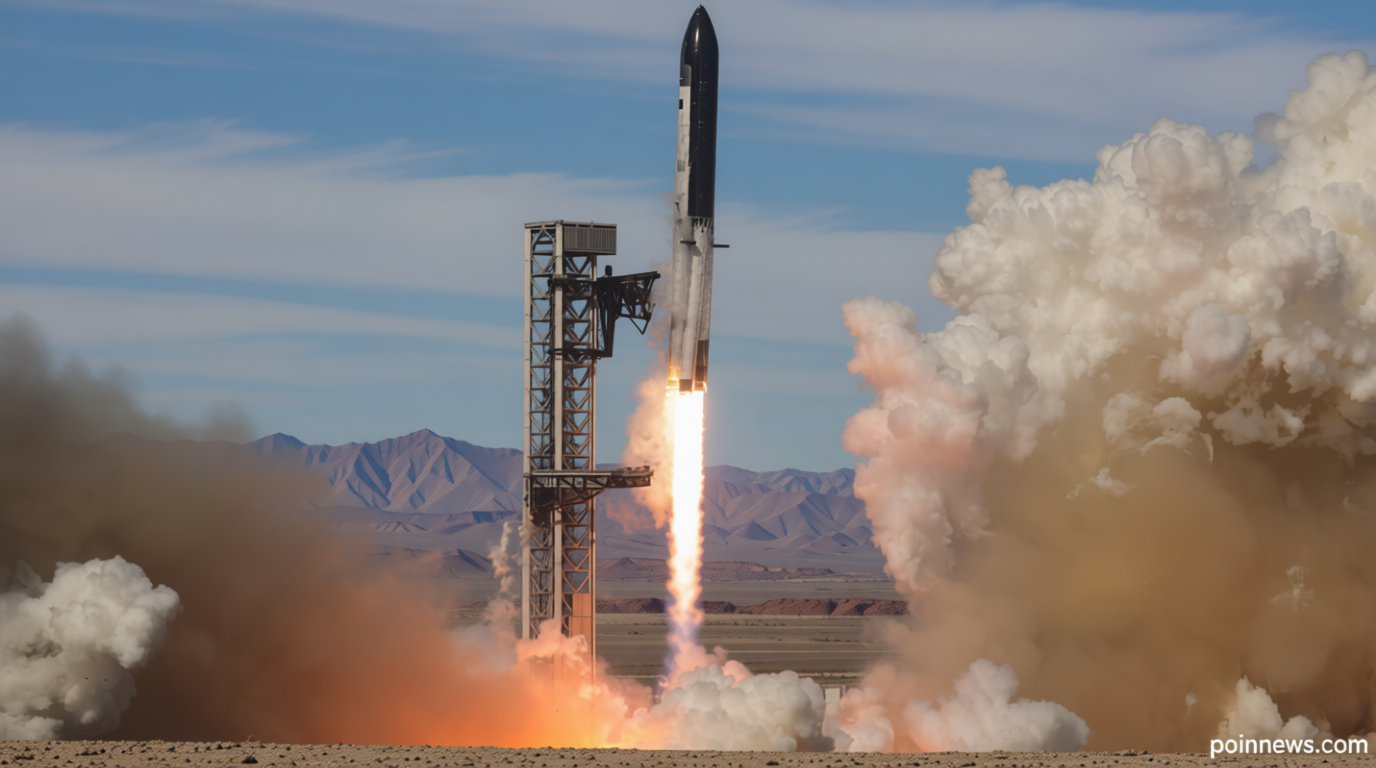
SpaceX Gains Investment-Grade Credit Ratings Amid Stock Drop
Poinews.com – Elon Musk’s aerospace and AI venture, SpaceX, has secured investment-grade credit ratings from Moody’s, Fitch, and S&P Global, marking a pivotal shift in its financial standing. This achievement, which highlights the company’s growing stability and profitability, comes as its shares have fallen from a record high, signaling a mixed reaction from investors. The ratings, announced just days after SpaceX’s groundbreaking IPO, which raised a staggering $85.7 billion, provide a clearer financial outlook for the firm’s ambitious projects and long-term strategy.
The Credit Rating Breakdown
Moody’s assigned SpaceX a Baa1 long-term issuer rating with a stable outlook, citing its “exceptional franchise strength” and dominant position in the orbital launch market. The agency emphasized that the Starlink satellite broadband network, now SpaceX’s primary revenue stream, has bolstered its cash flow and financial resilience. However, the rating remains slightly below that of Tesla, which was given a Baa3 rating, prompting Musk to quip:
“Tesla’s credit rating is ridiculously low to be honest.”
Fitch and S&P Global followed suit, issuing their own ratings—BBB+ and BBB, respectively—with similar stable outlooks. These assessments reflect a growing confidence in SpaceX’s ability to sustain operations and generate returns despite its high-risk ventures.
Despite the positive ratings, analysts have pointed out several factors that could impact SpaceX’s financial trajectory. The company’s aggressive expansion into AI technology and space exploration requires substantial capital investment, often outpacing its immediate cash flow. Additionally, the reliance on the Starship V3 vehicle for future missions introduces uncertainty, as technical delays or failures could disrupt revenue projections. Governance concerns also linger, with SpaceX’s concentrated control structure under Musk’s leadership raising questions about corporate oversight and long-term stability.
Ratings and Market Dynamics
While the credit ratings represent a milestone for SpaceX, they have not stemmed the recent decline in its stock price. Shares closed at $185, a drop of over 18% from their peak of $225.6, which briefly propelled the company’s valuation beyond $3 trillion. The sharp fall has been driven by investor skepticism over whether the soaring valuation was justified, especially in light of the company’s expansion into high-cost sectors like AI and space colonization. This adjustment has pushed SpaceX back to sixth place in the global market capitalization rankings, though it remains a top-tier public firm just weeks into its IPO.
Earlier in the week, SpaceX had briefly surpassed Amazon to claim fifth spot in the rankings, and its intraday high even eclipsed Microsoft’s valuation. These moments of market dominance underscored the hype surrounding the company, but the recent dip has tempered some of that enthusiasm. The new investment-grade credit ratings, however, signal a broader acknowledgment of SpaceX’s financial maturity. Previously seen as a privately funded rocket company, it is now being viewed as a potential cornerstone of the global aerospace and technology sectors, with its debt structure more attractive to institutional investors.
The credit rating upgrade comes as SpaceX continues to scale its operations, with plans for increased satellite launches, Mars missions, and advanced AI projects. Analysts suggest that the ratings could serve as a catalyst for long-term financing, allowing the company to tap into new markets and partnerships. Yet, the stock’s decline highlights the cautious nature of the market, which is still evaluating the risks associated with SpaceX’s rapid growth and Musk’s visionary ambitions. Investors remain divided, with some viewing the ratings as a sign of confidence and others as a testament to the company’s evolving complexity.