Trade turnover in Eurasian Economic Union exceeds €80 billion last year
Trade Turnover in Eurasian Economic Union Exceeds €80 Billion Last Year Trade turnover in Eurasian Economic Union - The Eurasian Economic Union (EAEU) is

Trade Turnover in Eurasian Economic Union Exceeds €80 Billion Last Year
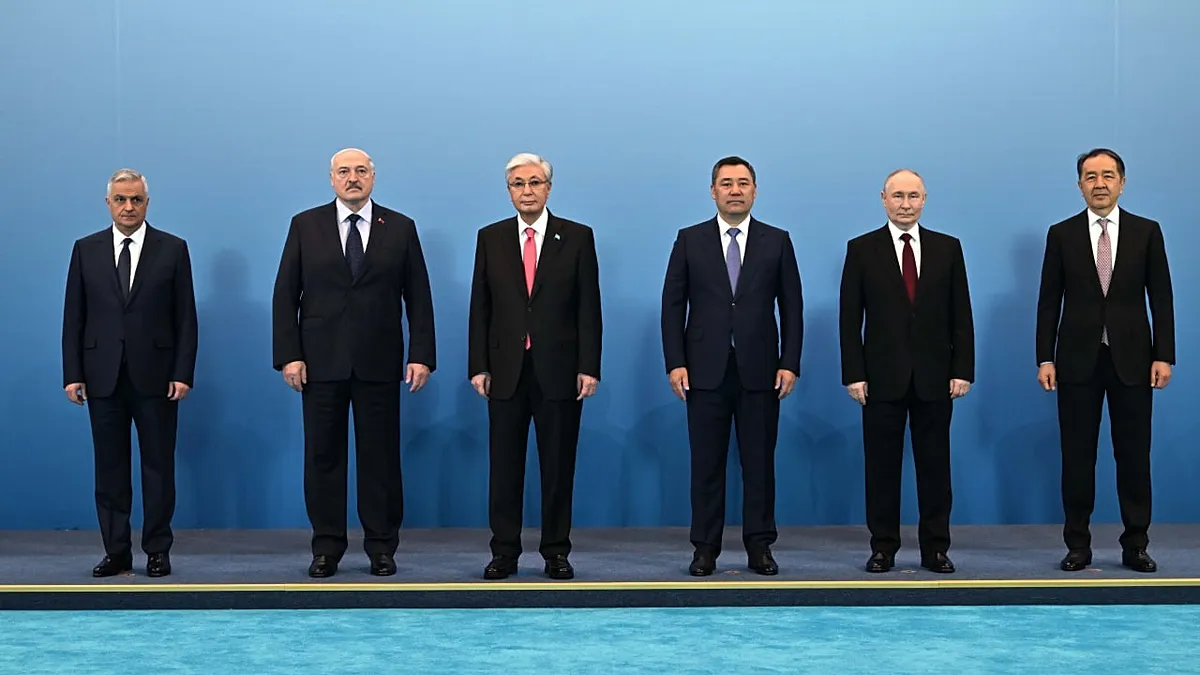
Poinews.com – The Eurasian Economic Union (EAEU) is progressing toward enhanced economic integration, driven by advancements in digitisation and artificial intelligence (AI). Leaders from the bloc convened in Astana for a two-day summit, during which they prioritised discussions on creating a unified digital environment. This initiative aims to foster a seamless market across the EAEU’s vast economic territory, which spans over 20 million square kilometres. The focus on technology-driven cooperation reflects the bloc’s commitment to reducing fragmentation and strengthening ties among its five members: Russia, Belarus, Kazakhstan, Kyrgyzstan, and Armenia.
A Digital Future for the EAEU
At the high-level summit, delegations explored strategies to develop shared digital tools and AI systems. These innovations are intended to streamline operations and enhance collaboration within the EAEU. Kazakhstan’s President, Kassym-Jomart Tokayev, highlighted the role of digitisation in boosting trade dynamics. He noted that trade turnover between EAEU members could rise by approximately 6% this year, surpassing €85 billion. This projection builds on last year’s figure of €80 billion, marking a significant milestone in the bloc’s economic expansion.
“Digitisation is accelerating progress across the EAEU, and we are confident that these efforts will solidify our collective competitiveness,” Tokayev stated.
Trade growth within the union has been remarkable, with turnover more than doubling in the past year. Meanwhile, trade with external partners increased by 72%, underscoring the bloc’s growing influence on the global stage. Deputy Minister of Artificial Intelligence and Digital Development Dmitry Mun explained that AI is being used to simplify legislation and improve regulatory accessibility for citizens and businesses. “Our AI legal assistants are designed to cut bureaucracy and make systems more user-friendly,” he said.
Shared Goals and Strategic Partnerships
The EAEU’s vision includes harmonising trade practices and creating a single transit system. Over 90% of settlements within the bloc are now processed in national currencies, a shift that promotes financial autonomy. Additionally, member states are exploring common principles for responsible AI use, as well as joint computing resources and model development. These steps are expected to further unify the bloc’s digital infrastructure and foster long-term economic synergy.
Russia, a central player in the EAEU, proposed a high-level AI summit for next year. President Vladimir Putin outlined the plan, aiming to deepen cooperation on domestic AI models and integrate the country’s IT and energy sectors. “This initiative will strengthen our technological foundations and align our priorities with global standards,” Putin remarked.
Infrastructure and Logistics Ambitions
On the ground, the EAEU is testing pilot projects to implement these digital strategies. In Kazakhstan, government agencies and startups have developed AI-powered digital assistants to aid citizens in navigating legal and regulatory processes. These tools are part of a broader effort to modernise administrative systems and improve efficiency. Mun added that such projects are also being adapted to streamline procedures across member states.
The bloc’s focus on logistics infrastructure is equally critical. Kazakhstan’s Minister of Trade and Integration, Arman Shakkaliyev, emphasised the country’s goal of establishing a fully integrated logistics ecosystem. This ecosystem will leverage major transport routes, including the Middle Corridor and the North–South Corridor, to consolidate export flows. The objective is to position Kazakhstan as a pivotal regional hub by 2030, with cargo volumes reaching 10 million tonnes annually.
Officials revealed that approximately 85% of goods moving from China to Europe traverse the Middle Corridor. This route is being supplemented by the Digital Transport Corridor, which incorporates AI to optimise supply chain management. Together, these measures are projected to increase non-commodity exports by 30% over the next two years, highlighting the strategic importance of digital transformation in trade efficiency.
Bilateral Cooperation and Investment
The summit was preceded by President Putin’s state visit to Kazakhstan, during which the two nations signed seven key pillars of bilateral agreements. These cover energy, transport, finance, education, and industrial development, reflecting a comprehensive partnership. Russia remains Kazakhstan’s largest investor, having already committed nearly €25 billion. Plans are in place to expand this investment, with a major project under way: the construction of Kazakhstan’s first nuclear power plant, valued at around €14 billion.
“This power plant will meet 20% of Kazakhstan’s electricity needs and align with international financing norms,” Putin said.
The nuclear facility not only supports Kazakhstan’s energy demands but also enhances Russian industrial capacity through equipment procurement and maintenance contracts. Such projects exemplify the mutual benefits of the EAEU’s integration efforts. The collaboration also reinforces the bloc’s role in global trade, with China serving as its primary partner. China accounts for roughly one-third of the EAEU’s external trade, demonstrating the bloc’s reliance on Asian markets.
Global Partnerships and Economic Outlook
Beyond bilateral ties, the EAEU has already established agreements with several countries, including Serbia, Vietnam, the UAE, Mongolia, and Indonesia. These partnerships extend the bloc’s economic reach and provide access to new markets. The EAEU’s existing free trade zone is complemented by its growing network of international trade relations, which are crucial for sustaining growth.
Looking ahead, the EAEU’s economic leaders project GDP growth of approximately 2.5% for the 2026–2027 period. This growth is anticipated to be driven by technological innovation, infrastructure development, and expanded trade routes. Kazakhstan’s ongoing railway modernisation and infrastructure projects are key to achieving these targets. The country’s efforts to consolidate transport corridors will not only facilitate trade but also enhance its strategic importance in regional logistics.
The EAEU’s strategic roadmap includes not only economic integration but also the promotion of digital tools and AI systems. These technologies are expected to reduce administrative hurdles and improve market efficiency. As the bloc enters its 12th year, its unified approach to trade and digital development is gaining momentum. The combination of digitisation, AI, and infrastructure upgrades positions the EAEU as a model for regional cooperation in the 21st century.
With continued investment in technology and logistics, the EAEU aims to solidify its economic foundation. The bloc’s focus on creating a single integrated market ensures that member states can capitalise on shared resources and collaborative opportunities. As the union refines its digital strategies and expands its global partnerships, it is poised to play an increasingly influential role in international trade and economic development.