Solar eclipse 2026 in pictures: The best shots from around Europe
The Solar eclipse 2026 in pictures collection showcases one of the most significant astronomical events witnessed across mainland Europe in recent decades

Europe Captures Spectacular Solar Eclipse in Stunning Photographs
A Rare Celestial Phenomenon Across the Continent
Poinews.com – The Solar eclipse 2026 in pictures collection showcases one of the most significant astronomical events witnessed across mainland Europe in recent decades. Yesterday evening, millions of people observed a remarkable celestial occurrence as the moon passed directly between Earth and the sun, creating a full solar eclipse. This extraordinary alignment marked the first total eclipse visible across much of Europe in twenty years, drawing enthusiastic crowds to beaches, parks, and mountain peaks throughout the continent.
The historical significance of this moment cannot be overstated. For many European nations, such an occurrence will not happen again for decades to come. France must wait until 2081 for the next total eclipse, while the United Kingdom will not see another until 2090. Germany faces an even longer wait, with the next total eclipse arriving sometime in the next century. Spain, however, enjoys more favorable timing and will experience its own total eclipse as early as next year.
Observations From Northern Europe
Scandinavians and northern Europeans were treated to exceptional views of this celestial event. In Denmark, the Mariager Fjord provided a stunning backdrop for eclipse photography, with photographers capturing the moon’s gradual approach toward the sun. Meanwhile, visitors to St. Petersburg, Russia, gathered along the Gulf of Finland shoreline to watch the moon slowly obscure the sun’s brilliant disk. The celestial bodies even appeared to set together over the water in this northern Russian city, creating a memorable scene for onlookers.
Switzerland offered dramatic mountain-top perspectives of the eclipse. From the summit of the Niesen mountain in the Bernese Oberland, observers captured the moon passing over the Gantrisch peak during the partial eclipse phase. The alpine setting added an extra dimension to the astronomical spectacle, with snow-capped peaks framing the celestial event beautifully.
Central and Western European Sightings
London became a major hub of eclipse watchers, with multiple locations reporting substantial crowds throughout the day. At Northala Fields, people gathered to observe the partial eclipse unfold. The Houses of Parliament provided an iconic backdrop for eclipse photography, while Primrose Hill attracted families and astronomy enthusiasts alike. Many visitors brought special protective glasses to safely observe the moon’s passage across the sun.
In England, Crosby beach in Liverpool drew visitors wearing special protective eyewear. The moon covered more than ninety percent of the sun’s disk during this viewing, creating a dramatic darkening effect. Meanwhile, Berlin’s Tempelhof airport—now a public park—hosted couples and families enjoying the celestial show. One particularly romantic moment was captured near the famous Molecule Man sculpture, where the moon partially covered the sun.
Southern European Views
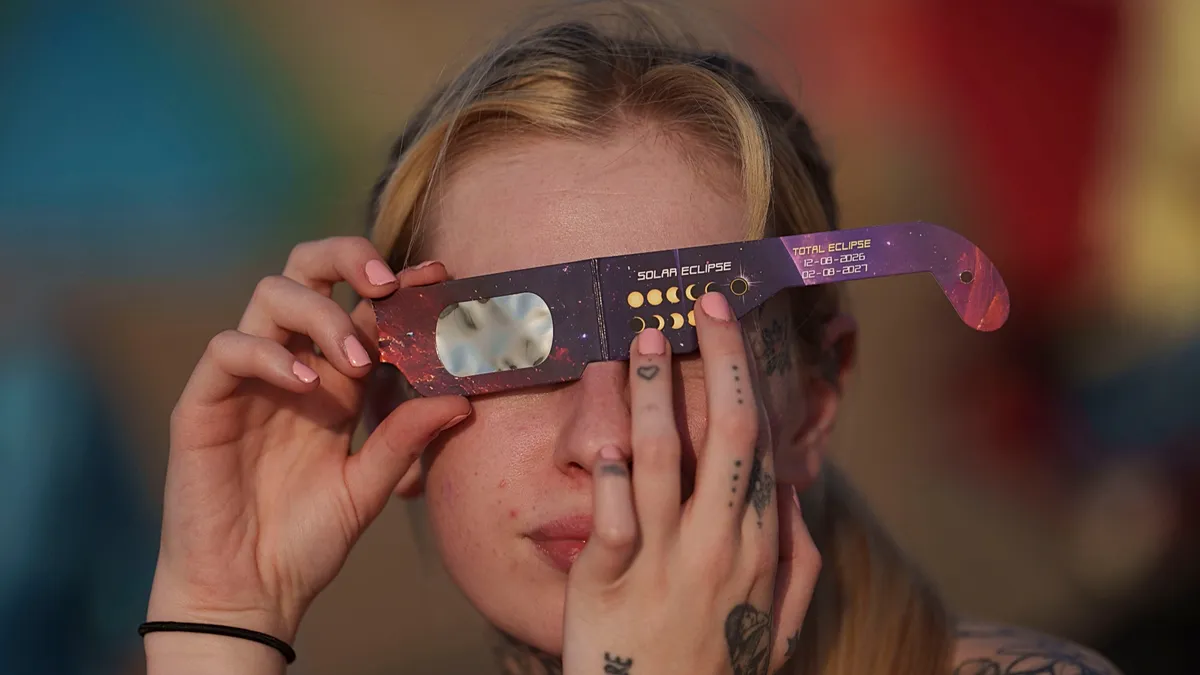
Spain emerged as one of the most photographed locations during the event, with numerous images featured in the Solar eclipse 2026 in pictures compilation. Berlanga de Duero in central Spain offered clear views of the total eclipse, with multiple photographers capturing different phases of the phenomenon. At Puerto de Sagunto beach near Valencia, a beachgoer wearing eclipse glasses looked skyward during the beginning stages of the event.
Italy’s northern regions also featured prominently in eclipse coverage. In Vidigulfo, near Pavia, the eclipse was photographed against the backdrop of a Virgin Maria church, creating a striking juxtaposition of celestial and religious imagery. In Palencia, Spain, the moon completely covered the sun during the total eclipse phase, offering one of the most dramatic shots of the day.
Memorable Moments and Practical Information
Across the continent, people of all ages participated in this shared experience. The eclipse progressed through various phases, from partial coverage to total obscuration, depending on each location’s position within the eclipse path. As the moon moved out of alignment with the sun, observers captured the gradual return of daylight.
For those planning to witness future celestial events, understanding the timing and viewing conditions is essential. The Solar eclipse 2026 in pictures collection demonstrates how different locations offered unique perspectives on the same phenomenon. Whether you were in Scandinavia, central Europe, or the Mediterranean, the experience was truly unforgettable.
The eclipse served as a reminder of humanity’s enduring fascination with the cosmos and our place within it. Many European nations will not see another total eclipse for decades, making this event particularly special for astronomy enthusiasts.
Frequently Asked Questions
When was the last total solar eclipse visible across Europe?
The 2026 event marked the first total eclipse visible across much of Europe in twenty years, making it a significant astronomical occurrence for the continent.
When will the next total solar eclipse be visible in the UK?
The United Kingdom will not see another total eclipse until 2090, making the 2026 event particularly noteworthy for British skywatchers.
What is the best way to view a solar eclipse safely?
Many visitors brought special protective glasses to safely observe the moon’s passage across the sun. These eclipse glasses filter out harmful ultraviolet and infrared radiation, allowing safe viewing of the celestial event.
Which European countries will experience total eclipses in the near future?
Spain will experience its own total eclipse as early as next year, while France must wait until 2081 and the UK until 2090 for their next total eclipses.