Finland joins France’s forward nuclear deterrence initiative
Finland has moved to deepen its security partnership with France by joining a French-led initiative focused on forward nuclear deterrence in Europe. The

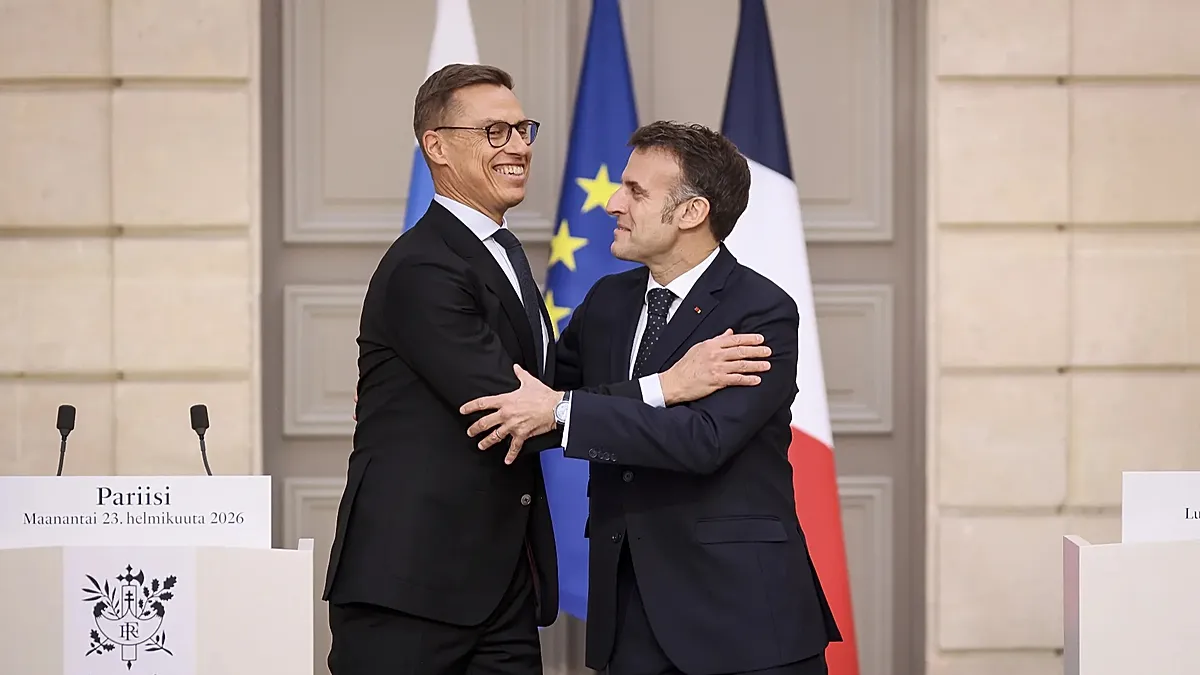
Table of Contents
Finland strengthens defence ties with France through nuclear deterrence framework
Poinews.com – Finland has moved to deepen its security partnership with France by joining a French-led initiative focused on forward nuclear deterrence in Europe. The decision comes as Helsinki continues to place its defence policy firmly within the broader NATO and European Union framework while seeking closer cooperation with key European allies.
France and Finland described the agreement as a significant development for both European security and their bilateral relationship. The arrangement is intended to create a more structured form of cooperation around deterrence, strategic communication and the management of possible escalation before a crisis reaches the nuclear level.
“Important step for European security, and for bilateral cooperation.”
The joint position of the two countries said the initiative would reinforce their partnership and create opportunities for strategic signalling. It also pointed to the ability to manage escalation below the nuclear threshold, an area that has become increasingly important in European defence planning.
A new Finnish role in a wider European framework
Finnish President Alexander Stubb underlined that joining the French initiative does not alter Finland’s fundamental security commitments. In a message posted on X, he said Finland’s first priority remained acting through NATO and the EU.
“Finland does not intend to station nuclear weapons on its territory in peacetime.”
Stubb also stressed that French-led cooperation would neither replace NATO’s deterrence arrangements nor duplicate them. Finland is already covered by NATO’s nuclear deterrence posture, and the new partnership is designed to sit alongside that alliance-based security structure rather than create a separate nuclear guarantee.
That distinction is central to the initiative. France retains full authority over its own nuclear forces, and the French president alone would make any final decision on their use. Participating states are not being given control over France’s nuclear arsenal. Instead, the framework is intended to increase consultation, coordination and preparedness among European partners.
What the initiative could involve
The French programme seeks to broaden nuclear cooperation across Europe through activities such as joint exercises. It could also allow participating countries, in certain circumstances, to temporarily host French aircraft capable of carrying nuclear weapons. Such possibilities would remain subject to the framework’s conditions and would not mean a transfer of control over French nuclear capabilities.
A Nuclear Steering Group is expected to be established in the coming months to begin putting the Finnish-French cooperation into practice. The group will provide a formal channel for the two governments as they work through implementation, including the practical and strategic questions raised by closer deterrence coordination.
For Finland, the agreement adds another layer to a defence posture shaped by its NATO membership, its role in the European Union and its location in northern Europe. The country has consistently emphasised collective security arrangements, and the French initiative is being presented as an additional avenue for cooperation rather than a substitute for existing commitments.
European participation continues to grow
Finland joins a group of European countries that have already signed up to the French initiative: the United Kingdom, Germany, Poland, Sweden, the Netherlands, Belgium, Greece, Denmark and Norway. The expanding list illustrates a broader interest among European states in closer discussion of deterrence and security responsibilities.
France’s approach combines deeper cooperation with a clear preservation of national command. Paris remains solely responsible for its nuclear forces, while partner countries can take part in planning, exercises and other forms of strategic engagement. The arrangement therefore aims to improve European coordination without changing the basic principle that France controls its own arsenal.
The initiative also carries a signalling function. Deterrence is not limited to military hardware or operational planning; it also involves communicating unity, readiness and political resolve. By building a wider network of participating countries, France and its partners seek to demonstrate that European security concerns are being addressed collectively.
Estonia also considering closer cooperation
Estonia may also become involved in future discussions with France. Prime Minister Kristen Michal said Tallinn was in talks with Paris about possible cooperation, while making clear that participation requires more than a political declaration.
“This is not this kind of (initiative) that you just join … It needs certain capabilities, readiness and so on.”
Michal noted that Estonia is already under NATO’s nuclear umbrella and pointed to France’s existing military contribution in the country. France has maintained roughly 300 troops in Estonia since March 2017 as part of NATO’s enhanced forward presence in the Baltic states.
“We are under NATO’s nuclear umbrella already. And France is also backing up our independence with the troops in Estonia. So if the cooperation can be deeper in nuclear field, that probably will go so.”
The discussion in Estonia highlights the practical considerations facing countries interested in the French framework. Participation may involve questions of readiness, military capacity and the ability to contribute meaningfully to shared exercises or other security activities. It is therefore not simply a matter of adding another signature to an existing agreement.
For Finland and France, the next step will be the creation of the Nuclear Steering Group and the development of concrete cooperation. Their decision reflects a continuing effort to strengthen European security links while keeping NATO central to the continent’s wider deterrence architecture.
Related Reading
Frequently Asked Questions
What is Finland joins France s forward nuclear?
Finland joins France s forward nuclear is the main topic of this guide. The article explains the context, practical details, and next steps readers should understand.
Why does Finland joins France s forward nuclear matter?
Finland joins France s forward nuclear matters because readers are looking for a useful answer, not just a short summary. Good content should match search intent and help them decide what to do next.