
Inside Ceuta: Residents face fear and uncertainty as migrant numbers soar; bread is scarce, shops are closed
The autonomous territory of Ceuta has experienced a significant slowdown in daily activities after a massive influx of newcomers from Morocco. On Friday, the

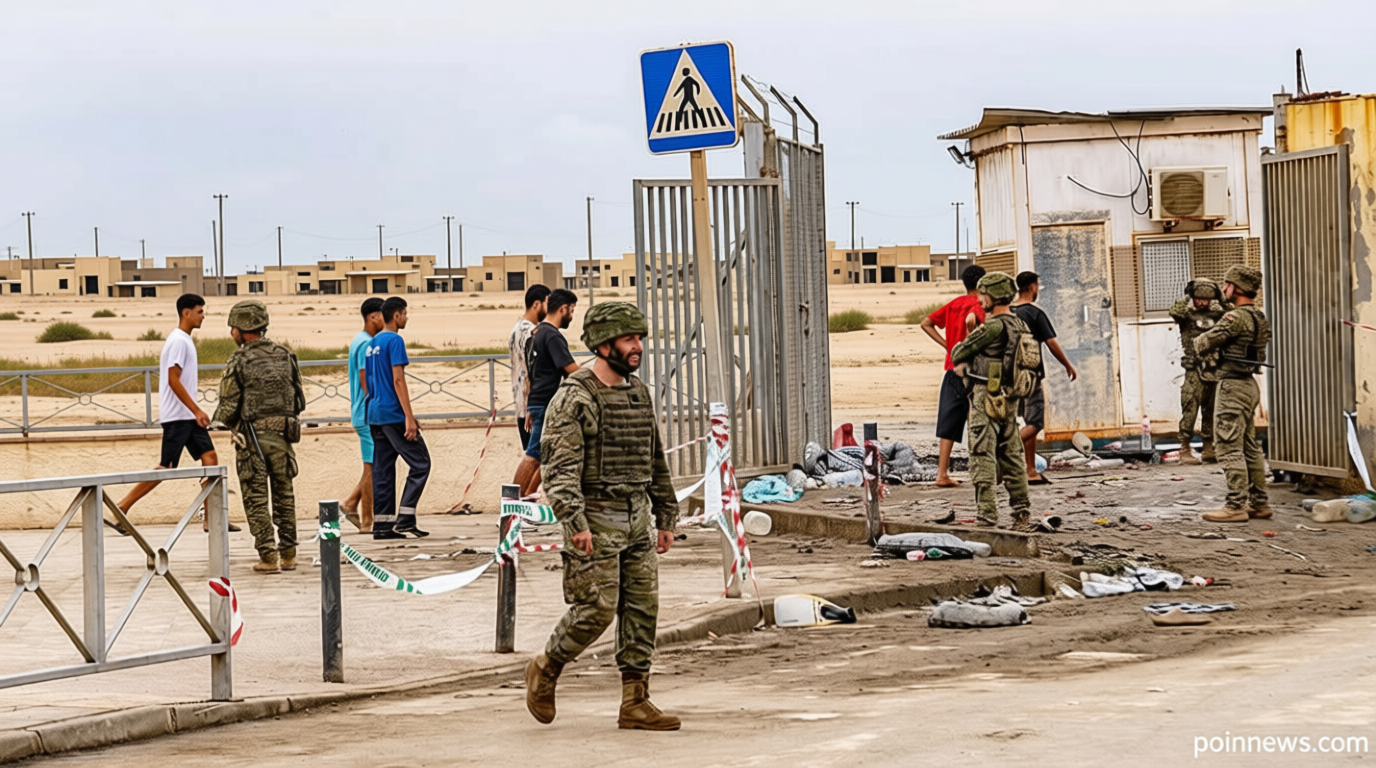
Life in Ceuta Disrupted as Thousands of Migrants Arrive
Poinews.com – The autonomous territory of Ceuta has experienced a significant slowdown in daily activities after a massive influx of newcomers from Morocco. On Friday, the majority of commercial establishments stayed shut, fresh loaves became hard to locate, and local officials postponed the weekend’s traditional celebrations while working to stabilize conditions. What was once a lively central Calle Real now features clusters of arrivals wandering through neighborhoods, with many storefronts displaying closed shutters.
Within the urban core, where approximately 84,000 inhabitants reside, only a few pharmacies and one restaurant from a recognized franchise operated normally. The Ceuta Business Confederation recommended that merchants hold off on reopening “until security can be guaranteed,” citing ongoing instability and the arrival of extra law enforcement personnel.
Services Under Strain
Healthcare professionals speaking to Euronews reported that medical facilities face considerable pressure even after calling in backup staff. Among the most frequent conditions being treated are hypothermia, anxiety attacks, and fractures. The shortage of basic supplies has also affected residents.
“We are running out of bread. There was no fresh bread today because the bakeries are closed,” municipal street sweeper Miguel Ángel Campana told AFP.
Campana noted that some locals worry newcomers might attempt to enter residences “asking for water and other things” and encouraged neighbors to “keep an eye on their balconies.” Throughout the city, arrivals were observed flagging down vehicles to request sustenance, cash, or mobile phones to reach relatives.
Scale of the Migration
Local officials estimate that roughly 60,000 individuals have crossed irregularly from Morocco into Ceuta since Thursday morning, with many swimming around the border breakwater. According to the Spanish government, more than 37,500 have already made their way back to Morocco. Police officers have been guiding substantial groups of migrants, predominantly young people, toward the border crossing to speed up their departure.
The emergency has sparked a robust political and diplomatic reaction, with military units stationed in Ceuta and multiple European nations voicing criticism over how events have unfolded.
Residents Share Concerns
“It remains a heartbreaking situation from a humanitarian point of view, seeing so many people with nowhere to go, without food or water, because the few services available for them are completely overwhelmed,” a Ceuta resident interviewed by Euronews said.
At the same time, concern among residents is growing. Mohammed, a taxi driver from Ceuta, believes many migrants have decided to return to Morocco after seeing the conditions awaiting them in the city.
“They thought they knew what they were going to find here and they have been confronted with reality,” he told AFP.
Some had told him they were returning “because they had no food”. “There is nothing here. Those of us who are from here are struggling to get by. We are having a hard time,” he added.
Mohammed said he and other neighbours stayed awake until the early hours of the morning for fear of possible robberies. “I have nieces who are afraid,” he said.
That sense of unease is shared by 56-year-old Yolanda Moreno, who said she had felt “afraid from the start” of the migration crisis.
“It was like during the pandemic: the feeling that it was better to stay at home than to go out onto the streets,” she told AFP.
Another resident interviewed by Euronews also expressed concern that tensions could escalate, saying people increasingly feared violence.
“This morning I was shocked to see people from here, from the neighbourhood, with lots of knives, trying to take justice into their own hands,” she said. “I just saw one boy with a katana running after a Moroccan boy, without really knowing what was going on.”
A City at a Standstill
The magnitude of the crisis has compelled the Ceuta administration to cancel the patron saint festivities that were scheduled to commence on Saturday. At the fairground, amusement rides remain draped with tarpaulins and motionless — a striking symbol of a city whose normal rhythm has been brought to a halt as it struggles to cope with one of the largest migrant arrivals in its history.