Mount Etna eruption: Catania airport closes and ash cloud reaches as far as Libya
The ongoing Mount Etna eruption has created widespread travel chaos across southern Europe, with Sicily's Catania–Fontanarossa Airport forced to close

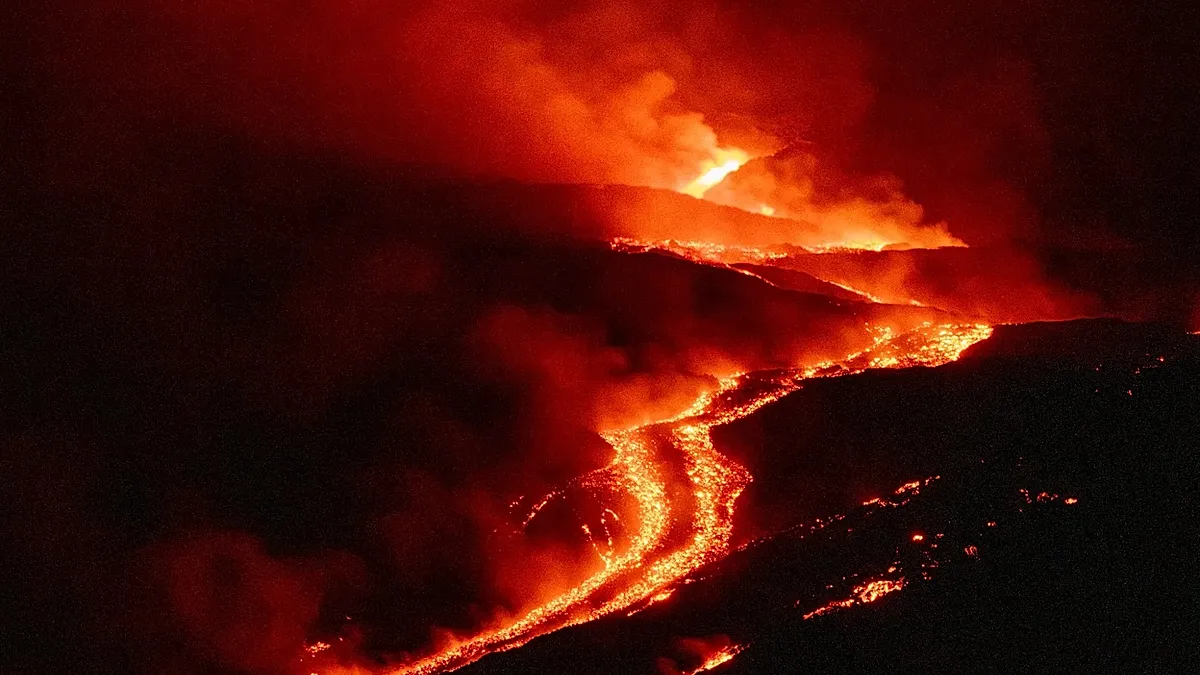
Mount Etna Eruption Closes Catania Airport as Ash Reaches Libya
Poinews.com – The ongoing Mount Etna eruption has created widespread travel chaos across southern Europe, with Sicily’s Catania–Fontanarossa Airport forced to close completely on Wednesday. This volcanic activity, now in its sixth consecutive day, has disrupted thousands of summer travelers as ash clouds drift across the Mediterranean. The airport suspended all arrivals and departures until 6 pm local time, while flight tracking systems recorded approximately 55 cancelled outbound flights on Wednesday alone. Since the eruption began, a total of 388 departures have already been eliminated from the schedule.
Passengers scrambled to find alternative routes as dozens of flights were rerouted to regional airports including Trapani, Palermo, and Comiso. Operations at Comiso temporarily ceased for several hours on Wednesday morning, resuming only after 10 am once conditions improved. The ash cloud has proven particularly problematic for Malta, with aircraft arriving and departing from the island adjusting their flight paths accordingly. Euronews My Europe has been tracking the situation closely as it develops.
Local Celebrations Affected by Volcanic Activity
Beyond transportation disruptions, the Mount Etna eruption has impacted cultural events on Malta. The Socjeta Muzikali La Stella Levantina organization in Attard decided to delay their Tuesday fireworks presentation, originally planned for the Feast of Santa Marija. Organizers noted that their launch location sits near the runway approach corridor, and following consultations with aviation authorities, they chose to postpone the event until airport restrictions ease.
The Volcanic Ash Advisory Centre based in Toulouse has been monitoring the situation closely. Their Tuesday evening bulletin indicated the ash cloud continues moving toward the south and southwest directions. While the densest concentrations remain above Sicily, lighter ash levels have been detected stretching from eastern Malta all the way to northern Libya. This extensive reach demonstrates the powerful atmospheric currents carrying volcanic particles across the Mediterranean basin.
Political Debate Over Airport Location Reignited
These repeated closures have sparked renewed discussion about Sicily’s aviation infrastructure. Nello Musumeci, serving as Minister for Civil Protection and Maritime Policies, emphasized that the current disruptions highlight a longstanding concern for the region. He pointed out that the timing of these events during peak summer season makes the impact particularly severe for both residents and tourists.
What has been happening in recent days at the airports of Catania and Comiso, with cancellations, delays and serious disruption for thousands of citizens and tourists at the height of the summer season, brings back to the fore a problem that Sicily has known about for a long time.
Musumeci recalled his earlier efforts to address this vulnerability during his tenure as president of the Province of Catania. He explained that back in 1999, he identified Fontanarossa airport’s susceptibility due to its closeness to Etna and proposed relocating the facility. The proposed solution involved constructing a new airport on the plain between Catania and Enna, which would have served seven of the island’s nine provinces. Despite this comprehensive plan, the initiative failed to gain sufficient support. Musumeci later revisited the topic when serving as regional president but encountered resistance from both the airport operator and local government officials.
With Etna standing as Europe’s most active volcano at approximately 220 kilometres north of Malta, the minister concluded that recent events demonstrate a clear truth about the situation.
The events of recent days show just one thing: it is not the volcano that is in the wrong place, but the airport.
Traveler Guidance and Safety Information
Passengers affected by the Mount Etna eruption are advised to check with their airlines before traveling to Catania. Many carriers have implemented flexible rebooking policies for flights scheduled during the disruption period. Travel insurance holders should review their coverage for volcanic activity-related delays and cancellations. Local authorities have established information points at both Catania and Comiso airports to assist stranded passengers.
Residents in eastern Sicily are also being advised to monitor air quality levels, particularly those with respiratory conditions. The volcanic ash contains fine particles that can irritate lungs and eyes when concentrations are high. Emergency services remain on standby in case additional eruptions occur while the airport remains closed.
Frequently Asked Questions
When will Catania Airport reopen? The airport is scheduled to reopen at 6 pm local time on Wednesday, weather and ash conditions permitting. Airlines are working to restore normal operations as quickly as possible.
How far has the ash cloud traveled? The ash cloud from the Mount Etna eruption has reached as far as northern Libya, with lighter concentrations detected across Malta and eastern Sicily.
Are flights to Malta affected? Yes, aircraft arriving and departing from Malta are adjusting their flight paths to avoid the densest ash concentrations. Some delays are expected but most flights continue to operate.
What should travelers do if their flight is cancelled? Passengers should contact their airline directly for rebooking options. Many carriers have waived change fees for flights affected by the volcanic activity.