Viktor Orbán calls for new era of ‘resistance politics’
The Hungarian political landscape is poised for a significant transformation as former Prime Minister and Fidesz party leader Viktor Orbán announced a

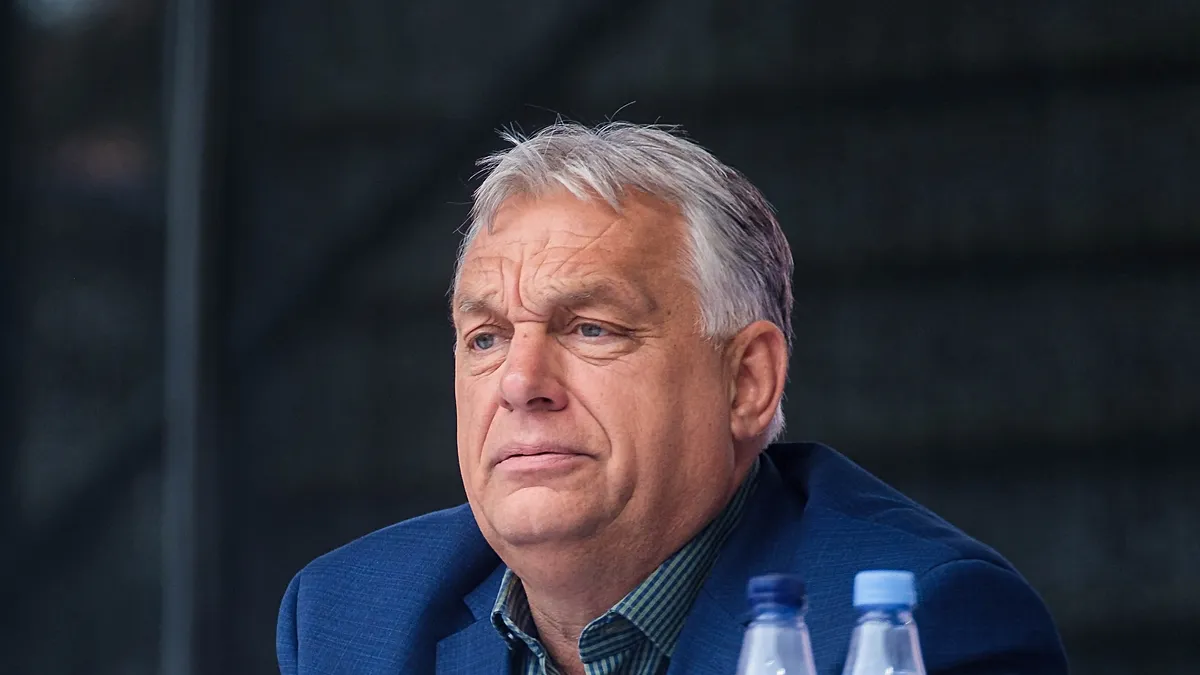
Viktor Orbán Calls for New Era of Political Resistance
Poinews.com – The Hungarian political landscape is poised for a significant transformation as former Prime Minister and Fidesz party leader Viktor Orbán announced a decisive shift in strategy. During a pivotal speech delivered on Saturday at the Bálványos Summer University, Orbán emphasized that Hungary must embrace a fresh approach to governance and opposition. The former leader, who lost power after sixteen years in office following the April elections, declared that the nation has entered a critical moment requiring bold action. He stressed that dwelling on electoral defeat would only weaken Hungary’s position, and instead, the country must unite to defend its sovereignty against emerging threats to democratic freedoms.
A Vision for Resistance Politics
According to Orbán, the current political climate demands more than mere reflection on past mistakes. He argued that voters who supported change during the spring elections did not expect their confidence to be betrayed by their representatives. Rather, these citizens acted in good faith, anticipating reduced governmental errors and improved economic conditions. The Fidesz leader suggested that the party must now channel this energy into a comprehensive resistance strategy that addresses both domestic challenges and international pressures. This approach, he explained, would position Hungary to better navigate the complex geopolitical environment while maintaining its national interests.
The speech also highlighted Orbán’s concerns about the direction of Hungarian politics under the ruling Tisza party. He drew comparisons between Hungary’s evolving political system and Venezuela’s model, describing it as a combination of communist ideology, arbitrary political decisions, and economic constraints. Orbán expressed his belief that there is a coordinated effort to eliminate Fidesz from the political arena entirely. This strategy, he claimed, involves removing party leaders from public life and employing questionable methods to dismantle any credible political opposition. The Fidesz leader concluded that self-reflection alone would not suffice; active resistance was essential for preserving democratic values.
“It is pointless to deal with an inexorable, disgraced mafia boss,” Hungarian Prime Minister Péter Magyar wrote on Facebook in response to Orbán’s speech. “Thank you for your wisdom and trust Hungary,” he added, dismissing the former leader’s message entirely.
Expanding his critique beyond Hungary’s borders, Orbán addressed the European Union with a clear vision for reform. He argued that patriotic forces must take control of Brussels to help member states reclaim their independence and restore equilibrium within the EU’s power structure. The former prime minister proposed abolishing the position of European Commission president, currently held by Ursula von der Leyen, and significantly reducing the executive branch’s authority. His message was straightforward: Brussels must be occupied by the Patriots who understand the importance of national sovereignty. This perspective aligns with Orbán’s long-standing advocacy for European integration that respects individual nations’ rights and traditions.
As Hungary enters this new chapter, the question remains whether Orbán’s vision of resistance politics will resonate with voters and reshape the country’s political trajectory. His call for a fundamental shift in strategy comes at a time when many European nations are reevaluating their relationship with both domestic institutions and international organizations. The coming months will reveal whether this renewed approach can galvanize support and establish a lasting framework for Hungarian governance. Ultimately, Viktor Orbán calls for new era – one defined by principled opposition and unwavering commitment to national interests.