French prime minister says government not indifferent to students’ concerns in TV address
France’s prime minister Sébastien Lecornu has sought to address growing anger among secondary school students, saying their concerns cannot be dismissed as

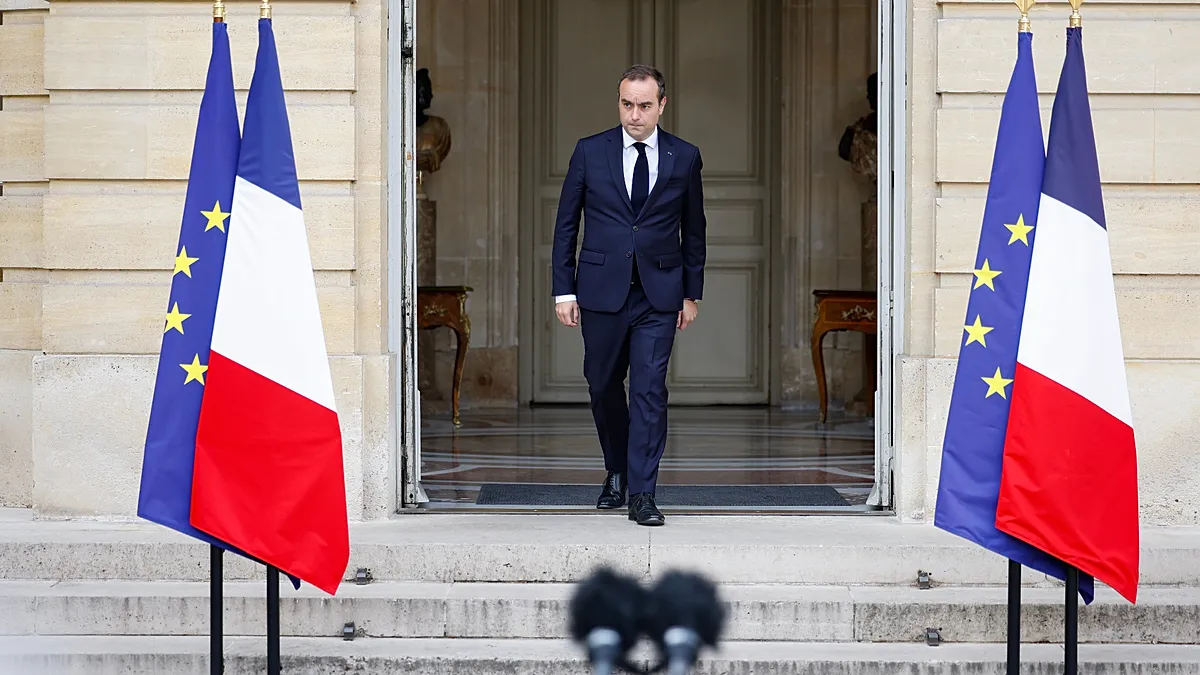
Table of Contents
French government pledges response as student protests continue
Poinews.com – France’s prime minister Sébastien Lecornu has sought to address growing anger among secondary school students, saying their concerns cannot be dismissed as demonstrations and strike calls continue to disrupt schools across the country.
In a televised address on Wednesday, Lecornu directed much of his message toward younger people, recognising that frustration among students has deeper causes. He said the authorities could not remain detached from what pupils are expressing, while also insisting that police have not been instructed to confront high school protesters.
“The anger of young people does not come from nowhere.”
The statement came after several days of mobilisations over conditions in France’s high schools. The movement has brought together students demanding more teachers, greater funding, repairs to deteriorating buildings and changes to Parcoursup, the online system used for applications to first-year higher education courses.
Critics of Parcoursup argue that its decisions are difficult to understand and can produce unequal outcomes. For students facing an uncertain transition from school to university or other post-secondary study, the platform has become one of the most visible symbols of dissatisfaction with the education system.
Injuries and arrests intensify pressure
The protests have also raised serious questions about public-order policing. Hundreds of students, teachers and police officers have been injured since the campaign began, while more than 6,500 people have been arrested. Most of those detained have been minors.
Claims of excessive police force have intensified following confrontations around demonstrations. Interior Minister Laurent Nuñez has confirmed that stun grenades will no longer be used in operations connected to the secondary school movement.
The decision followed the serious injury of a 15-year-old boy in Lens, northern France. His hand was torn off by a police grenade, and he has undergone an amputation while remaining in hospital.
Some police unions have responded cautiously to the suspension. They have referred to a possible right to withdraw from duty and have warned of what they describe as an inability to respond effectively if disorder breaks out during future protests.
Lecornu’s remarks appeared intended to lower tensions while maintaining public order. His insistence that security forces have not been told to engage directly with student demonstrators comes as the government faces pressure both from families concerned about safety and from officers seeking clarity about operational rules.
More protests expected this week
Tuesday’s demonstrations did not bring the movement to a halt. Several education unions have called for a further day of strikes and protests on Thursday, creating the prospect of renewed disruption in schools and surrounding transport networks.
The government has already opened consultations with secondary school students and started work on several areas raised during the protests. These include replacing absent teachers, restoring school premises, reviewing the organisation of the school day and revisiting concerns around Parcoursup.
Lecornu said a broader government plan to deal with the education crisis would be presented by the end of October. He also pointed to Agora, an application designed to collect young people’s views anonymously, which has received 30,000 contributions.
The challenge for the government will be turning consultation into measures that students can see and judge in their daily lives. Calls for more staff and better-maintained facilities involve significant spending, while any reform of university admissions will need to convince students that the process is clearer and fairer.
Education crisis intersects with economic strain
The prime minister used his address to discuss pressures beyond the schools. He promised the release of diesel stocks in an effort to reduce fuel prices, which have climbed above €2.36 per litre once again. The increase has sharpened concerns over household purchasing power at a time when many people are already facing rising costs.
France’s farming sector is also seeking stronger action from the state after a severe drought. Producers have been pressing for answers for weeks as the effects of difficult weather conditions continue to affect output. Wine-production projections have been revised slightly higher to nearly 35 million hectolitres, but the Agriculture Ministry still considers that level historically low.
Lecornu repeated the government’s objective of bringing France’s debt down to five percent of gross domestic product next year. That target sits alongside the need to finance an education response, ease broader economic pressure and prepare the 2027 budget.
Budget debate leaves little room for compromise
The draft 2027 budget includes higher spending for education, yet the executive must also identify savings worth several tens of billions of euros to improve the public finances. Those competing demands may make it difficult to offer rapid, costly concessions to protesters.
Political uncertainty adds another layer of difficulty. The government is managing the school protests while confronting complex budget negotiations and looking ahead to next year’s election to choose Emmanuel Macron’s successor. Marine Le Pen, the far-right candidate, is polling strongly.
For now, attention is likely to focus on whether the promised October plan delivers tangible changes for students and whether the suspension of stun grenades reduces fears around demonstrations. The scale of the demands, combined with constrained public finances and the possibility of parliamentary deadlock, means the government has little margin for error as it tries to restore confidence.
Related Reading
Frequently Asked Questions
What is French prime minister says government not indifferent?
French prime minister says government not indifferent is the main topic of this guide. The article explains the context, practical details, and next steps readers should understand.
Why does French prime minister says government not indifferent matter?
French prime minister says government not indifferent matters because readers are looking for a useful answer, not just a short summary. Good content should match search intent and help them decide what to do next.