
‘Not in my basement’: Why has Germany been so slow to adopt smart meters and what’s it costing?
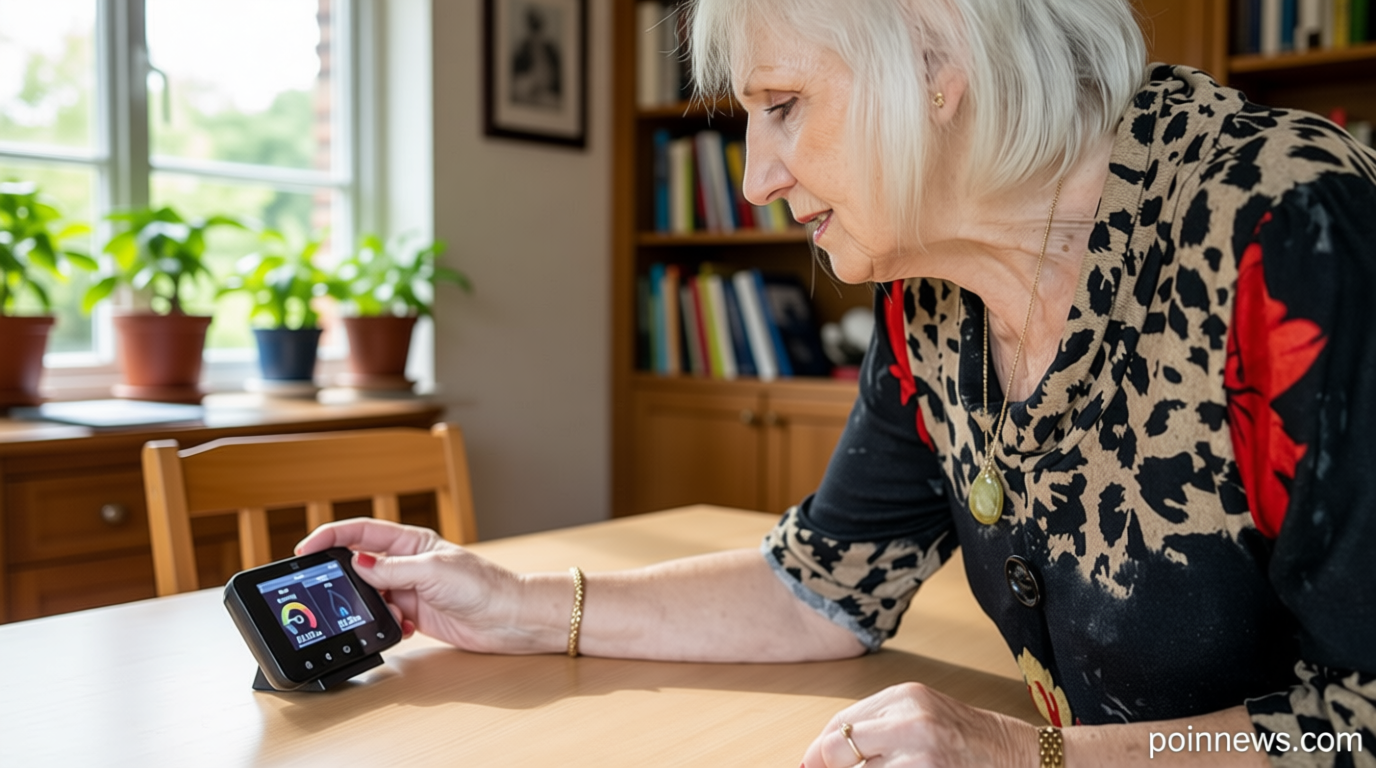
Not in my basement – this phrase captures Germany's resistance to smart meter adoption. The country has one of the slowest smart meter rollouts in Europe

Not in my basement: Germany’s smart meter dilemma
Poinews.com – Not in my basement – this phrase captures Germany’s resistance to smart meter adoption. The country has one of the slowest smart meter rollouts in Europe. Just 5.5 per cent of households have one as of December 2025, compared with more than 90 per cent in France, Italy, the Netherlands and Spain, and 63 per cent on average EU-wide. This makes it harder for Germany to shift energy use toward times when renewables are abundant, contributing to the country’s wasted wind and solar – and to Germans paying some of the highest energy bills in Europe.
With recent data from the Energy Institute revealing that Germany generated more power from wind and solar than from fossil fuels last year for the first time, grid flexibility solutions like smart meters are only becoming more important. So what’s behind Germany’s sluggish smart meter rollout – and is it starting to gain pace? When the EU’s 2009 Third Energy Package set a target for smart meter rollout across the bloc, it came with an opt-out clause: if member states carried out an analysis showing the economic costs outweighed the benefits, they’d be exempt.
Privacy fears fuel the ‘Not in my basement’ sentiment
With data privacy debates raging in Germany, the collection of additional personal data within the home was a politically unpopular policy. The German government commissioned consultancy firm Ernst & Young to carry out a cost-benefit analysis. The 2012 study warned that installation costs would outweigh potential energy savings for households.
It argued that local grids weren’t prepared to manage the instability of intermittent renewables, and recommended a phased, market-driven rollout rather than an accelerated one. Fast-forward 14 years, and the country is rethinking its approach. The massive build-out of wind and solar means supply now frequently outstrips demand, leading to negative electricity prices on the wholesale market – which in turn disincentivises investment in renewables.
It also contributes to Germany’s curtailment bill, as renewable generators either switch off to avoid financial losses or are paid by the government to do so. In 2025, the country spent around €435 million compensating renewable generators for curtailment. Smart meters could help Germany consume rather than waste this excess power, while letting households and businesses take advantage of low-cost electricity through flexible tariffs.
“It’s difficult to incentivise people to flex their demand if you don’t have a smart meter,” says Jan Rosenow, a Professor of Energy and Climate Policy at Oxford University. Historic weaponising of personal data in Germany has left citizens especially wary of data sharing, and this has bled into sentiment about smart meters. “There’s certainly a lot of scepticism about smart meters – rightly or wrongly – around data sharing and privacy,” says Rosenow.
“There was lots of media noise about how smart meters would be used to spy on you.” Headlines warning of “Spionagezähler” (spy meters) in household basements, turning residents into “gläserner Mensch” (transparent people), fed fears of unnecessary surveillance. This is where the Not in my basement attitude truly took root. “Smart electricity meters can, in principle, provide high-resolution data on the electricity consumption of a household,” says IT security expert Dr Christoph Sorge, professor of Legal Informatics at Saarland University. In practice, though, this granular detail isn’t collected: smart meters typically gather data every 15 minutes rather than every second.
“These are still detailed enough to detect when devices like washing machines, dryers, or flow-through heaters are running, and can be used to infer whether people are present in the household or not,” Dr Sorge tells Euronews Earth. Unauthorised access to this data could hypothetically see it misused by, for example, insurers, marketers, law enforcement or malicious actors. “As with all computers, there is at least a theoretical risk that an attacker can manipulate them so they transmit higher-resolution data than they are supposed to,” Dr Sorge explains.
He describes the worst-case scenario as largely unchanged since the 2012 backlash – but believes the probability of it actually happening has fallen since then, as EU and national rules on smart meter privacy have strengthened. Since the initial 2012 backlash, both data protection and cybersecurity regulation have evolved significantly. A non-binding EU recommendation on smart meter privacy has been replaced by a binding legal framework.
Illegal processing of smart meter data in the EU is now subject to considerable General Data Protection Regulation (GDPR) fines, and smart meter gateways are covered by the EU’s Cyber Resilience Act, which mandates cybersecurity-by-design and mandatory incident reporting; ‘critical products’ like these will need to fully comply by December 2027. Germany has gone further still: the Metering Point Operation Act requires a security certification for smart meters, and the BSI (Federal Office for Information Security) requires data to be processed locally. With these protections in place, the Not in my basement movement may finally be ready to embrace the technology it once feared.