
Turkey-Libya maritime boundaries deal ‘remains null and void,’ Greek foreign minister says
Greece has renewed its opposition to the 2019 maritime boundaries agreement between Turkey and Libya, with Foreign Minister Giorgos Gerapetritis saying the

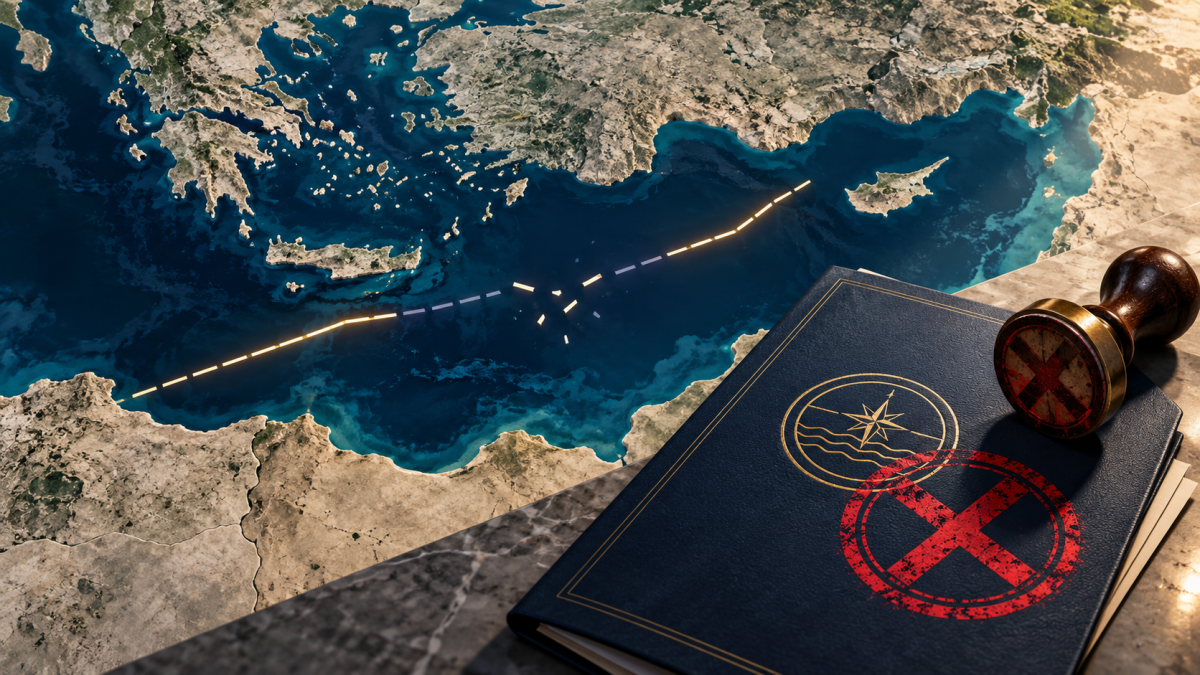
Table of Contents
Greece and partners reject Turkey-Libya maritime memorandum
Poinews.com – Greece has renewed its opposition to the 2019 maritime boundaries agreement between Turkey and Libya, with Foreign Minister Giorgos Gerapetritis saying the document has no legal standing and cannot be used to define sea zones in the Mediterranean.
Speaking in a joint declaration representing Greece, Egypt, Cyprus, Bahrain, the United Arab Emirates and the European Union, Gerapetritis addressed Libya’s House of Representatives’ recent move to ratify the Turkish-Libyan memorandum. The signatories said that decision had heightened concerns about security and stability across the region.
The memorandum in question remains null and void and without legal effect, runs counter to international law and cannot serve as a lawful basis for the delimitation of maritime zones, nor can it produce legal consequences for third states.
The dispute centres on the 2019 agreement concerning maritime jurisdiction areas in the Mediterranean. Greece and its partners argue that any attempt to use the memorandum to establish maritime claims would affect the interests and rights of other coastal states.
International law at the centre of the dispute
Gerapetritis said the rules governing maritime boundaries are set out through international law, including the United Nations Convention on the Law of the Sea, widely known as UNCLOS, as well as customary international law. These principles provide the framework states use when determining maritime zones and resolving overlapping claims.
For countries around the Mediterranean, maritime delimitation carries practical importance beyond legal terminology. Sea boundaries can shape questions involving navigation, fishing, offshore activity and the management of natural resources. Clear, law-based arrangements are also intended to reduce tensions between neighbouring states.
The Greek foreign minister stressed that predictable rules are essential to peaceful relations. In the joint position, the participating countries argued that bilateral arrangements should not be allowed to override established international standards or weaken the protections available to states that are not parties to an agreement.
These rules are of fundamental importance for safeguarding predictability, legal certainty and peaceful relations among states.
The declaration warned that accepting agreements which disregard applicable legal principles could have consequences extending beyond the immediate disagreement. It said such an approach could establish a harmful precedent and erode the foundations used for the peaceful settlement of disputes between states.
Rights of coastal states and islands
A central objection raised by the signatories concerns geography and the treatment of islands in maritime boundary discussions. They said the Turkey-Libya memorandum fails to reflect the geographical reality of the eastern Mediterranean and does not respect the maritime rights of all coastal states involved.
The statement specifically referred to islands and their rights under UNCLOS. The countries backing the declaration maintained that these rights must be considered when maritime zones are delimited, rather than set aside through a separate bilateral arrangement.
The subsequent decision of Libya’s House of Representatives does not alter this legal reality.
That position means Greece and its partners view the parliamentary ratification in Libya as politically significant but legally incapable of changing their assessment of the original memorandum. Their argument is that approval by Libya’s House of Representatives does not resolve the objections they have raised under international law.
The wording of the declaration also reflects wider unease over regional relations in the Mediterranean. Maritime disagreements are often closely tied to broader diplomatic questions, making legal certainty especially important for avoiding further confrontation among neighbouring countries.
Call for a stable and united Libya
Despite their criticism of the memorandum, the signatories expressed support for Libya’s future stability and political cohesion. They reaffirmed their commitment to the reunification of Libya’s institutions and to the prospect of a country that is united and prosperous.
The declaration presented an active, stable Libya as an important element of Mediterranean peace and security. It said regional cooperation would be strengthened by a Libya whose institutions are unified and whose political transition proceeds within a framework of international law.
The countries and the European Union involved in the statement also emphasised that Libya’s engagement with neighbouring states should be guided by good-neighbourly relations. This places the maritime dispute within a wider call for cooperation rather than unilateral steps that could deepen divisions.
For Greece, Egypt, Cyprus, Bahrain, the United Arab Emirates and the European Union, the immediate message is clear: the 2019 Turkey-Libya deal is not accepted as a valid basis for maritime delimitation. Their joint statement combines that legal objection with a broader appeal for regional stability, respect for established rules and a peaceful future for Libya and the Mediterranean.
Related Reading
Frequently Asked Questions
What is Turkey Libya maritime boundaries deal remains?
Turkey Libya maritime boundaries deal remains is the main topic of this guide. The article explains the context, practical details, and next steps readers should understand.
Why does Turkey Libya maritime boundaries deal remains matter?
Turkey Libya maritime boundaries deal remains matters because readers are looking for a useful answer, not just a short summary. Good content should match search intent and help them decide what to do next.