What time will the solar eclipse be visible in my city in Spain on 12 August?
What time will the solar eclipse be visible in your city? Spain will experience a remarkable celestial event on Wednesday, August 12, as a total solar eclipse

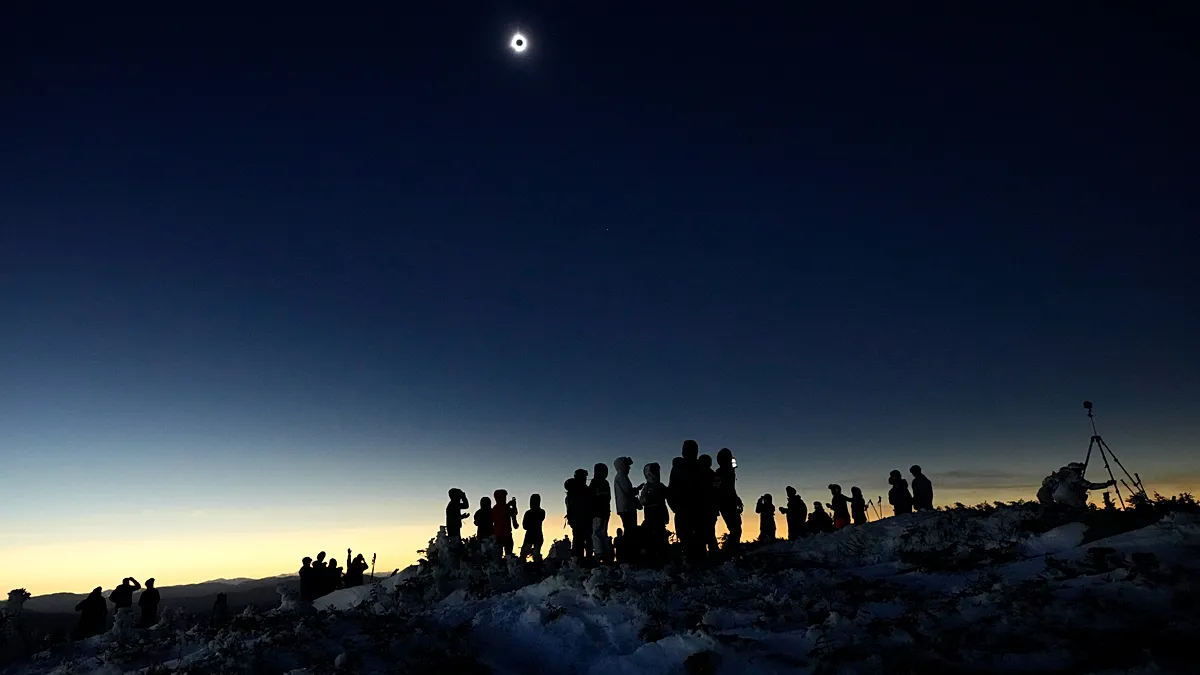
Table of Contents
What Time Will the Solar Eclipse Be Visible in Spain on August 12?
Poinews.com – What time will the solar eclipse be visible in your city? Spain will experience a remarkable celestial event on Wednesday, August 12, as a total solar eclipse traverses much of the nation during the late afternoon. Millions of residents and visitors will have the opportunity to observe one of the most anticipated astronomical phenomena in recent memory. However, determining the exact viewing time for your specific location requires understanding how the Moon’s shadow moves across the country.
The peak moment of darkness generally arrives near 20:30, but this timing shifts depending on where you stand in Spain.
Timing Varies by Location
While the peak moment of darkness generally arrives near 20:30, this timing shifts depending on where you stand. The lunar shadow travels from west to east, meaning cities in different regions will experience maximum eclipse at slightly different moments. Western locations such as Santander, Oviedo, and La Coruña will witness the peak around 20:27, while eastern cities including Valencia, Castellón, and Palma will see it several minutes later.
Not every part of Spain will experience totality. The narrow band of complete darkness will sweep through portions of the northern and eastern peninsula before extending toward the Balearic Islands. Areas beyond this path will observe a partial eclipse, though in numerous locations the Sun will appear nearly entirely obscured.
Major Cities Outside the Path
Spain’s two largest urban centers will both fall outside the primary totality corridor. Madrid will experience a partial eclipse reaching its zenith at approximately 20:32. The situation proves particularly interesting since the totality path’s edge passes remarkably close to the capital, touching areas near Barajas. Barcelona will similarly miss totality, with maximum Sun obscuration occurring around 20:29.
Despite missing complete darkness, observers in both Madrid and Barcelona will witness a remarkably deep partial eclipse. The experience will lack the brief period of darkness found within the totality path, but the visual spectacle will remain impressive. For more detailed information about this celestial event, you can read the complete guide on Euronews.
Viewing Conditions and Safety
The eclipse will coincide with sunset, placing the Sun very close to the horizon. This timing makes selecting an observation point with an unobstructed western view essential. Buildings, mountains, or trees could block your view during these critical minutes.
Even those outside the totality path can follow the event. The eclipse will be visible, at minimum partially, across all Spanish territory, including the Canary Islands. The primary distinction lies in those final seconds when the Moon entirely conceals the solar disc. Within the totality corridor, the sky will darken swiftly, allowing observers to glimpse the solar corona for a short duration. Beyond this path, a sliver of the Sun remains visible even at peak eclipse, preventing the sky from achieving the distinctive appearance of totality.
One crucial safety reminder applies to all viewers regardless of location: never look directly at the Sun without certified protective eyewear during the partial phases. Standard sunglasses do not provide adequate protection for safe observation.
Frequently Asked Questions
What time will the solar eclipse start in Spain?
The eclipse begins at different times depending on your location. Western cities like Santander and Oviedo will see the eclipse start around 20:27, while eastern cities including Valencia and Palma will experience it several minutes later. The peak moment generally arrives near 20:30 across most of the country.
Will the eclipse be visible in Madrid?
Yes, Madrid will experience a partial eclipse reaching its maximum at approximately 20:32. While the city falls outside the primary totality corridor, the totality path’s edge passes remarkably close to the capital, touching areas near Barajas. Observers will witness a deep partial eclipse, though without the brief period of complete darkness found within the totality path.
Do I need special glasses to watch the eclipse?
Absolutely. One crucial safety reminder applies to all viewers regardless of location: never look directly at the Sun without certified protective eyewear during the partial phases. Standard sunglasses do not provide adequate protection for safe observation, even when the Sun appears partially obscured.
Can I see the eclipse from the Canary Islands?
Yes, the eclipse will be visible, at minimum partially, across all Spanish territory, including the Canary Islands. The primary distinction lies in those final seconds when the Moon entirely conceals the solar disc. Within the totality corridor, the sky will darken swiftly, allowing observers to glimpse the solar corona for a short duration.