UK must ‘face up to changing climate,’ PM says on visit to fire-hit Stourbridge
UK must face up to changing climate patterns, Prime Minister Andy Burnham declared during a visit to Stourbridge, where devastating wildfires have left

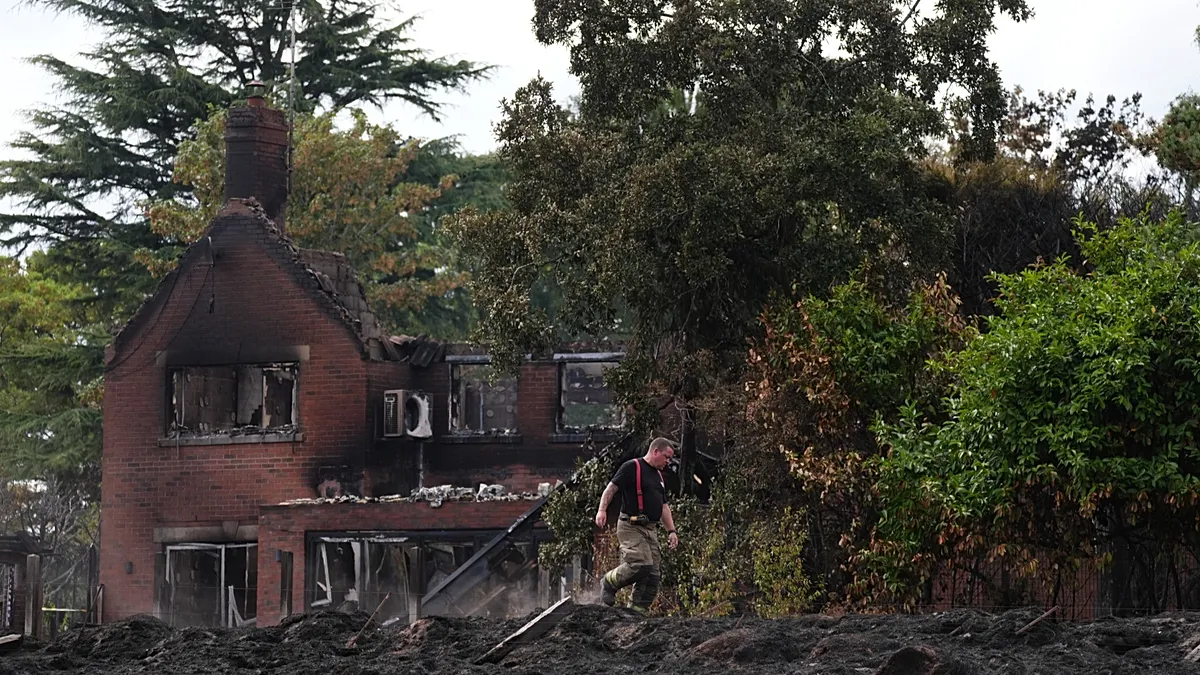
Table of Contents
UK Must Face Up to Changing Climate After Stourbridge Fires
Poinews.com – UK must face up to changing climate patterns, Prime Minister Andy Burnham declared during a visit to Stourbridge, where devastating wildfires have left communities in ruins. The prime minister emphasized that the United Kingdom needs to confront its shifting weather patterns while accelerating the transition toward renewable energy sources. His remarks came as smoke continued to billow from charred remains of several homes without roofs, with emergency crews working through Friday to douse the wreckage.
According to the West Midlands Fire Service, the blaze left 19 properties completely destroyed while another 18 sustained varying degrees of damage. After touring the affected area and speaking with first responders, Burnham expressed astonishment at what he witnessed. He connected the “combustible situation” directly to climate change and highlighted the urgency of transitioning to cleaner energy sources across the nation.
“I’ve never seen scenes like this in Britain, where you just see a whole house gutted, smouldering,” he said.
“We have to face up to the changing climate…there’s no point denying where we are. We need to face up to it. We need more clean energy,” he stressed.
Widespread Fire Activity Across the Nation
Britain has committed to generating zero-carbon electricity by 2030 and achieving net-zero greenhouse gas emissions by 2050 as part of its comprehensive climate strategy. The prime minister characterized the country as “a tinderbox” noting that 37 separate fires were burning across Britain on Friday alone. In response to the dry conditions, authorities implemented restrictions on selling disposable barbecue equipment and advised residents against outdoor fire use during the heatwave.
Stourbridge residents were evacuated as the fire expanded on Thursday, which marked the hottest day recorded in the UK this year. Medical personnel treated numerous individuals for smoke inhalation, while emergency responders worked tirelessly to control remaining hotspots in open fields, along railway lines, and within residential gardens throughout the affected area.
Medical statistics revealed the scale of the health impact from the wildfires. The West Midlands ambulance service reported treating 68 people for various symptoms including smoke inhalation, with 25 requiring hospitalization. Additionally, six firefighters stationed in Staffordshire were transported to hospitals suffering from heat exhaustion and difficulty breathing during the intense firefighting operations.
Emergency Response and Future Plans
One firefighter required hospital treatment while five others sustained minor injuries, according to the fire service’s Friday update. The West Midlands region, covering much of England, remains under drought conditions following weeks of elevated temperatures and limited precipitation, creating heightened fire risk for communities across the area.
Emergency personnel indicated that several fires near Stourbridge were intentionally ignited in grassland areas before spreading rapidly out of control. Chief fire officer Simon Tuhill described the event as “one of the most significant incidents that West Midlands Fire Service has ever attended” during a Thursday evening press conference. He attributed the swift expansion to “tinder dry” conditions and noted that “the devastation is extensive.”
Burnham pledged to organize a summit bringing together fire service representatives, acknowledging that government resources had been insufficient for handling wildfire emergencies. He also announced intentions to acquire firefighting aircraft similar to those deployed in European and American operations to better protect communities.
“It’s been a particularly difficult, busy period for the fire and rescue service, where we’ve been under significant pressure,” the head of the National Fire Chiefs Council (NFCC), Phil Garrigan, told BBC Radio 4.
“Firefighters have been on the front line of climate change for a number of years. They’re doing their absolute best to protect communities and properties,” he said.
Throughout the current summer season, emergency crews have primarily focused on controlling wildfires in rural regions and moorland areas across the country. As the UK must face up to changing climate realities, these events serve as a stark reminder of the challenges ahead.
Frequently Asked Questions
How many properties were destroyed in the Stourbridge fires? The West Midlands Fire Service confirmed that 19 properties were completely destroyed while 18 others sustained damage during the wildfires.
What is the UK’s target for zero-carbon electricity? Britain has committed to generating zero-carbon electricity by 2030 as part of its broader climate strategy to achieve net-zero emissions by 2050.
How many people were treated for smoke inhalation? The West Midlands ambulance service reported treating 68 people for various symptoms including smoke inhalation, with 25 requiring hospitalization.
What measures are being taken to prevent future fires? Authorities have implemented restrictions on selling disposable barbecue equipment and advised residents against outdoor fire use during dry conditions.