Polls open in Saxony-Anhalt as AfD predicted to win state election
More than 1.7 million registered voters in the eastern German state of Saxony-Anhalt stepped into polling stations on Sunday morning, beginning what many

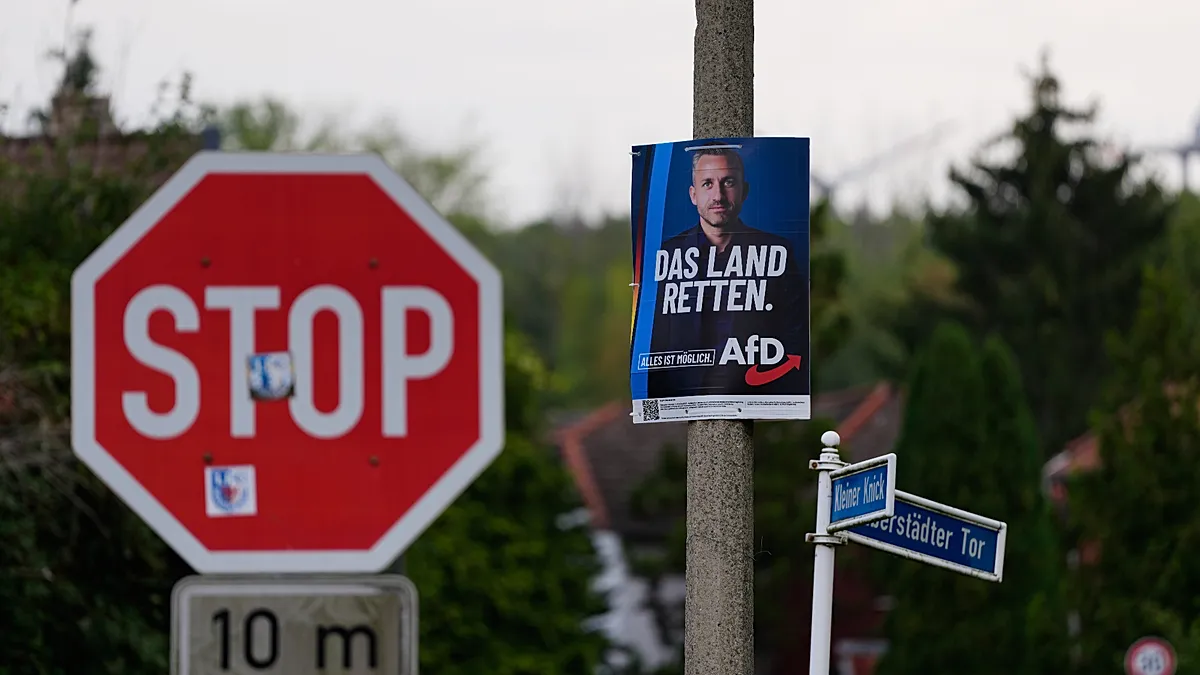
Table of Contents
Saxony-Anhalt Heads to the Polls in a Vote That Could Reshape German Federal Politics
Poinews.com – More than 1.7 million registered voters in the eastern German state of Saxony-Anhalt stepped into polling stations on Sunday morning, beginning what many analysts regard as the most consequential regional election in Germany since the post-reunification era. With ballot boxes closing at 6 pm local time, the state’s electorate is deciding not merely who will govern Magdeburg but also sending a signal that will reverberate through Berlin’s chancellery. Chancellor Friedrich Merz, whose federal coalition government has seen its approval ratings slide steadily since taking office, faces a scenario in which a landslide result for the far-right Alternative for Germany (AfD) would intensify pressure already mounting on his cabinet.
A Race With a Clear Front-Runner
Opinion polling conducted in the final days before the vote places the AfD, fielding Ulrich Siegmund as its lead candidate, comfortably ahead of every other contender. The party is tracking at above 40 percent of the projected vote share, a figure that would, if confirmed, represent a historic breakthrough for a formation that has spent years consolidating its base in eastern Germany. The Christian Democratic Union (CDU), Merz’s own party, trails well behind and enters the contest as the second-place candidate at best.
The stakes extend far beyond the walls of the Magdeburg state parliament. Saxony-Anhalt, a compact state of roughly 2.2 million inhabitants nestled between Saxony and Lower Saxony, has long served as a bellwether for eastern German political sentiment. A decisive AfD result here would embolden the party ahead of upcoming state elections elsewhere and could complicate Merz’s ability to govern at the federal level, where his coalition partners are already grappling with declining popularity.
The Absolute-Majority Gambit
Siegmund has made his governing condition explicit: he will form a state government only if the AfD captures an outright majority of seats in the Landtag. That threshold means winning more than half of the 86 parliamentary seats — a bar that transforms the election from a simple plurality contest into a question of how the remaining vote splits among smaller formations.
The arithmetic is unforgiving. Germany’s state-level electoral system requires parties to clear a five percent threshold to gain representation in the Landtag. The more parties that cross that line, the more seats are carved out of the pool available to the two largest contenders. Should three or four smaller parties manage to enter parliament, the AfD’s path to an absolute majority narrows considerably, even if its raw vote share exceeds 40 percent. Conversely, a fragmented field in which only two or three parties clear the threshold would concentrate seats and make an AfD majority far more attainable.
Tactical Voting and a Divided Political Class
Recognising this dynamic, several civic groups and local organisations have urged voters to cast tactical ballots — choosing a smaller party over their preferred candidate in order to keep additional seats out of the AfD’s reach. The campaign has drawn sharp reactions across the political spectrum. The AfD, the CDU, the Left party, the Social Democrats (SPD), the Free Democrats (FDP), and the newly formed BSW have all publicly criticised the tactical-voting initiative. Only the Greens have voiced support for the effort, arguing that preventing a one-party dominance in Magdeburg outweighs short-term electoral preferences.
The CDU has drawn firm lines around its post-election options. At a recent party conference, the union adopted an incompatibility clause formally ruling out any coalition partnership with the Left party. Separately, the CDU has stated it will not enter government with the AfD under any circumstances. What remains open is whether Merz’s party could assemble a governing majority in Magdeburg with other centre-right or centrist partners, though the arithmetic of such an arrangement would depend heavily on final seat counts.
Undecided Voters and the Final Hours
The outcome remains genuinely open. A survey conducted by the ZDF Politbarometer shortly before election day found that 26 percent of eligible voters had not yet settled on a candidate — a figure large enough to swing the balance between an AfD majority and a fragmented parliament. Those undecided voters, many of whom are first-time participants in a state-level contest, could tip the result in either direction during the final hours of polling.
Polling stations across the state operated from 8 am to 6 pm, giving voters a full ten-hour window to cast their ballots. Turnout in eastern German state elections has historically run above the national average, and organisers expected high participation given the national attention the contest has attracted.
Why Magdeburg Matters to Berlin
For Merz and his coalition, the Saxony-Anhalt result carries implications that go well beyond one state’s executive. A dominant AfD showing would hand the party a powerful platform from which to challenge federal policy, organise opposition in another Landtag, and project strength ahead of subsequent state elections scheduled across Germany. It would also test whether Merz’s coalition can survive sustained electoral erosion at the subnational level without fracturing internally. Conversely, a contained AfD result — one that leaves the party as a strong opposition force but short of governing power — would allow the federal government to claim it has contained the far-right advance and preserve a degree of political stability heading into the next federal cycle.
As the day draws to a close and the first exit polls begin to circulate, all eyes in German politics will be fixed on Magdeburg, waiting to learn whether the eastern state has delivered a mandate for one-party rule or a parliament too fractured for any single formation to govern alone.
Related Reading
Frequently Asked Questions
What is Polls open in Saxony Anhalt as AfD?
Polls open in Saxony Anhalt as AfD is the main topic of this guide. The article explains the context, practical details, and next steps readers should understand.
Why does Polls open in Saxony Anhalt as AfD matter?
Polls open in Saxony Anhalt as AfD matters because readers are looking for a useful answer, not just a short summary. Good content should match search intent and help them decide what to do next.