IFA 2026: Xiaomi wants its smart-home cars on European roads by 2027
For over a decade, the Xiaomi brand has been synonymous with affordable smartphones and a sprawling catalog of consumer electronics. That identity, however

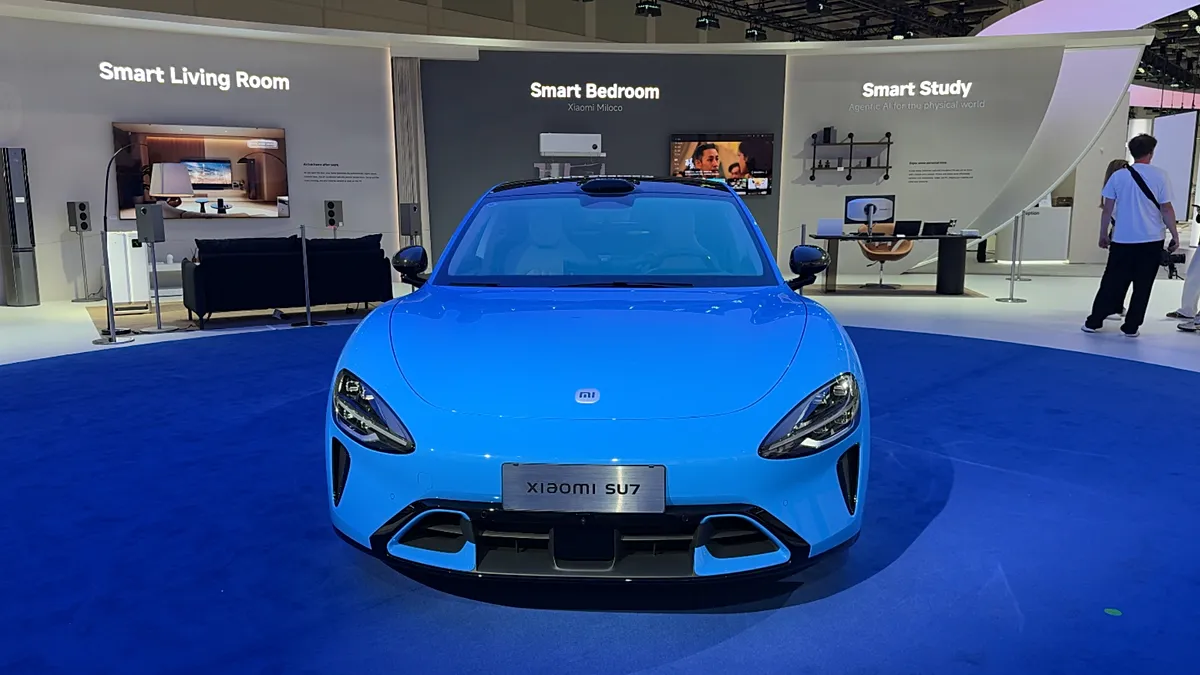
Table of Contents
Xiaomi’s Four-Wheel Ambition: European Roads Get a Chinese EV Player in 2027
Poinews.com – For over a decade, the Xiaomi brand has been synonymous with affordable smartphones and a sprawling catalog of consumer electronics. That identity, however, is rapidly becoming incomplete. At IFA 2026 in Berlin, the Chinese tech giant made unmistakably clear that its next growth frontier involves putting wheels under its ecosystem — and that European drivers should expect to see the outcome as early as next year.
The company confirmed during its exhibition that it intends to bring its electric vehicle lineup to European markets in 2027. For a brand whose cars have already become a common presence on Chinese streets, the announcement represents a decisive step beyond its domestic stronghold and into one of the world’s most competitive automotive arenas.
Eight German Retail Partners Sign Letters of Intent
The path from announcement to showroom is rarely instantaneous, and Xiaomi appeared aware of that reality. On 3 September, during a dedicated press conference at the fair, the company executed a formal signing ceremony with eight established German automotive retail groups. The partners include Emil Frey Germany, the Ernst Dello Group, Autohaus Dinnebier, Hahn Automobile, the LUEG Mobility Group, Fett & Wirtz, SPT Avior, and Penske-Jacobs.
Germany is positioned as the beachhead rather than the final destination. Xiaomi indicated that comparable distribution agreements are being negotiated across additional European markets, signaling a continent-wide rollout strategy rather than a single-country pilot.
“Europe is a key market for our global strategy,” said Xu Fei, Xiaomi’s Chief Marketing Officer, during the press conference.
The retail partnerships carry practical weight: they give Xiaomi access to existing dealership infrastructure, service networks, and consumer trust channels that would otherwise require years of independent development. For a company entering a market where established EV rivals like Tesla, BYD, and homegrown brands already compete fiercely, leveraging incumbent distribution networks shortens the time-to-market considerably.
The “Human × Car × Home” Ecosystem
Yet the vehicle itself is only one node in a larger architectural vision. Xiaomi frames its integrated approach under the label “Human x Car x Home” — a design philosophy in which the car, the smartphone, and the smart-home environment operate as a single, continuously connected system rather than isolated product categories.
In practical terms, the concept allows a driver to manage household devices from behind the wheel. At the Berlin exhibition, Xiaomi demonstrated a scenario in which occupants of the vehicle opened and closed smart curtains and toggled air-conditioning units back at home before arriving. The car, in this framing, functions as an additional remote control point for the domestic environment — a capability that blurs the boundary between transportation and home automation.
Underpinning the connectivity is HyperOS, Xiaomi’s proprietary operating system, combined with artificial-intelligence layers that the company says will eventually move beyond manual, device-by-device commands. The longer-term ambition is for AI to interpret contextual signals — time of day, location, occupancy patterns — and autonomously coordinate appliances across the car, phone, and home without explicit user instruction for each action.
This positioning places Xiaomi in direct philosophical competition with other tech firms exhibiting in Berlin that pursue similar cross-device integration strategies, while differentiating itself through the depth of its existing smart-home hardware portfolio and its vertical integration into the vehicle itself.
Vision Gran Turismo: A Concept, Not a Commitment
Alongside the concrete commercial plans, Xiaomi also showcased the Vision Gran Turismo, an electric hypercar concept developed in collaboration with the Gran Turismo racing video-game franchise. The vehicle explores speculative ideas in aerodynamic form, design language, and digital-vehicle interaction.
Company representatives were explicit that the Vision Gran Turismo remains a study piece — a design and engineering exploration rather than a preview of a production model slated for near-term road use. Its presence at IFA served to communicate design ambition and engineering range, not to announce a new SKU.
€24 Billion R&D Commitment Through 2030
The scale of Xiaomi’s stated investment underscores the seriousness of the pivot. Between 2026 and 2030, the company projects global research-and-development spending exceeding €24 billion, directed toward artificial intelligence, operating-system development, semiconductor design, intelligent-vehicle engineering, robotics, and smart-manufacturing processes.
That figure positions Xiaomi among the most heavily capitalized technology entrants in the global EV and connected-device space. It also signals that the company views the automotive and robotics segments not as peripheral diversions but as core pillars of its next decade of growth.
For European consumers and regulators, the implications are layered. On one hand, an additional well-funded entrant intensifies competition that can pressure pricing and accelerate feature availability. On the other, the deep integration of vehicle, home, and personal-device data raises questions about data sovereignty, cybersecurity standards, and the regulatory perimeter within which such cross-domain ecosystems operate — questions that EU policymakers will increasingly need to address as 2027 approaches.
Xiaomi’s Berlin presentation made one thing unambiguous: the smartphone era of the brand is giving way to a multi-surface, multi-environment strategy in which the road is simply the latest frontier.
Related Reading
Frequently Asked Questions
What is IFA 2026?
IFA 2026 is the main topic of this guide. The article explains the context, practical details, and next steps readers should understand.
Why does IFA 2026 matter?
IFA 2026 matters because readers are looking for a useful answer, not just a short summary. Good content should match search intent and help them decide what to do next.