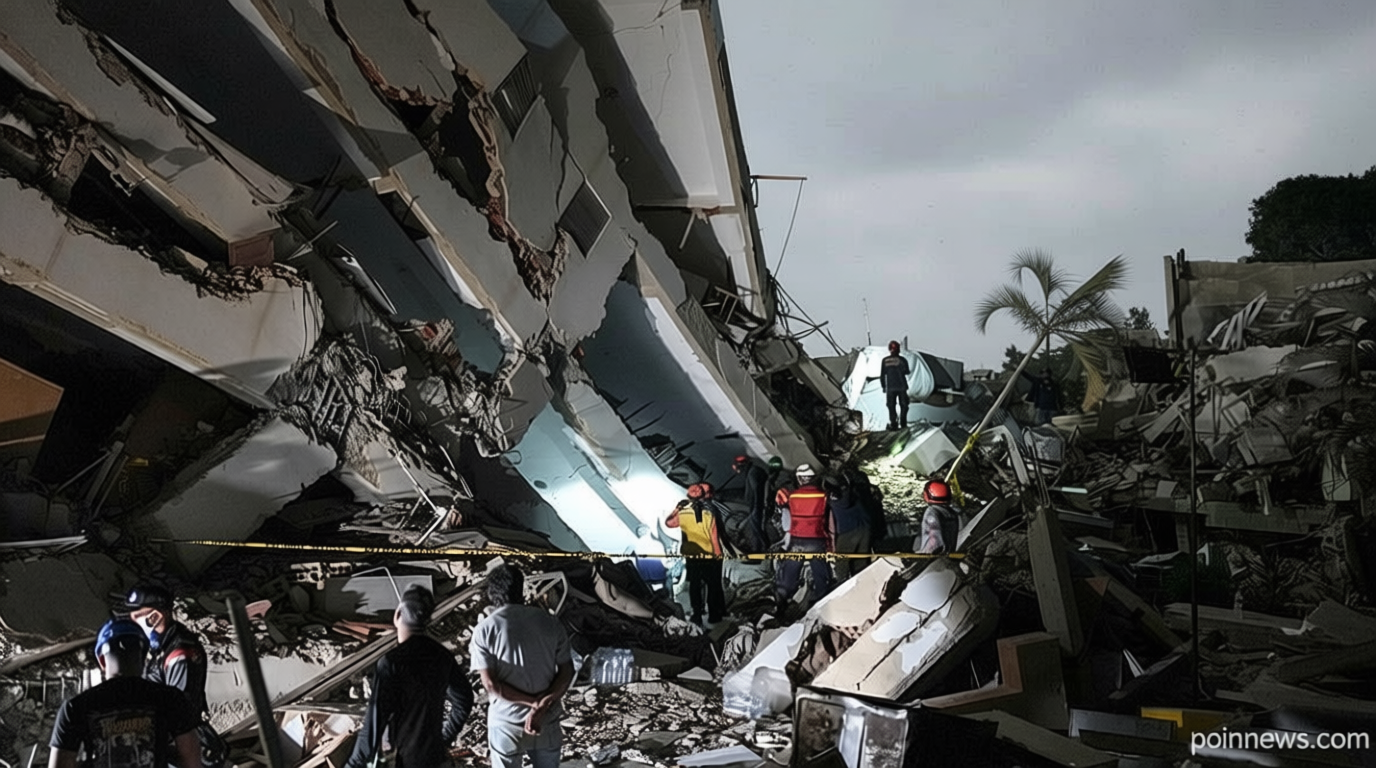
Rescuers search rubble for survivors after New Delhi hostel collapse kills seven
Heavy rain-soaked soil, unfinished renovation work, and a structure that had stood for more than half a century combined to bring down a five-storey boys'

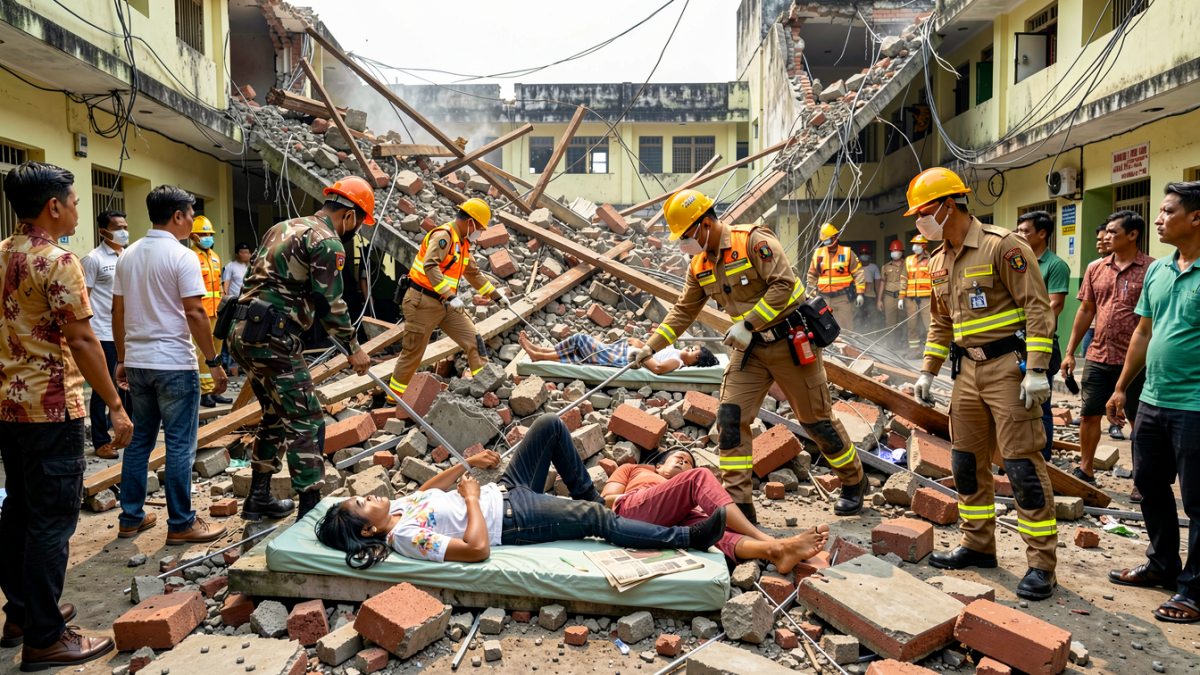
Table of Contents
Seven Dead as Decades-Old Student Hostel Crumbles in New Delhi’s Monsoon Season
Poinews.com – Heavy rain-soaked soil, unfinished renovation work, and a structure that had stood for more than half a century combined to bring down a five-storey boys’ hostel in New Delhi’s Satya Niketan neighbourhood on Sunday. By Monday, the confirmed death toll had reached seven, with at least six more occupants injured and dozens of residents still unaccounted for beneath the wreckage.
Satya Niketan sits adjacent to a Delhi University campus and has long served as a hub of inexpensive private lodging for students. The collapse turned that everyday geography into a scene of emergency vehicles, snarled earthmovers, and exhausted rescue workers digging through concrete and rebar for a second consecutive day.
Rescue Operations and the State of the Rubble
Delhi Chief Minister Rekha Gupta addressed reporters at the site on Monday, confirming that crews had extracted at least 12 individuals from beneath the collapsed structure. She stated that roughly 80 percent of the debris had been removed by that point, leaving only the basement-level rubble yet to be fully cleared. Six fatalities and six injuries were confirmed at the time of her briefing. Later that same day, officials announced the recovery of a seventh body, pushing the toll upward.
Firefighters, police units, and teams from India’s national disaster-response agency worked in coordinated shifts. Trained sniffer dogs combed the remaining debris piles, guiding human rescuers toward pockets where trapped survivors might still be breathing. The operation continued through the night and into the following morning.
What Brought the Building Down
Neighbours described the hostel as at least 55 years old. It had been closed for months of renovation work before reopening to tenants—predominantly university students—in August, even though construction was not yet complete. Prakash Chand, a resident of the surrounding block, told investigators that labourers were inside the basement performing excavation tasks at the moment the structure gave way.
Gupta outlined preliminary findings pointing to two converging factors: prolonged water pooling in the basement during the monsoon rains, and the added stress of active repair work on an already ageing frame. Neither factor alone would typically compromise a structure of that size, but together they created conditions under which load-bearing elements could fail catastrophically.
Government Response and Accountability Measures
In the hours following her site visit, Gupta announced that the state government would draft a new regulatory framework mandating periodic structural audits and formal safety certifications for all buildings open to public use. The scope she specified includes student hostels, nursing homes, and schools.
“No public activity will be permitted” in buildings that fail to comply, Gupta said.
Police moved swiftly on the ownership question, arresting the hostel’s proprietor and filing a formal case against him. Separately, authorities suspended at least five municipal employees tasked with building-safety oversight in the Satya Niketan ward, a step reported by the Press Trust of India. The suspensions signal an internal review of whether inspection lapses preceded the disaster.
A Recurring Monsoon Hazard
The collapse lands squarely within India’s June-through-September monsoon window, a period when sustained rainfall saturates soil, corrodes exposed steel, and tests the integrity of older masonry and reinforced-concrete frames. Across the country, building failures cluster in these months, particularly in cities where decades of informal construction outpaced the development of rigorous inspection regimes. New Delhi, with its dense mix of colonial-era and post-independence structures housing students, workers, and families, is especially exposed.
The Satya Niketan incident is likely to intensify calls for enforceable structural-safety standards in the capital. Gupta’s announced audit-and-certification policy, if enacted, would represent one of the most explicit post-disaster regulatory commitments made by a state government in recent years. Whether it translates into funded inspection capacity, trained engineers, and genuine enforcement remains the question that will define the next monsoon season.
For the families of those still missing beneath the last remaining basement rubble, the question is more immediate: whether the next shift of earthmovers and sniffer dogs will bring answers, or only silence.
Related Reading
Frequently Asked Questions
What is Rescuers search rubble for survivors after?
Rescuers search rubble for survivors after is the main topic of this guide. The article explains the context, practical details, and next steps readers should understand.
Why does Rescuers search rubble for survivors after matter?
Rescuers search rubble for survivors after matters because readers are looking for a useful answer, not just a short summary. Good content should match search intent and help them decide what to do next.