The world’s biggest fine jewellery factory: How Pandora aims to make more and pollute less in Vietnam
Pandora has started operations at a major new jewellery manufacturing site in Ho Chi Minh City, pairing a significant expansion in output with commitments on

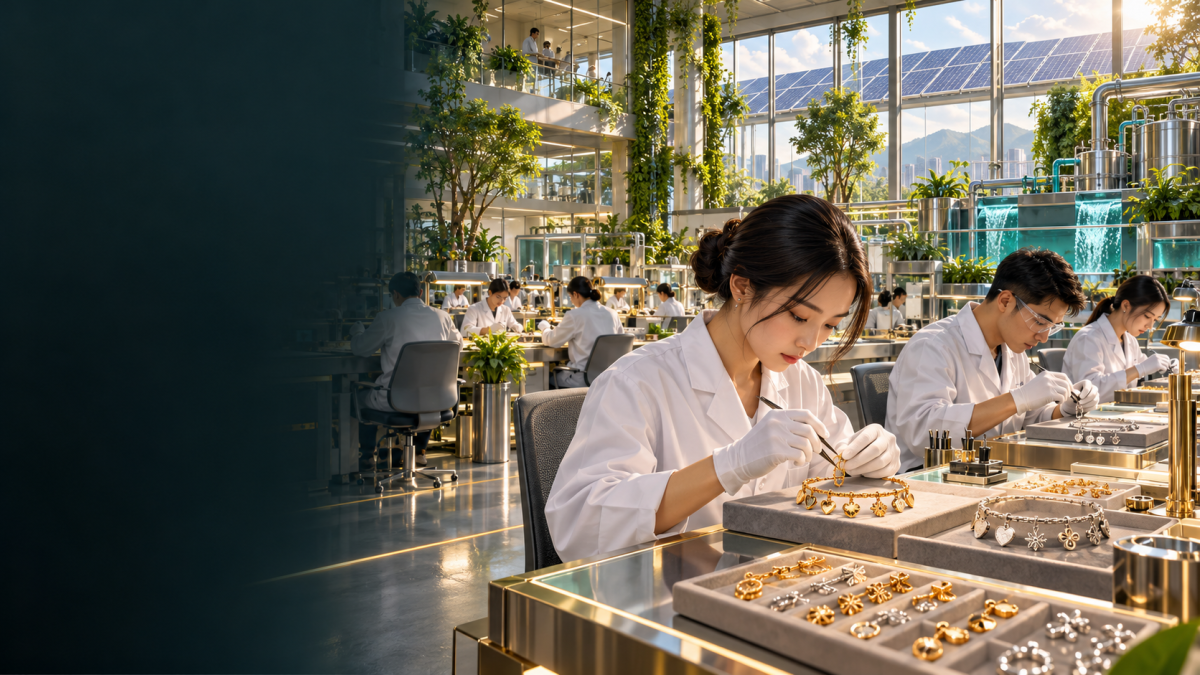
Table of Contents
Pandora Bets on Vietnam for Its Next Stage of Growth
Poinews.com – Pandora has started operations at a major new jewellery manufacturing site in Ho Chi Minh City, pairing a significant expansion in output with commitments on renewable power and recycled precious metals. The Danish company describes the facility as the largest fine jewellery crafting operation in the world.
Once it reaches full capacity, the factory is expected to employ 7,000 people and make as many as 60 million jewellery pieces each year. That output would lift Pandora’s overall manufacturing capability by 50%.
The project marks an important shift for a business whose production history has been closely tied to Thailand. The Vietnam site is Pandora’s fourth factory worldwide, but its first outside Thailand, where the company began manufacturing in 1989.
A $150 million investment in production capacity
Pandora invested $150 million (€132mn) in the Ho Chi Minh City factory. The facility is intended to give the brand more room to produce across its range of materials, techniques and collections as global demand for jewellery continues to rise.
This gives us flexibility to craft all our collections, our assortments in all our materials and crafting techniques.
That flexibility matters for a company operating at substantial scale. Pandora sold 112 million pieces of jewellery in 2025, equal to more than three items every second. It identifies itself as the world’s largest jewellery brand.
The company grew from a small jewellery shop founded in Copenhagen in 1982 into an international business with a highly recognisable charm-bracelet model. Its charm bracelet, introduced in 2000, helped accelerate expansion abroad, followed by Pandora’s listing on the Copenhagen stock exchange in 2010.
Vietnam now becomes a central part of the company’s effort to meet future demand while reducing its reliance on a single manufacturing country.
Renewable electricity and recycled metals
Pandora says the new factory will run entirely on renewable electricity. The pledge supports a wider sustainability strategy that also includes a transition to 100% recycled gold and silver in its jewellery production, completed in 2024.
Recycled precious metals can help limit the need for newly mined material, although the process is not without an environmental cost. Metals must still be refined through energy-intensive steps that heat and separate materials to remove impurities.
Gold is especially well suited to repeated reuse because it does not oxidise and can retain its qualities over long periods. Saleem H. Ali, lead researcher for critical minerals and the inclusive energy transition at the United Nations University, has highlighted why the metal fits circular-economy thinking.
In many ways, it is designed for a circular economy. It doesn’t oxidise. That’s why it’s so valuable. We still have the gold from the ancient Egyptians in pretty good shape.
Pandora’s stated objective goes beyond electricity used within its own factories. The company also wants renewable energy use to extend through the supplier network involved in making its products. That ambition will be more difficult to measure, since a jewellery supply chain includes multiple stages before a finished item reaches a store or customer.
We will continue growing in a sustainable manner.
A growing market, but not a guaranteed outcome
The broader market gives Pandora a reason to increase capacity. The State of Fashion 2026, produced by McKinsey and The Business of Fashion, forecasts annual jewellery unit-sales growth of 4.1% from 2025 to 2028. That pace is roughly four times faster than the expected growth rate for clothing.
Yet faster category growth does not automatically translate into easier conditions for every jewellery company. Pandora has warned that US import tariffs will continue to pressure profitability. The United States is the company’s largest market, and demand there is also being affected by inflation and wider economic uncertainty.
The challenge is particularly significant because jewellery is often a discretionary purchase. When household budgets tighten, consumers may delay buying charms, rings, necklaces and other non-essential items even if the category’s long-term outlook remains positive.
Pandora must therefore balance the cost of opening and running a huge new factory against the need to protect margins in its most important market. Greater manufacturing capacity can improve responsiveness and support future sales, but it also makes reliable demand and efficient operations more important.
Labour conditions remain part of the picture
Environmental claims are only one part of the scrutiny facing a global manufacturer. Pandora’s production record has previously attracted attention over labour relations in Thailand. In 2020, details emerged of a Thai labour court decision from May 2019 finding that union activity had contributed to dismissals of workers at Pandora’s Bangkok factory.
Pandora maintained that the job cuts were linked to restructuring and employee performance.
As employment grows in Vietnam, worker rights, workplace conditions and the handling of labour concerns will remain important tests of the expansion. The planned workforce of 7,000 gives the factory a meaningful role not only in Pandora’s supply chain, but also in the local economy around Ho Chi Minh City.
The new site offers Pandora a chance to demonstrate that high-volume jewellery production, renewable electricity and recycled metals can develop together. Whether the company can deliver that outcome while managing tariffs, demand pressure and labour expectations will determine how successful this next chapter becomes.
Related Reading
Frequently Asked Questions
What is The world s biggest fine jewellery?
The world s biggest fine jewellery is the main topic of this guide. The article explains the context, practical details, and next steps readers should understand.
Why does The world s biggest fine jewellery matter?
The world s biggest fine jewellery matters because readers are looking for a useful answer, not just a short summary. Good content should match search intent and help them decide what to do next.