‘Save a life, not a bag’: Airlines could lock overhead bins over evacuation safety concerns
Save a life not a bag -

‘Save a Life, Not a Bag’: Airlines Could Lock Overhead Bins for Evacuation Safety
Emerging Concerns About Passenger Behavior in Emergencies
Poinews.com – Save a life not a bag has become a rallying cry for aviation safety officials, as airlines explore measures to ensure passengers prioritize their survival over personal belongings during emergencies. The International Air Transport Association (IATA) recently proposed locking overhead bins during evacuation procedures to mitigate risks associated with delayed responses. This initiative follows growing concerns that some travelers may still attempt to retrieve items during critical moments, despite being instructed to evacuate immediately. A recent survey conducted across the United States, United Kingdom, UAE, and Singapore revealed that while 80% of respondents claimed knowledge of emergency protocols, only 61% accurately understood the need to abandon all luggage and exit the aircraft without delay. Alarmingly, 10% admitted they might still collect belongings during an evacuation, even when it’s safest to leave them behind.
Why Overhead Bin Locks Could Be a Game-Changer
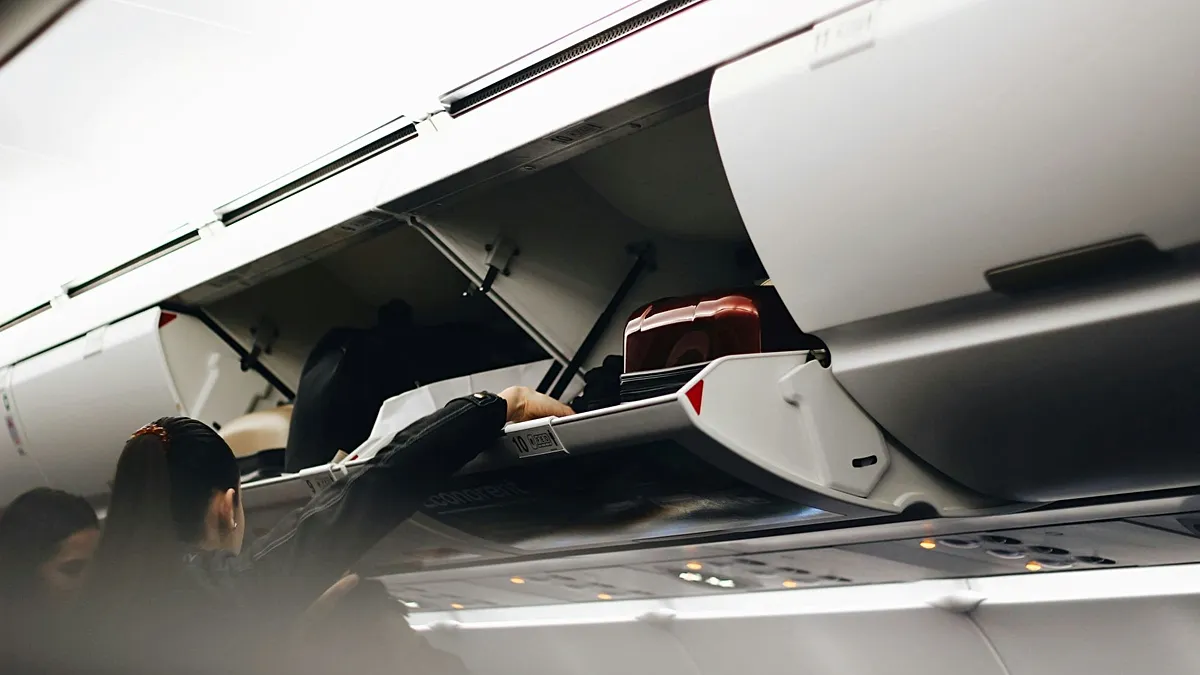
The concept of locking overhead bins during emergencies is gaining traction as a practical solution to enhance passenger safety. Nick Careen, senior vice-president for operations, safety, and security at IATA, emphasized that while education remains the first step, more decisive actions—like bin locks—might be necessary if compliance does not improve. These locks would prevent passengers from accessing their bags during critical evacuation windows, reducing the likelihood of obstructions. The IATA’s proposal aligns with global efforts to standardize safety procedures, ensuring that all cabin items are secure before takeoff and landing. This measure could also help streamline the evacuation process, as blocking exits with luggage may slow down the movement of people to safety.
‘Save a Life, Not a Bag’ Campaign: A Call to Action
Launched under the ‘Save a Life, Not a Bag’ campaign, the initiative seeks to reinforce the critical message that safety should always come first. The campaign highlights the importance of following crew instructions during rare but potentially life-threatening situations, such as sudden depressurization or fire. According to IATA’s director general, Willie Walsh, even a single bag can delay evacuation, risking lives. “In an emergency, every second counts,” Walsh stated, urging passengers to internalize the lesson that their luggage is secondary to their own survival. The campaign also encourages travelers to carry essential items—such as passports, money, and medication—on their person before boarding, ensuring these are easily accessible if time is of the essence.
Impact of Luggage on Evacuation Efficiency
Research underscores the significant role luggage plays in complicating emergency evacuations. A study by the Guardian found that bags can block exits, create tripping hazards, or even damage evacuation slides when rushed to retrieve them. In high-stress scenarios, such as a fire or structural failure, the time it takes to unfasten a bag or navigate around it can be critical. For example, during a 2023 incident on a transatlantic flight, a passenger’s delayed exit due to retrieving a laptop led to a bottleneck that delayed the evacuation of several others. IATA’s push for overhead bin locks aims to prevent such scenarios by ensuring all items are stored away before emergencies occur.
Global Trends and Safety Innovations in Aviation
The IATA’s focus on overhead bin locks reflects a broader trend in aviation safety innovation. Airlines are increasingly adopting technology-driven solutions to minimize risks during emergencies, such as automatic seatbelt alerts and reinforced door mechanisms. However, the bin lock idea is unique in its approach to addressing passenger behavior directly. The campaign’s success will depend on its ability to influence behavior through consistent messaging and tangible measures. For instance, the introduction of bin locks could serve as a visual reminder to passengers, reinforcing the idea that their bags are not essential in the immediate moment. This could lead to a cultural shift in how travelers perceive the priority of safety versus convenience.
Education and Enforcement: A Two-Pronged Strategy
While overhead bin locks offer a physical deterrent, IATA acknowledges the need for ongoing education to ensure long-term compliance. The campaign includes targeted messaging through in-flight announcements, safety videos, and printed materials, aiming to instill the ‘Save a Life, Not a Bag’ ethos in passengers. Careen noted that the IATA will evaluate the effectiveness of these educational efforts before deciding on stricter enforcement. If the initiative proves successful, it could lead to a new era of standardized safety protocols, with airlines investing in bin locks as a proactive measure. This would not only reduce the risk of injury but also increase the chances of a swift and orderly evacuation, ensuring the safety of all onboard.