Video. China tests AI robot cleaners in homes
China Tests AI Robot Cleaners in Homes China tests AI robot cleaners in homes - China is making strides in integrating artificial intelligence into everyday

China Tests AI Robot Cleaners in Homes
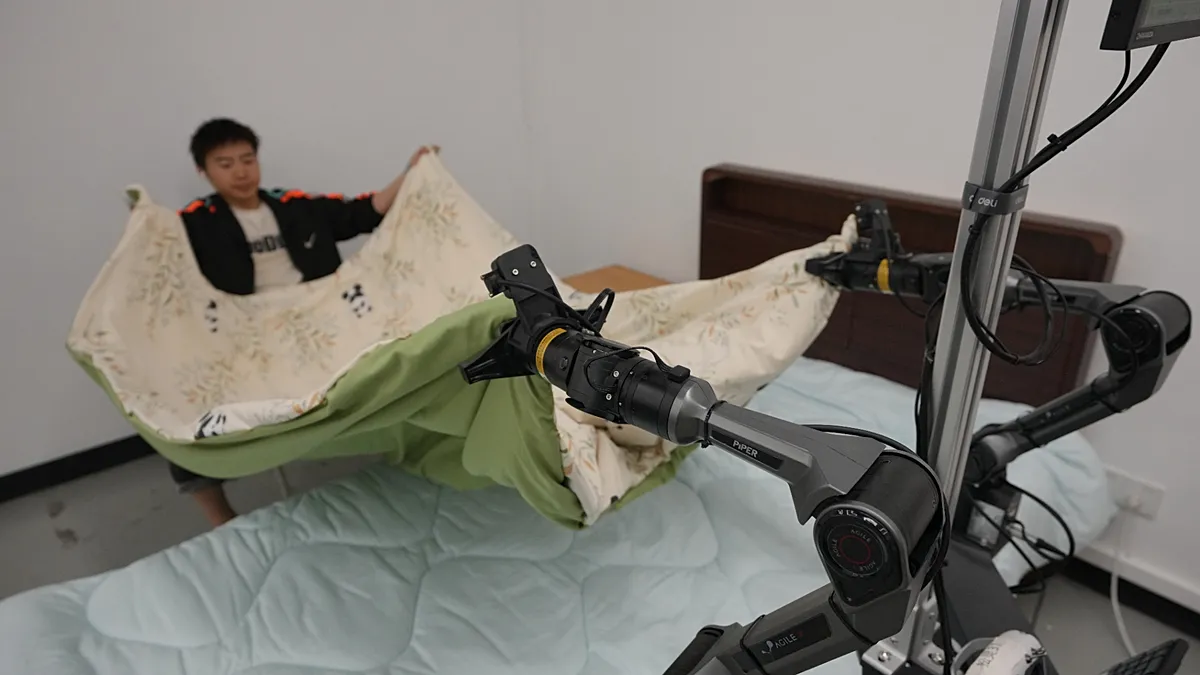
Poinews.com – China is making strides in integrating artificial intelligence into everyday household tasks, with a notable initiative involving the deployment of AI-powered robot cleaners in residential settings. This experiment, led by a collaborative effort between 58.com and X Square, introduces a new layer of automation to domestic chores, blending advanced technology with traditional labor. While these robots are designed to assist with tasks such as vacuuming, mopping, and organizing garments, they still require close human supervision. The project reflects China’s growing commitment to leveraging AI in domestic environments, signaling a shift toward more efficient and tech-enhanced cleaning solutions.
The Emergence of AI in Domestic Cleaning
As part of the broader AI revolution, these robot cleaners represent a significant step toward automating mundane tasks. Equipped with high-resolution cameras, tactile sensors, and mechanical arms, the devices are engineered to identify messes and perform cleaning operations with minimal human intervention. However, their effectiveness is limited by their current capabilities. While they excel at basic tasks, such as picking up debris or suctioning dust, they struggle with more nuanced activities like adjusting to irregular surfaces or recognizing complex objects. This limitation highlights the ongoing challenge of refining AI systems to function seamlessly in dynamic, real-world environments.
The pilot program, launched in major cities like Beijing and Shenzhen, has attracted approximately 200 households to test the technology. Each service costs 149 yuan for a three-hour session, offering a glimpse into how AI-driven solutions might reshape domestic labor. Users report mixed experiences, with some praising the robots’ efficiency and others noting their reliance on human oversight. This phase of testing is crucial for identifying practical applications and addressing technical shortcomings before scaling the initiative nationwide. The collaboration between 58.com and X Square underscores the potential for cross-industry partnerships to accelerate AI adoption in everyday life.
Training AI for Real-World Use
Developers emphasize that the project’s primary goal is to train embodied AI systems within the context of real-life domestic scenarios. By exposing the robots to varied household environments, they aim to enhance their adaptability and performance. Engineers are working to improve the devices’ fine motor skills, enabling them to handle tasks like folding clothes or navigating narrow spaces more effectively. This iterative process involves analyzing data from test homes to refine algorithms and optimize sensor responses. Despite these efforts, challenges persist, including ensuring safety for both users and pets, and addressing privacy concerns related to the robots’ data collection capabilities.
“The machine offers some convenience, even if it still needs close human help,” Lin Meiqiong, a 56-year-old cleaner participating in the trial, remarked. Her experience underscores the transitional nature of this technology, where humans and AI work in tandem rather than replace one another. While the robot can streamline repetitive tasks, its inability to perform complex, judgment-based actions like recognizing a spilled drink or adjusting cleaning intensity based on surface type means it remains a complementary tool rather than a fully autonomous solution. This balance between human and machine is central to the project’s success and the broader adoption of AI in household settings.
Public Reception and Market Potential
The public’s mixed reception of the AI robot cleaners reflects both optimism for technological advancement and cautiousness about its practicality. While early adopters appreciate the convenience of having assistance with routine cleaning, others question the long-term cost-effectiveness and the potential displacement of human workers. For instance, the 149-yuan fee for three hours of service is still competitive compared to hiring a human cleaner, but it may not be sufficient for widespread adoption. Experts suggest that the success of this initiative hinges on further refinements, such as reducing maintenance costs, improving user-friendliness, and demonstrating clear long-term benefits over traditional methods.
China’s interest in AI-driven domestic solutions is part of a larger trend toward smart homes and automated services. The country has been investing heavily in AI research, particularly in robotics and machine learning, and this project aligns with its vision of integrating technology into daily life. As the pilot program progresses, it may serve as a model for other nations seeking to balance innovation with practical implementation. The ultimate goal is to create a system where AI handles the bulk of household tasks, allowing humans to focus on more specialized or creative work. This approach not only enhances efficiency but also ensures that the human element remains vital in the evolving landscape of domestic labor.