Everything you need to know about the Jared Kushner resort protests in Albania
er Luxury Resort Project Everything you need to know about the Jared Kushner resort protests in Albania begins with a $4 billion development project in the

Public Dissent in Albania Intensifies Over Luxury Resort Project
Poinews.com – Everything you need to know about the Jared Kushner resort protests in Albania begins with a $4 billion development project in the Vjosa-Narta Lagoon, a protected coastal area. This initiative, backed by Kushner’s Affinity Partners, has sparked widespread public opposition, with thousands of citizens rallying in Tirana to demand environmental safeguards. The controversy centers on the potential ecological damage, as the proposed resort threatens to disrupt habitats that support over 200 bird species, including flamingos and nesting sea turtles. Local activists and residents argue that the project could compromise Albania’s commitment to preserving its natural heritage, raising questions about the balance between economic growth and environmental protection.
The Environmental Concerns
The Vjosa-Narta Lagoon, a UNESCO-designated site, is renowned for its biodiversity and role as a critical stopover for migratory birds. Environmental groups warn that construction on the island of Sazan—once a remote, uninhabited area—could lead to irreversible harm to the region’s delicate ecosystems. Wetlands International, a leading conservation organization, has emphasized the lagoon’s status as an “irreplaceable” habitat, home to rare species like the European seal and critically endangered nesting turtles. Their research highlights the lagoon’s role in maintaining water quality and supporting local fisheries, which are vital to the livelihoods of nearby communities. Critics argue that the project’s approval risks undermining Albania’s environmental policies and its aspirations to join the European Union, where adherence to strict ecological standards is a key criterion.
EU Pressure and Government Response
The European Commission has been vocal in its concerns, warning that the resort could jeopardize Albania’s progress toward EU membership. Chapter 27 of the EU’s accession process, which deals with environmental policy, has become a focal point of the debate. A spokesperson for the Commission, Guillaume Mercier, stressed the urgency of meeting these benchmarks, stating:
“Albania should refrain from actions that could undermine the fulfilment of the closing benchmark, in this case Chapter 27, and so we expect the Albanian authorities to act without any delay.”
Meanwhile, the Albanian government maintains that the project will revitalize the economy by attracting international tourists and generating jobs. Prime Minister Edi Rama has defended the decision, framing it as a necessary step to modernize the country’s infrastructure and tourism sector. However, opponents argue that the project prioritizes short-term gains over long-term sustainability, questioning the government’s ability to manage such large-scale developments responsibly.
Protesters’ Mobilization and Public Reaction
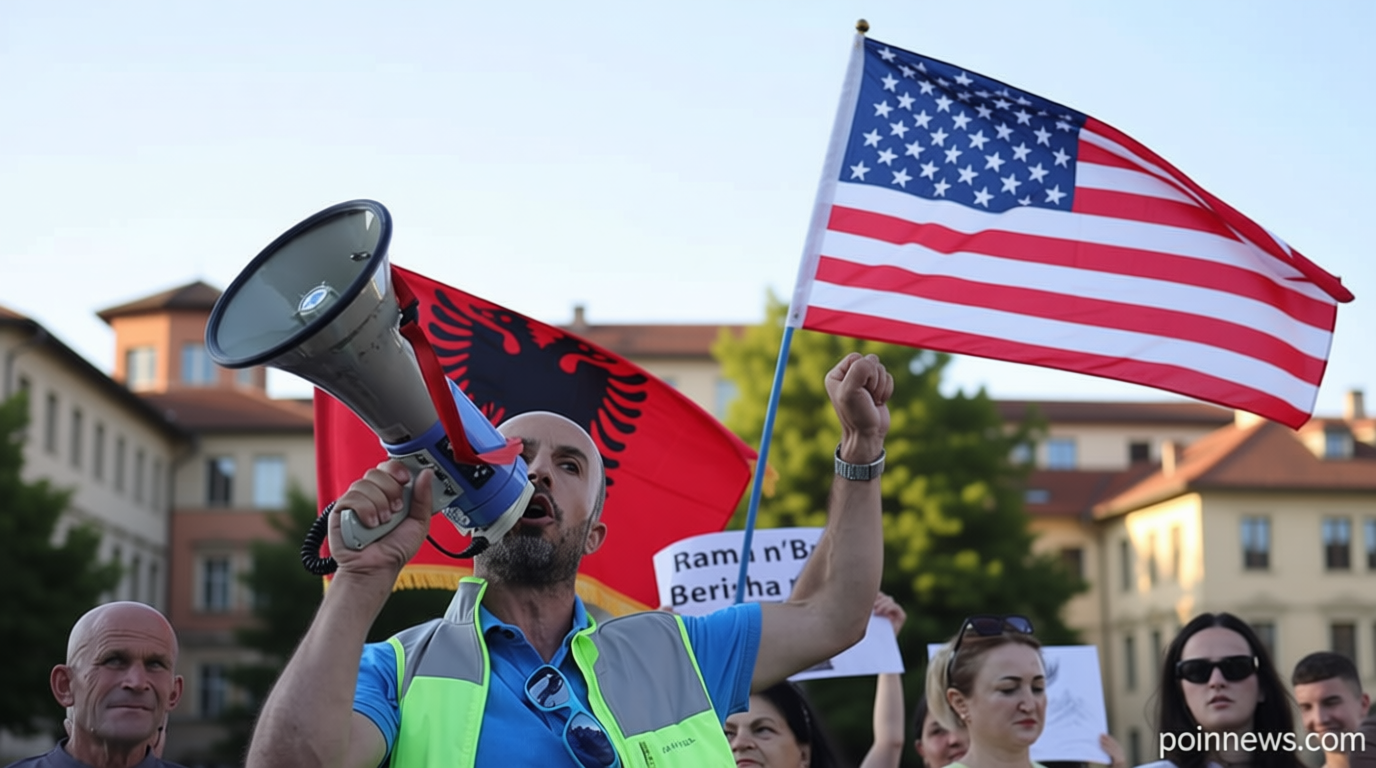
For nearly two weeks, protesters have used creative methods to highlight their cause, including inflatable flamingos and slogans like “Albania is not for sale.” These demonstrations have drawn attention to the project’s potential to erode public trust in leadership. The Albanian Association for the Protection of the Environment has warned that the conversion of Sazan into a tourist destination could lead to “serious risks to biodiversity and critical habitats.” Social media platforms have amplified the movement, with hashtags like #SaveSazan gaining traction. Public opinion is divided, with some citizens supporting the project for its economic promise and others fearing its environmental consequences. The protests reflect a growing demand for transparency and accountability in decision-making processes, particularly regarding natural resource management.
Political Dynamics and International Accusations
The dispute has also become a political battleground, with Prime Minister Edi Rama accusing foreign actors, specifically Iran, of influencing the protest movement. In a recent statement, Rama claimed:
“There is one malicious actor, Iran. This is something that we know for a fact. I never said and I don’t say that Iran invented it. I’m saying that Iran jumped in it. Right away. And we are at war with Iran, cyber, since some years now.”
The Iranian foreign ministry has responded to these allegations, with spokesperson Esmaeil Baqaei retorting on X:
“It was YOU, sir, who started this. So…you should ‘face the music’!”
While this exchange adds a layer of international intrigue, it has also fueled debates about the role of external actors in domestic policy decisions. Locally, the protests have prompted calls for stricter oversight of development projects, with some advocating for a pause in construction until further environmental assessments are completed.
Looking Ahead: The Path Forward
As the situation unfolds, stakeholders are bracing for the next steps in the conflict between development and conservation. Environmental groups have called for a public referendum to decide the project’s fate, while the government remains committed to its timeline. The outcome could set a precedent for future infrastructure projects in Albania, influencing how the country balances growth with ecological responsibility. With the European Union closely monitoring the situation, the protest movement has also become a test of Albania’s ability to address public concerns while meeting international standards. For now, the nation stands at a crossroads, with the fate of the Vjosa-Narta Lagoon hanging in the balance. Everything you need to know about this controversy underscores the urgency of finding a solution that satisfies both economic and environmental imperatives.