San Andreas Fault reaches highest stress level in 1,000 years
San Andreas Fault Reaches Highest Stress Level in 1,000 Years San Andreas Fault reaches highest stress - Recent scientific analyses have revealed that the San

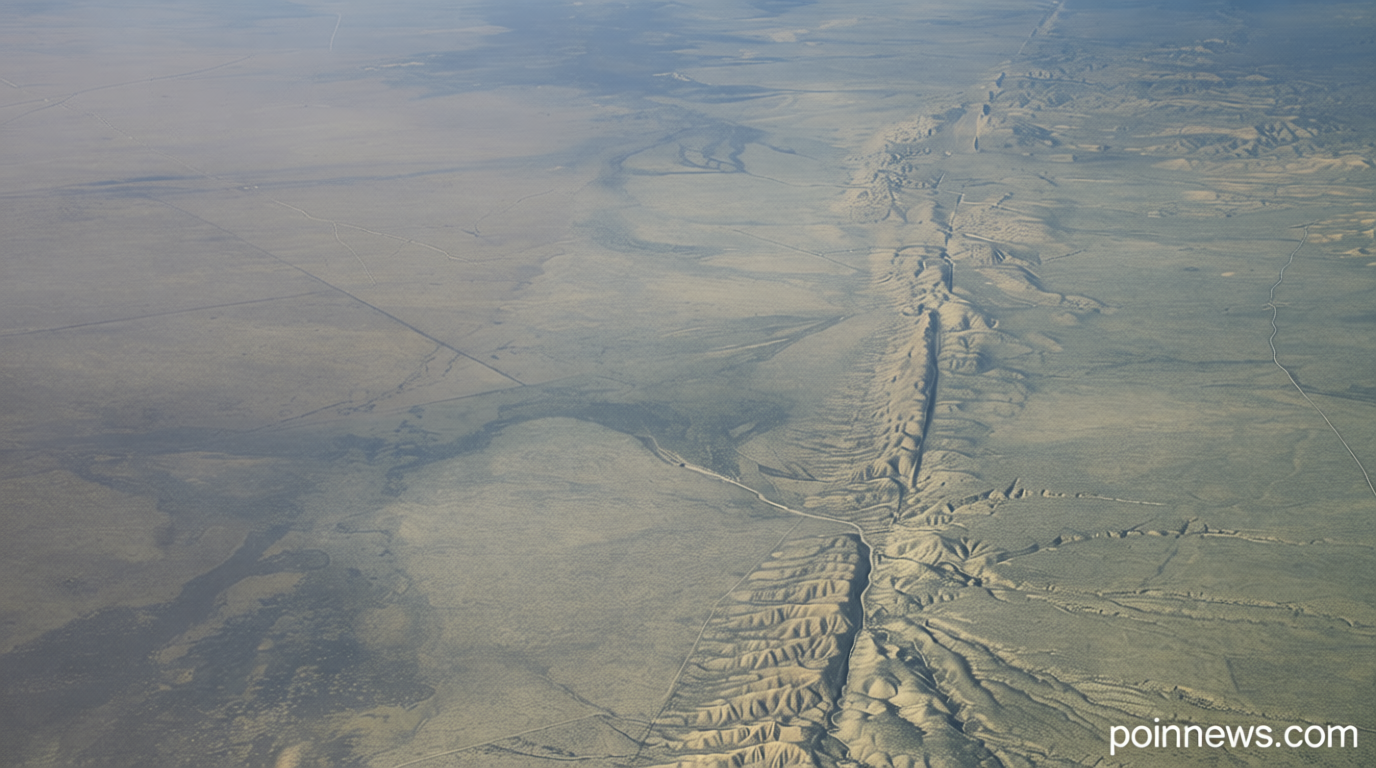
San Andreas Fault Reaches Highest Stress Level in 1,000 Years
Poinews.com – Recent scientific analyses have revealed that the San Andreas Fault is now experiencing the highest stress levels recorded in the past millennium, according to a groundbreaking study published in the Journal of Geophysical Research: Solid Earth. This development raises significant concerns about the seismic activity in Southern California, where the fault system has long been a focal point for geologists and disaster risk assessors. The study, conducted by researchers at the University of Hawai’i at Mānoa, highlights how the accumulated pressure along this critical tectonic boundary could lead to a major earthquake in the near future. While the research does not specify an exact timeline, it provides critical insights into how stress buildup on the San Andreas and San Jacinto fault systems has reached unprecedented levels, potentially altering the dynamics of future seismic events.
The Science Behind Stress Accumulation
Using advanced computer modeling, the team reconstructed the history of stress changes along the San Andreas Fault over the past 1,000 years. By analyzing geological data—including radiocarbon dating of displaced sediments and tree-ring records—they determined that the current stress levels on the fault are at their highest point since historical records began. This finding is particularly alarming because stress on tectonic faults typically builds gradually, with periodic releases through smaller earthquakes. However, the study suggests that this process may have stalled, leaving the fault in a more volatile state. The San Andreas Fault reaches highest stress levels not only in isolation but also in conjunction with adjacent fault systems, which could amplify the potential for a catastrophic rupture.
The research team emphasized that stress accumulation is a natural process, but the scale and timing of the current buildup are unusually high. For instance, the San Jacinto-Bernardino segment of the fault, which lies near the city of San Bernardino, is now under 3.6 megapascals of pressure—a level equivalent to the combined weight of two blue whales on every square meter of the fault. When scaled up, this pressure could be likened to over 6 billion blue whales pushing against the fault line. Such figures underscore the immense forces at play and the urgency for further monitoring and preparedness efforts.
Cajon Pass: A Critical Zone of Convergence
One of the most significant areas of focus in the study is Cajon Pass, a region where the San Andreas and San Jacinto faults intersect. Researchers have dubbed this area an “earthquake gate,” as it plays a pivotal role in determining how seismic energy is distributed between the two fault systems. The San Andreas Fault reaches highest stress levels in this zone, which could either block or channel the release of energy, potentially leading to simultaneous ruptures along both faults. This scenario would generate a much larger and more destructive earthquake than one originating from a single fault, according to the study.
“Cajon Pass acts as a bottleneck for stress transfer, and its current condition suggests a higher likelihood of a multi-fault event,” explained one of the lead researchers. “This could have far-reaching implications for regions like Los Angeles, San Bernardino, Riverside, and even the Coachella Valley.”
The study also notes that the San Andreas Fault reaches highest stress levels not just in Cajon Pass but across several segments, including the infamous Parkfield segment, which has historically experienced quakes at regular intervals. However, the latest findings indicate that these regular patterns may have been disrupted, leaving the fault in a state of heightened tension. While this does not confirm an immediate quake, it suggests that the potential for a major event has increased substantially, prompting experts to call for more comprehensive risk assessments and emergency planning.
Broader Implications for Seismic Risk Assessment
The research team’s work has introduced a new methodology for analyzing stress distribution in interconnected fault systems, which could be applied to other regions beyond California. This approach allows for more accurate predictions of how stress builds up over time and how it might be released in a coordinated manner. For example, the San Andreas Fault reaches highest stress levels in conjunction with the San Jacinto Fault, which is known for its frequent smaller quakes. By understanding these interactions, scientists can better model the behavior of complex fault networks and identify areas that may be more susceptible to large-scale seismic activity.
“This study represents a major leap in our ability to assess multi-fault earthquake scenarios,” stated a geologist from the University of Hawai’i at Mānoa. “It shows that the San Andreas Fault reaches highest stress levels not in isolation but as part of a larger system, which means we need to consider the fault as a whole when predicting future earthquakes.”
The findings have sparked renewed interest in the role of stress transfer between fault systems, a factor that has often been overlooked in traditional seismic models. By integrating this concept into risk assessments, experts can improve preparedness strategies for communities in high-risk areas. For instance, the San Andreas Fault reaches highest stress levels in regions where population density and infrastructure are most vulnerable, making it a key target for targeted mitigation efforts. The study also highlights the importance of continuous monitoring, as stress levels may continue to rise in the coming decades.
While the San Andreas Fault reaches highest stress levels in the past 1,000 years, the implications of this discovery extend beyond the immediate future. The research underscores that seismic activity is not random but follows patterns influenced by geological and tectonic processes. By understanding these patterns, scientists can refine their models and provide more precise risk assessments for regions like Southern California. This, in turn, can help policymakers and urban planners develop strategies to reduce the impact of future earthquakes, ensuring that communities are better equipped to withstand the consequences of the San Andreas Fault reaching highest stress levels.