Federal judge rejects bid to halt removal of Trump’s name from Kennedy Center building
Federal Judge Rejects Bid to Halt Trump's Name Removal from Kennedy Center Federal judge rejects bid to halt - A federal judge has dismissed a last-minute

Federal Judge Rejects Bid to Halt Trump’s Name Removal from Kennedy Center
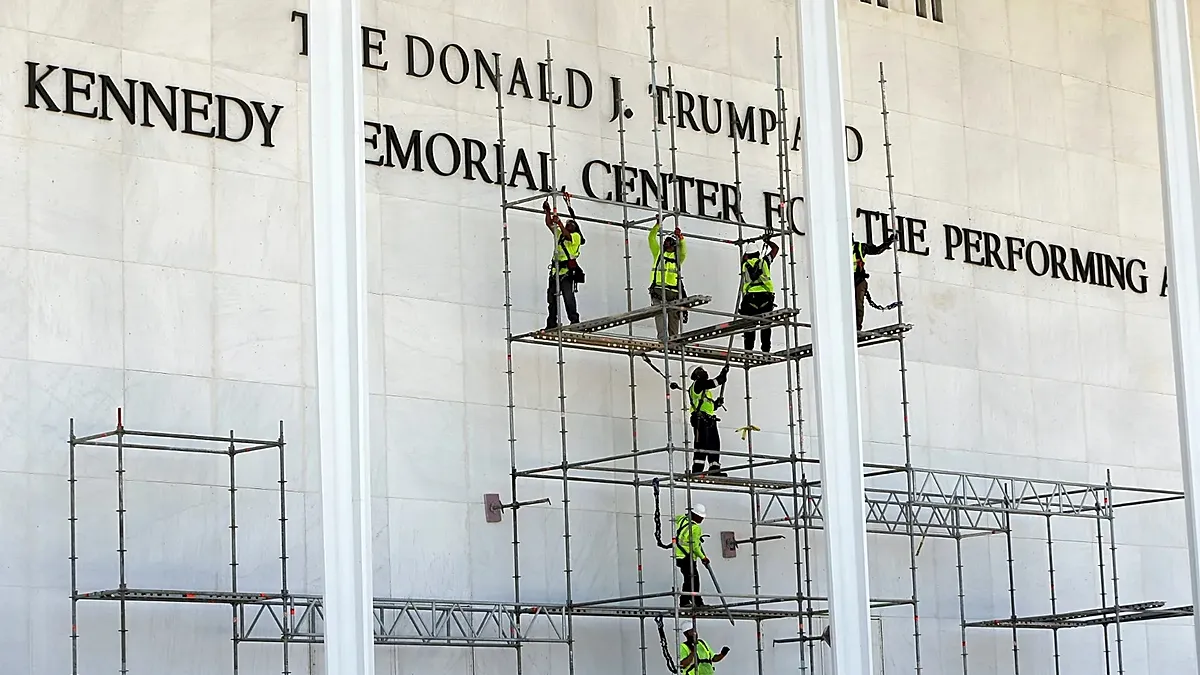
Poinews.com – A federal judge has dismissed a last-minute attempt to temporarily stop the removal of former President Donald Trump’s name from the Kennedy Center’s main building. The decision, issued on Friday, came after a legal challenge filed by the center’s board and the Justice Department, which sought to block the move under the argument that it was a rushed action without proper procedural grounds. The ruling by US District Judge Christopher Cooper underscores the growing momentum behind the effort to erase Trump’s legacy from the iconic cultural institution, despite his political allies’ objections.
Legal Arguments and Judicial Rationale
During the proceedings, the board and Justice Department argued that the renaming process violated established protocols for official name changes. They cited the Kennedy Center’s bylaws, which require a two-thirds majority vote for such modifications. However, Judge Cooper found that the board had already fulfilled this requirement, and the removal of Trump’s name from the building’s exterior was a direct result of their decision. In his ruling, the judge emphasized that the public interest was best served by allowing the name to be removed, particularly as the process had been completed before the court hearing.
“The public interest is rarely advanced by continuing ‘unlawful’ governmental actions,”
Cooper stated, highlighting that the renaming was a routine administrative decision rather than an executive overreach. The judge also noted that the Kennedy Center’s board, which Trump had heavily influenced during his presidency, had the authority to act on its own without needing additional judicial intervention.
Timeline of Events and Current Status
The removal of Trump’s name from the Kennedy Center’s website began earlier this week, marking the first step in the broader rebranding effort. However, the name remains visible on the building’s marble facade, which has been a point of contention for critics. The judge’s ruling has now cleared the way for the full removal of the name from all public displays, including the main entrance and signage. This move is expected to be completed within the next two weeks, as the administration has been given a 14-day window to finalize the process.
The legal battle reflects the broader political tensions surrounding Trump’s influence on cultural institutions. While the Justice Department supported the bid to halt the removal, it did not dispute the board’s authority to rename the building. Instead, the department focused on the potential for public backlash and the need for a formal review of the process. The judge’s decision, however, has validated the board’s actions, signaling a shift in the legal landscape regarding presidential namesakes in public spaces.
Trump’s Reaction and Political Context
President Trump expressed disappointment over the judge’s ruling, calling it a “political attack” on his administration. He had previously championed the renaming of the center as part of a broader strategy to ensure his name was associated with major institutions. The board’s decision to remove his name from the building’s exterior has been framed by critics as a symbolic act of distancing from Trump’s presidency, particularly given his recent criticisms of the arts sector.
The renaming of the Kennedy Center has also sparked debates about the role of public institutions in shaping national narratives. Some argue that the move is a necessary correction to reflect the current political climate, while others view it as an overreach that undermines the institution’s independence. The judge’s ruling has reinforced the idea that such decisions can be made by the board without requiring additional judicial oversight, provided they follow proper procedures.
Broader Implications and Public Response
The decision to remove Trump’s name from the Kennedy Center is part of a larger trend of reevaluating presidential affiliations with public spaces. Similar actions have included the renaming of the US Institute of Peace and the removal of Trump’s portrait from the Department of Justice and Agriculture. These changes have been met with mixed reactions, with some artists and activists applauding the move as a step toward accountability, while others criticize it as politically motivated.
Public opinion has also been divided. While some supporters of Trump have voiced frustration, others have welcomed the removal as a symbol of progress. The judge’s ruling has provided clarity on the process, allowing the Kennedy Center to proceed with its rebranding. Moving forward, the institution will continue to focus on its mission as a cultural hub, while the removal of Trump’s name becomes a landmark moment in the ongoing dialogue about the legacy of his presidency.