‘Take me to America’: Bosnia unites behind viral anthem in its World Cup return
'Take Me to America': Bosnia Unites Behind Viral Anthem in Its World Cup Return Take me to America - As Bosnia and Herzegovina made its long-awaited return to

‘Take Me to America’: Bosnia Unites Behind Viral Anthem in Its World Cup Return
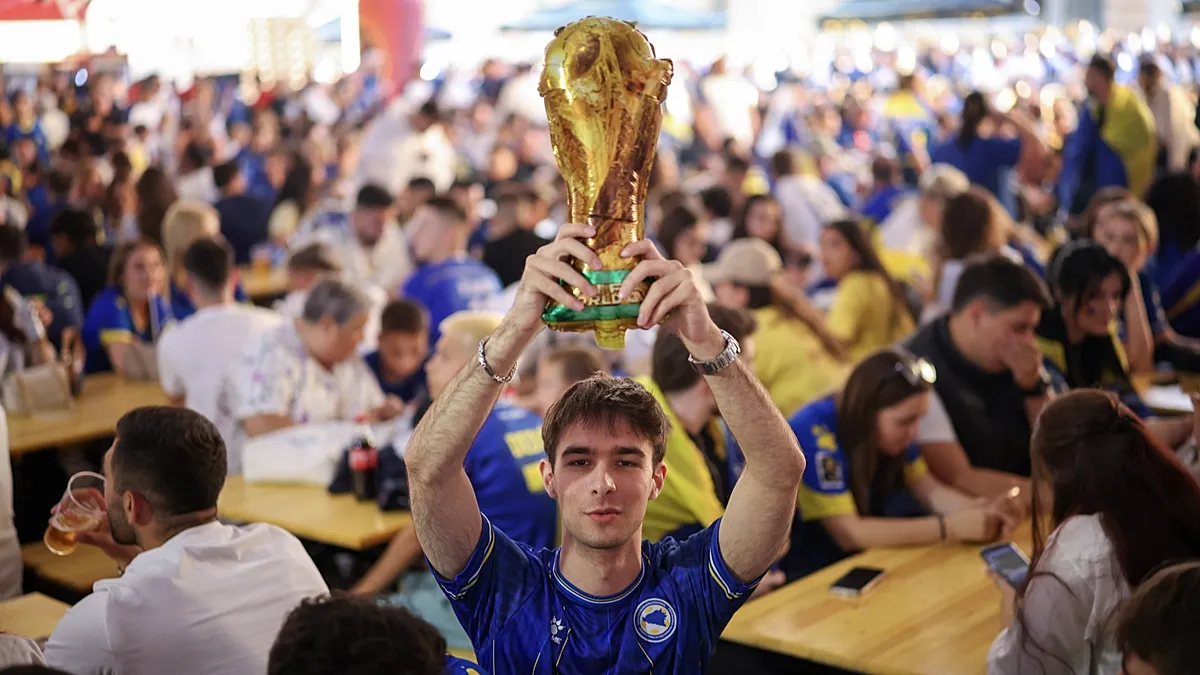
Poinews.com – As Bosnia and Herzegovina made its long-awaited return to the World Cup stage, the national team’s journey was underscored by the emotional power of a song that has captured hearts across the nation: “Take Me to America.” The anthem, which surged in popularity during the team’s match against Canada, became a unifying force for Bosnian fans and players alike, symbolizing hope, resilience, and the shared dream of escaping hardship. The moment it resonated in Toronto Stadium, where a small but fervent Bosnian contingent cheered alongside the Canadian supporters, marked a turning point in the country’s football history.
Bosnia’s path to the World Cup has been anything but straightforward. As a Western Balkan nation with a population of approximately 3.5 million, it had not competed in the tournament since its independence from Yugoslavia in 1992—a period marred by war and political fragmentation. The team’s qualification for the 2026 event came after a nail-biting penalty shootout victory over Italy in the European playoffs, a triumph that rekindled national pride. For many Bosnians, the World Cup return was not just a sports milestone but a testament to the country’s perseverance through decades of conflict and division.
The Rise of a National Symbol
The song “Take Me to America” by Dubioza Kolektiv, originally released in 2007, has undergone a remarkable transformation. Initially a satirical reflection on post-war Bosnian aspirations to leave their homeland for a better life, the lyrics have since been reinterpreted as a powerful anthem of unity and determination. The phrase “Take me to America” now evokes not just a longing for the American Dream but a collective call to stand together as a nation. This rebranding has been embraced by fans and players, who have adopted the song as a rallying cry during matches and in everyday life.
“The song’s evolution is fascinating,” remarked Vedran Mujagić, the band’s bassist. “It started as a joke about migration, but now it’s a symbol of something much bigger. People are taking ownership of it, and that’s what makes it truly special.”
The band’s journey mirrors that of the nation itself, with their music becoming a cultural touchstone. During the match, the anthem was sung by thousands of fans in the stadium, with its chorus echoing through the stands. Even superstar commentators like Thierry Henry and Zlatan Ibrahimović joined the chorus, highlighting its universal appeal. Henry’s children, who have Bosnian heritage, and Ibrahimović’s roots in the region further deepened the connection between the song and the team.
Bosnia’s performance in the tournament has been a standout moment for the country. In their opener against Canada, the team’s relentless defense and tactical discipline stood out, with over 70 clearances recorded—a testament to their tenacity. Despite Canada’s equalizing goal in the 78th minute, the Bosnians’ resilience on the field matched their emotional journey off it. The anthem, played in the closing moments of the game, became a reminder of the nation’s strength, even as they faced challenges both on and off the pitch.
Connecting Music and Identity
The song’s resurgence during the World Cup highlights the deep emotional ties between music and national identity. Dubioza Kolektiv, known for their blend of rock and folk, has always been a voice for Bosnian youth and culture. But the viral adoption of “Take Me to America” has elevated its status beyond mere entertainment. It has become a cultural emblem, representing not just the desire for escape but the determination to thrive despite adversity. Fans have taken to wearing t-shirts with the song’s lyrics, displaying banners at matches, and even incorporating it into public celebrations, reinforcing its role as a shared identity.
“This song has become more than what we created,” said Brano Jakubović, the band’s keyboardist. “It’s a reflection of the people. They’ve given it new life, and now it belongs to the entire nation.”
The anthem’s journey from a song about migration to a symbol of unity is a story of adaptation and resonance. Its lyrics, once rooted in the struggles of the 1990s, now serve as a reminder of the collective spirit of Bosnians. As the team continues its campaign, the anthem’s presence is a constant, uniting fans in a shared moment of pride and passion.
Beyond the stadium, the song’s influence extends to Bosnia’s broader social fabric. In a country still grappling with political tensions and economic struggles, the anthem offers a fleeting escape from daily hardships. It reminds people of their resilience and potential, even as they face challenges like stagnating EU membership talks and rising poverty rates. The World Cup has provided a platform for this unity, with “Take Me to America” serving as a reminder that, for a moment, the nation can be one, united by the same dream and the same hope.