Ukraine and Russia trade strikes as Kyiv inches closer to EU membership
Ukraine and Russia trade strikes as Kyiv inches closer to EU membership Ukraine and Russia trade strikes as Kyiv - Amid escalating hostilities, Ukraine and

Ukraine and Russia trade strikes as Kyiv inches closer to EU membership
Poinews.com – Amid escalating hostilities, Ukraine and Russia continue to exchange military strikes, with both sides intensifying their attacks in a volatile display of regional conflict. Recent reports indicate that Kyiv and Moscow engaged in a series of strikes across southeastern Ukraine and southern Russia, resulting in multiple casualties and significant infrastructure damage. Ukrainian forces have been reported to launch coordinated strikes targeting Russian energy and transportation hubs, while Russian artillery and drone attacks have focused on Ukrainian positions in the Donbas region. The ongoing clashes underscore the shifting dynamics in the war, as Kyiv’s strategic moves toward European integration appear to galvanize its military operations and provoke a stronger Russian response.
The Dnipropetrovsk Regional State Administration confirmed that Ukrainian strikes on Saturday caused nine injuries in the Dnipropetrovsk Oblast, a key industrial area near the frontlines. Russian forces, in turn, retaliated with over 20 aerial assaults across three districts, utilizing drones and precision munitions to target Ukrainian supply lines. Local authorities reported that the strikes disrupted critical infrastructure, including power stations and communication networks, complicating Kyiv’s efforts to maintain resilience. Meanwhile, in southern Russia, a Ukrainian drone strike in the Temryuk district of Krasnodar Krai left one civilian dead and three injured, with fire crews battling a blaze at a maritime terminal caused by falling debris. This incident highlights the reciprocal nature of the conflict, as both nations target each other’s vulnerabilities to gain strategic advantage.
Escalating military actions
The latest round of strikes marks a sharp increase in the intensity of the Ukrainian-Russian military confrontation. According to reports, Ukrainian forces have been conducting long-range attacks on Russian oil facilities, a move aimed at weakening Moscow’s economic and logistical capacity. President Zelenskyy recently revealed that Ukrainian strikes had targeted the Kuibyshev oil refinery in the Samara region and two infrastructure sites in the Vladimir region, significantly impacting Russian energy production. Additionally, FP-5 Flamingo cruise missiles struck a military plant in Cheboksary, a critical supplier of drones and missiles to Russian forces, further demonstrating Kyiv’s strategic focus on degrading Moscow’s military infrastructure.
Ukraine’s air force confirmed that its defenses intercepted 110 Russian Shahed attack drones on Friday night, a record high in recent weeks. These drones, deployed in large numbers by Russian forces, have become a staple of their aerial campaign, targeting Ukrainian villages and military installations. Zelenskyy emphasized that the use of drones and guided missiles has intensified since the beginning of the week, with over 530 drones and two air-launched guided missiles launched in a single day. The escalation has led to dozens of injuries, underscoring the growing toll of the conflict on both sides and the broader implications for the region’s stability.
EU membership progress
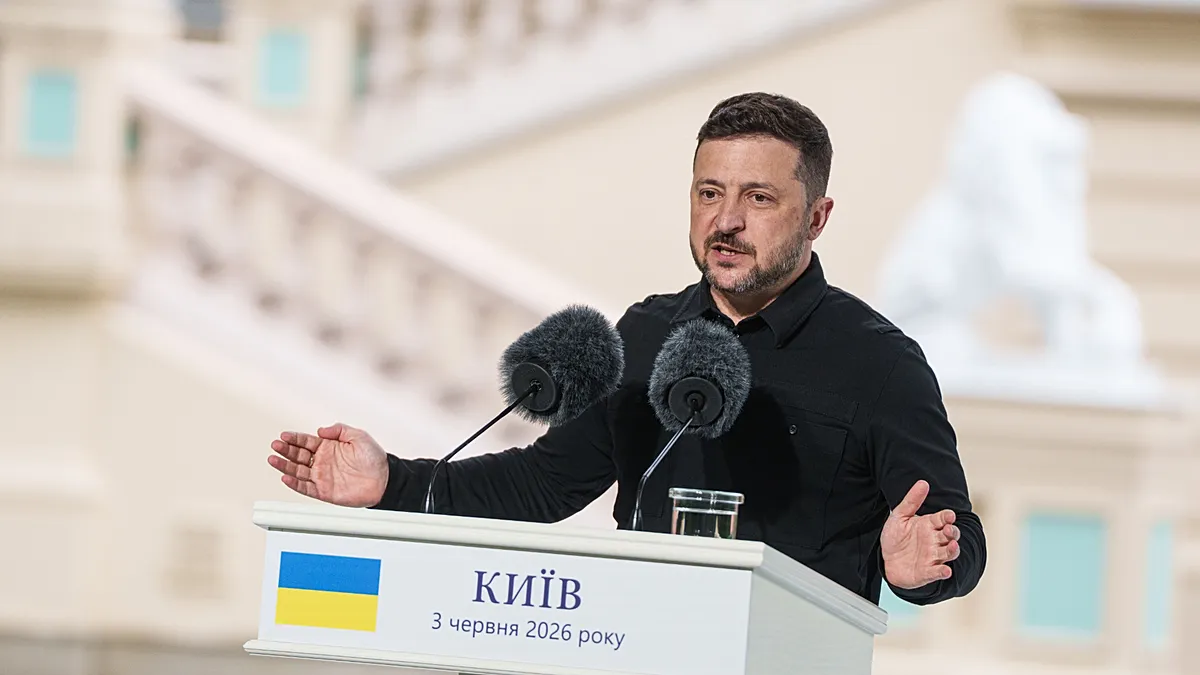
As the war rages on, Kyiv’s path to EU membership has gained momentum, with the European Commission set to initiate formal negotiations with Ukraine and Moldova. On Friday, European Commission President Ursula von der Leyen announced that EU member states had agreed to open the first phase of accession talks, a landmark step toward closer European integration. “At the first Intergovernmental Conference on Monday, we will open the cluster on fundamentals; the backbone of the accession process,” she wrote on social media, signaling the EU’s commitment to supporting Ukraine’s reforms despite ongoing challenges.
“This is a recognition of the determination, courage and hard work shown by both countries in advancing reforms, even in the face of immense challenges,” von der Leyen continued.
The decision comes as Ukraine and Moldova face persistent Russian aggression, with Moscow warning that their alignment with the EU could deepen the division between the two nations. In October, Kremlin spokesperson Dmitry Peskov criticized Moldova’s expanding relations with Brussels, calling it a “serious mistake” that risks further antagonizing Russia. He argued that Moldova’s growing ties to Europe imply a complete break with Moscow, a stance that has drawn sharp responses from Kyiv and its allies. The EU’s support for Ukraine is not only a political endorsement but also a practical effort to strengthen the country’s defenses against Russian attacks.
The recent military actions have also intensified scrutiny of Russia’s influence in the region. Analysts note that Kyiv’s increased strikes on Russian territory, combined with its push for EU membership, are designed to shift the narrative of the war and gain international backing. The European Union’s decision to open negotiations with Ukraine is seen as a pivotal moment, with the bloc aiming to solidify Kyiv’s security guarantees through political and economic integration. This move has been met with both enthusiasm in Ukraine and concern in Moscow, which views the EU’s involvement as a direct challenge to its geopolitical dominance in Eastern Europe.
Meanwhile, the ongoing strikes have exposed the vulnerabilities of both nations’ military and civilian infrastructure. Ukraine’s attacks on Russian energy facilities, such as the Kuibyshev refinery, have disrupted oil supplies, while Russia’s use of drones and guided missiles has caused significant damage to Ukrainian towns. The conflict has also raised questions about the sustainability of the war effort, with Kyiv relying heavily on international support to sustain its military campaigns. As the EU accelerates its membership process, the question remains: will the continued exchange of strikes between Ukraine and Russia weaken or strengthen Kyiv’s position in its bid for European integration?