Video. Berlin musician turns Germany football opener into musical spectacle
Video. Berlin Musician Turns Germany Football Opener Into Musical Spectacle Berlin musician turns Germany football opener - In a groundbreaking blend of music

Video. Berlin Musician Turns Germany Football Opener Into Musical Spectacle
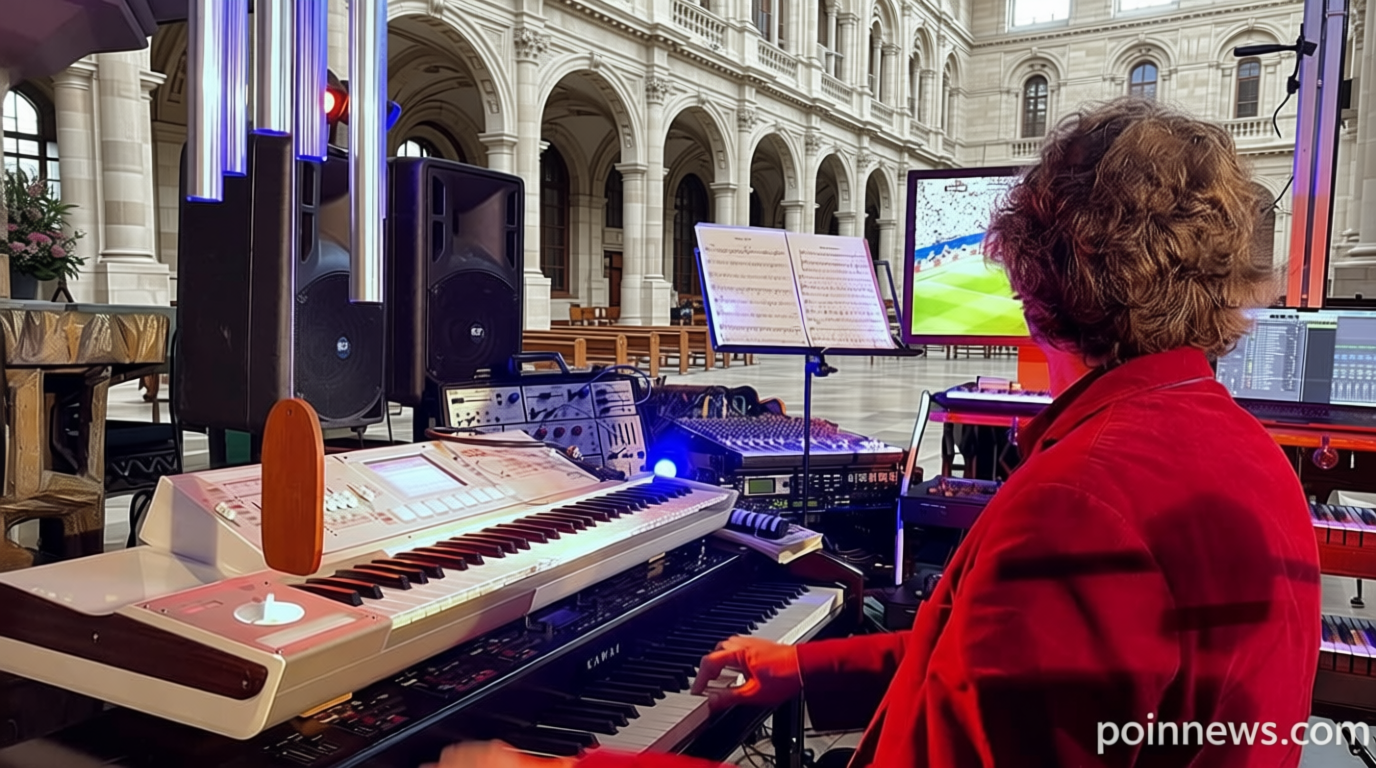
Poinews.com – In a groundbreaking blend of music and sports, a Berlin-based artist has reimagined the Germany national football team’s World Cup opener as an immersive, live musical event. The creative concept, which redefines traditional sports broadcasting, took place in the iconic Church of the Twelve Apostles in Schöneberg, where the nation’s football fans gathered to witness the match under a unique auditory experience. Instead of standard commentary, the performance featured dynamic compositions created in real-time, using a church organ and a custom-built CineTonium keyboard to reflect the rhythm, tension, and excitement of the game. This innovation not only captivated the audience but also sparked a global conversation about the fusion of art and sport in modern media.
A Revolutionary Approach to Live Broadcasting
The Berlin musician, whose identity is closely tied to the city’s cultural scene, transformed the pre-match buildup and in-game moments into a symphonic narrative. By synchronizing musical improvisation with the action on the field, the event offered a multisensory experience that engaged fans in a novel way. For instance, the first goal by Germany was accompanied by a powerful crescendo on the organ, while the midfield’s relentless movement translated into a syncopated rhythm on the keyboard. This approach ensured that every critical play, from a missed penalty to a last-minute winner, was amplified through sound, creating a unique atmosphere that blurred the lines between performance and competition.
Such an innovative format required meticulous coordination between the artist and the event organizers. The performance was streamed live to a massive screen, allowing fans to experience the match in real-time while the musician adapted his compositions to the unfolding drama. This real-time interplay was made possible by the CineTonium keyboard, a specialized instrument designed to respond to on-field actions with precision. The musician’s background in silent film scoring added a cinematic quality to the performance, making it feel like a grand stage production rather than a mere sports event. This collaboration between art and sports has since inspired discussions about the potential for similar formats in other international tournaments.
Community Engagement and Cultural Significance
The event’s donation-based model emphasized inclusivity and communal participation, allowing attendees to contribute to the experience. As the game progressed, the audience’s collective energy influenced the musician’s improvisations, creating a symbiotic relationship between the performer and the fans. This interactive element not only deepened the emotional connection to the match but also highlighted Berlin’s reputation as a hub for artistic experimentation. The Church of the Twelve Apostles, known for its architectural grandeur and historical significance, served as the perfect venue, blending the sacred with the secular in a celebration of creativity and national pride.
Public reactions to the performance were overwhelmingly positive, with many praising its ability to capture the essence of football in a fresh, artistic manner. Social media platforms buzzed with excitement as fans shared their experiences, using hashtags like #BerlinFootballConcert and #MusicalSpectacle to highlight the event’s uniqueness. The success of this initiative has since inspired similar performances in other cities, proving that the fusion of music and sport can transcend borders and create shared cultural moments. As the Germany football team’s journey continues, this innovative approach promises to keep the experience as dynamic as the game itself.
Artistic Innovation in Sports Media
The Berlin musician’s work represents a broader trend in redefining how sports are experienced through the lens of performance art. By integrating live music with the World Cup opener, the event challenged conventional sports broadcasting norms, offering a more emotionally resonant alternative. The use of the CineTonium keyboard, a tool developed specifically for synchronizing sound with visual media, allowed for seamless transitions between different musical themes, mirroring the ebb and flow of the match. This level of technical sophistication underscored the artist’s commitment to pushing creative boundaries, making the event a standout moment in the tournament’s history.
Moreover, the performance highlighted the potential for cities to become active participants in major sporting events. Rather than passively consuming the game, Berliners were invited to engage with it through a shared artistic experience, fostering a sense of unity and pride. The event also demonstrated the versatility of venues like the Church of the Twelve Apostles, which can host both religious services and high-energy concerts. This adaptability is a testament to the city’s cultural vibrancy and its ability to repurpose spaces for innovative purposes. As the World Cup progresses, the question remains: how many more cities will embrace this fusion of music and sport?
The Future of Musical Sports Spectacles
The success of the Germany football opener’s musical transformation has paved the way for future events, with the artist planning similar performances for all matches in the tournament. These concerts aim to maintain the same level of artistic quality while ensuring each game receives a distinct auditory identity. For example, the second match of the tournament is expected to feature a different musical palette, reflecting the evolving narrative of the team’s campaign. This consistency in innovation will keep the experience fresh, demonstrating that music can serve as a powerful tool to enhance the emotional depth of sports.
As the Germany football team continues its journey, the musical spectacle has already begun to influence how fans perceive the game. The event’s ability to translate football into a sensory-rich experience has sparked comparisons to cinematic scores, with some critics calling it a “new era in sports storytelling.” The Berlin musician’s work not only celebrates the team’s performance but also reimagines the role of art in sports culture, offering a blueprint for future events. This approach has the potential to redefine live sports viewing, making it a more immersive and memorable experience for audiences worldwide.