Iran ‘played Trump like a violin’ in deal, former national security adviser Bolton tells Euronews
Iran Played Trump Like a Violin in Deal, Bolton Says Iran played Trump like a violin - Former U.S.

Iran Played Trump Like a Violin in Deal, Bolton Says
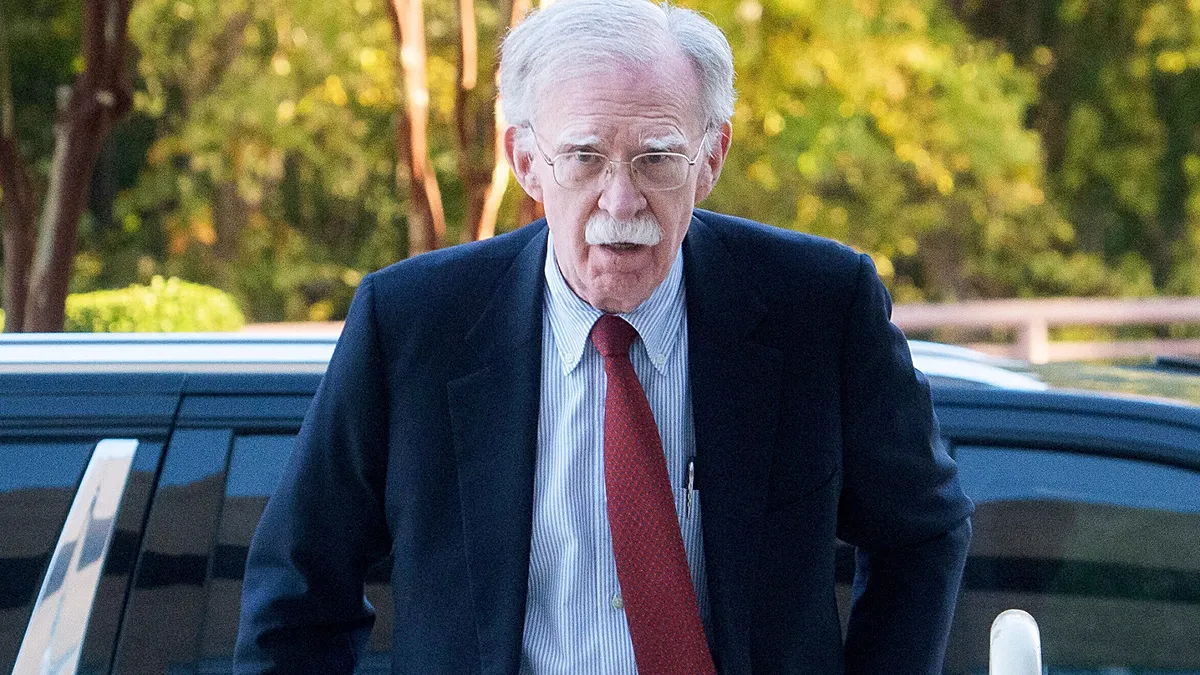
Poinews.com – Former U.S. National Security Adviser John Bolton, who worked under President Donald Trump during his first term, has criticized Iran’s strategic maneuvering in a recent international agreement. In a recent interview with Euronews, Bolton described how Iran effectively leveraged Trump’s desire for a swift resolution to the ongoing tensions, securing terms that were less favorable to the United States. This approach, which Bolton likened to “playing Trump like a violin,” has raised concerns about the long-term implications of the deal on U.S. national security and geopolitical influence.
“They’ve played him like a violin,” Bolton remarked. “That’s why they’ve got the deal that they want.”
Trump’s Priorities and the Cost of Diplomacy
Bolton argued that Trump’s negotiation strategy was heavily influenced by economic priorities, particularly the need to maintain access to the Strait of Hormuz and stabilize global oil prices. He pointed out that the president’s focus on immediate benefits, such as lowering gasoline costs, led to a deal that Iran perceived as advantageous. “Trump isn’t thinking about the geo-strategic implications of the deal. He’s thinking of one thing. He wants the strait open. He wants Gulf oil on international markets. He wants the price of gasoline at the pump down. That’s all he cares about,” Bolton said. This narrow lens, Bolton claimed, allowed Iran to dominate the bargaining table, as the U.S. seemed more interested in short-term gains than enduring alliances.
“The way Iran played Trump like a violin shows how they’ve turned his focus into a weapon against us,” Bolton added, emphasizing the lack of leverage for Washington in the final agreement.
Framework Agreement and Transparency Concerns
Bolton expressed skepticism about the framework agreement’s lack of published details, suggesting that transparency is essential for a fair deal. He highlighted unresolved issues, such as Iran’s uranium enrichment program, the extent of sanctions relief, and the practicality of reopening the Strait of Hormuz. “If it were a great deal, it would be out in public. And I think that tells you pretty much what you need to know,” he stated. The absence of clear text, Bolton warned, could leave the U.S. vulnerable to Iran’s continued nuclear ambitions.
“Iran played Trump like a violin in the way they presented their nuclear program,” Bolton explained, noting how the regime’s assurances were treated as binding commitments despite their potential for renegotiation.
Iran’s Leadership and the Long-Term Strategy
Bolton dismissed the notion that Iran’s leadership had fundamentally changed after U.S. and Israeli strikes, arguing that the core of the regime remained intact. He claimed that the changes were superficial, with only the top ranks replaced by secondary figures. “The change of leadership is only because we’ve killed the top four or five hundred people in the existing regime and you’re down now to their seconds and deputies. So, yeah, it’s different people, but it’s the same fanatic regime,” he explained. This assessment suggests that Iran’s strategic goals—such as nuclear capability—have not wavered, despite the pressure from external forces.
Strategic Leverage and Election-Year Pressures
Bolton contended that Trump’s decision to prioritize economic interests over military readiness weakened U.S. influence in the negotiations. He argued that the president’s eagerness to secure a deal before the November midterm elections allowed Iran to dictate terms. “That takes away the biggest weapon we have, the biggest leverage we have over Iran. That’s all they will understand,” he stated. The focus on immediate results, Bolton warned, could have long-term consequences for the stability of the Middle East.
“Iran played Trump like a violin because they knew how to manipulate his focus,” Bolton said, highlighting the importance of maintaining a balanced approach in future talks.
European Support and the G7 Summit Context
During the G7 summit in Evian, French President Emmanuel Macron reiterated Europe’s commitment to ensuring freedom of navigation through the Strait of Hormuz. However, Trump’s skepticism about the need for European involvement underscored his belief in a more unilateral approach. Bolton noted that the U.S. had signaled a lack of readiness for further military action before the election, leaving Europe to pick up the slack. “The deal is a reflection of how Iran played Trump like a violin, using his focus on energy to secure their interests,” he said, drawing a parallel between the U.S. president’s approach and the regime’s own tactics.
“This is the same game Iran played Trump like a violin. They’re not committed to the deal; they’re just using it as a temporary shield,” Bolton remarked, questioning the sincerity of Iran’s promises.