VivaTech 2026: Why learn German when AI can talk for you, asks DeepL CEO
the Need for German When AI Can Translate for You VivaTech 2026 - Jarek Kutylowski, co-founder and CEO of DeepL, envisions a world where language no longer

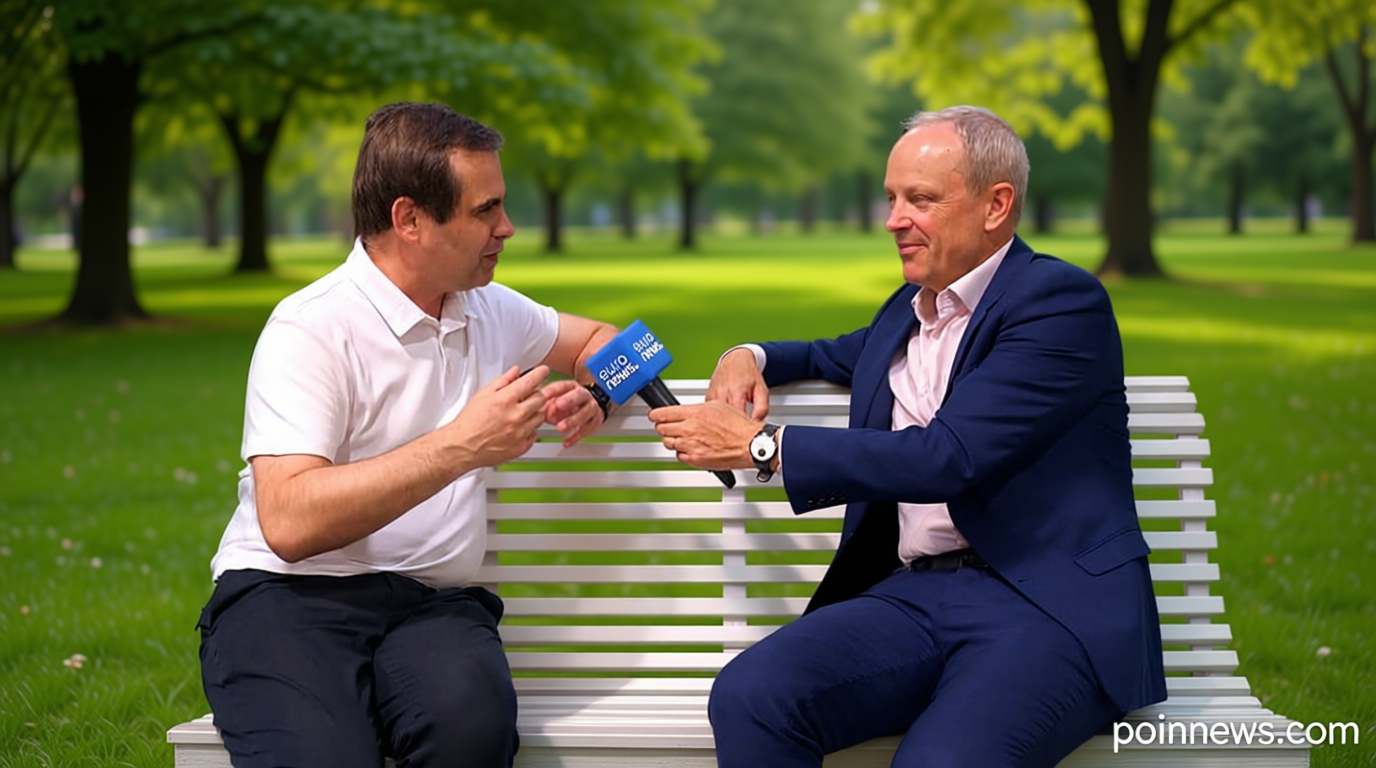
VivaTech 2026: DeepL CEO Questions the Need for German When AI Can Translate for You
Poinews.com – Jarek Kutylowski, co-founder and CEO of DeepL, envisions a world where language no longer acts as a barrier in international business. At VivaTech in Paris, he shared his thoughts on how AI could revolutionize communication, particularly in multilingual settings. Kutylowski imagined a meeting with participants from Greece, Russia, Egypt, and Germany, each speaking their native tongue while simultaneously hearing others in their own language—highlighting the potential of real-time translation technology.
The Vision for Seamless Communication
Kutylowski emphasized that his goal is to enable individuals to converse in their own language without needing to adapt to others. “If you’re in an interview in Portugal, you should be able to speak your language and the other person to speak theirs,” he said. “The aim is a fully fluent exchange where both parties not only comprehend each other but also feel secure and confident.” This vision is tailored for everyday business scenarios, especially in virtual meetings that increasingly define global collaboration.
He noted that platforms such as Microsoft Teams or Zoom simplify integration for multilingual interactions. “Many modern conversations happen virtually, and these tools already have microphones and speakers built-in,” Kutylowski explained. The system allows users to select their preferred language, with the rest of the process managed effortlessly in the background. “You invite DeepL into your meeting,” he said, underscoring the user-friendly approach.
DeepL’s Technological Edge
The Cologne-based company has positioned itself as a leader in real-time AI translation. According to a 2026 Slator evaluation, DeepL Voice outperforms competitors like Microsoft Teams, Zoom, and Google Meet on accuracy, fluency, and reliability. It achieved a quality score of 96.4 out of 100, demonstrating its advanced capabilities.
Kutylowski’s focus remains on business clients, especially in high-stakes environments. Recently, his firm acquired Mixhalo, a San Francisco-based platform specializing in ultra-low-latency audio. The merger aims to enhance DeepL’s offerings for events like VivaTech, as well as customer support and other cross-border workflows. “Mixhalo has solved one of the toughest challenges in live audio—delivering high-fidelity sound to thousands with near-zero delay,” he remarked.
Cultural Nuances and Human Learning
Despite his optimism about AI translation, Kutylowski acknowledges the complexities of cultural context. “You can’t perfect this because certain ideas are deeply tied to a culture’s history and can’t be fully conveyed in another,” he admitted. His own upbringing in Poland and Germany, where divergent histories shaped his worldview, illustrates this point. “Understanding two cultures through their languages was incredibly valuable,” he said, reflecting on his personal experience.
He draws a parallel between language learning and mathematics. “Schools still teach addition and subtraction by hand, even though computers do it better,” Kutylowski noted. “That’s because it’s essential for human development.” This reasoning supports his belief that language learning retains value, even as AI improves. “It’s worth studying a language because it opens doors to understanding another culture,” he emphasized.
Looking ahead, Kutylowski has set his sights on Japanese, a language he calls “a fascinating challenge.” “It’s so intricate yet so elegant, and different enough to make it a significant test,” he said. His ambition is to eliminate language as a constraint in business, allowing companies to expand globally without hesitation. “If you run a French business, you can start selling in Germany tomorrow—without ever thinking about the German language,” he asserted.