Elon Musk’s business empire: The companies behind the world’s richest man
ehind the world's richest man From humble beginnings to a global enterprise Elon Musk s business empire - Elon Musk's business empire is a testament to

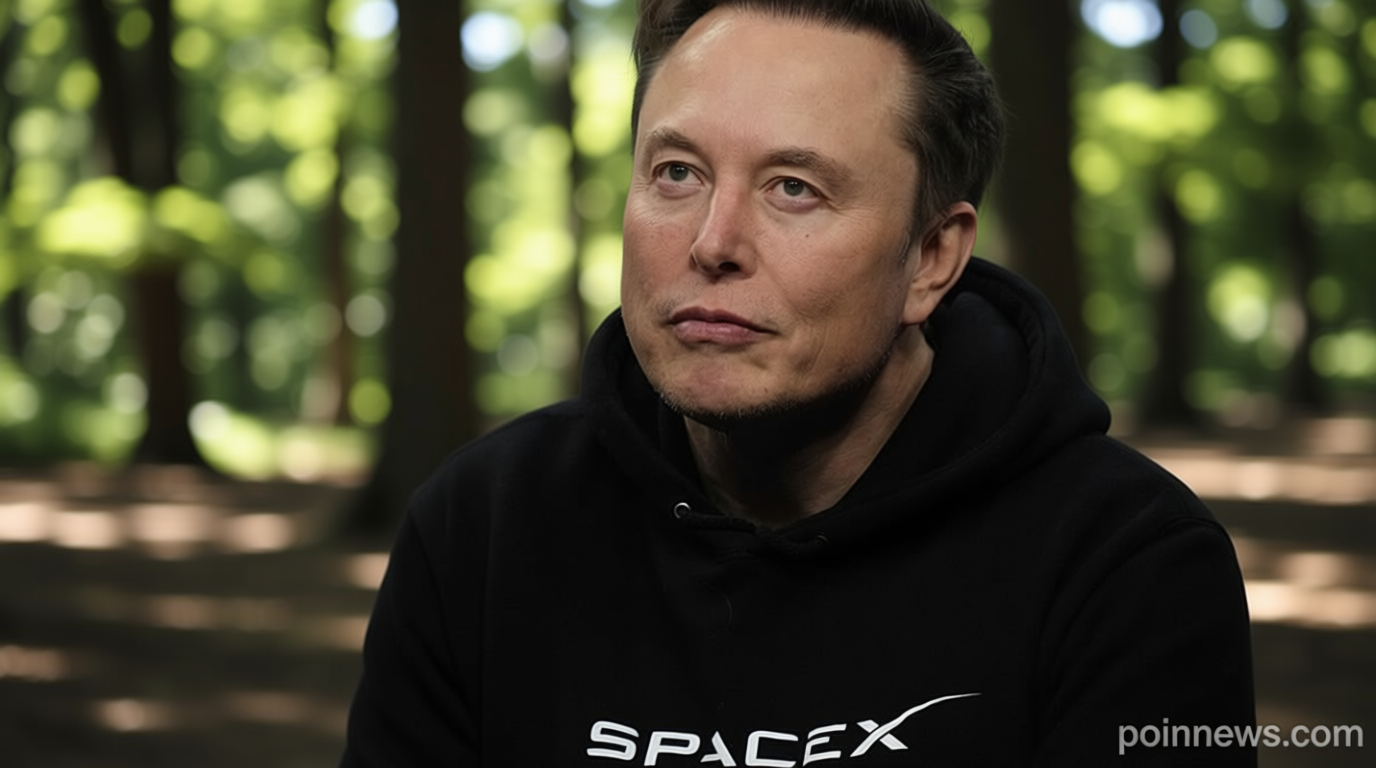
Elon Musk’s business empire: The companies behind the world’s richest man
From humble beginnings to a global enterprise
Poinews.com – Elon Musk’s business empire is a testament to relentless innovation and calculated risk-taking. With a net worth that has often placed him as the world’s richest individual, Musk’s ventures span multiple industries, from electric vehicles and space exploration to artificial intelligence and renewable energy. His journey began in the late 1990s, when he sold a video game at age 12 for $500, a modest start that would eventually evolve into a sprawling portfolio of companies. By 1999, the sale of his first major venture, Zip2, to Compaq for over $300 million, provided the financial foundation to launch X.com, a pioneering online payment platform. This marked the beginning of a business empire that would redefine technological frontiers and challenge traditional industries.
Building the foundation: Zip2 and PayPal
Elon Musk’s business empire was built on the back of early successes and strategic vision. Zip2, co-founded in 1995 with his brother Kimbal Musk, was a web-based software company that offered directory services to newspapers, enabling them to provide digital business listings and maps. The company’s growth was propelled by Musk’s coding expertise and a bold approach to the nascent internet industry. Its acquisition by Compaq in 1999 not only secured Musk’s financial stability but also set the stage for his next endeavor: X.com. This platform, which later merged with Confinity to form PayPal, became a cornerstone of his business empire, eventually being sold to eBay for $1.5 billion in 2002. These early ventures established Musk as a serial entrepreneur with a knack for transforming niche ideas into industry leaders.
Space exploration and the rise of SpaceX
Elon Musk’s business empire expanded dramatically in the early 2000s when he shifted his focus from the internet to space exploration. In 2002, he launched SpaceX, a private aerospace manufacturer and space transportation company, with a personal investment of $100 million. At the time, the idea of making space travel affordable and reusable was considered audacious, but Musk’s vision and technical acumen drove the company to achieve milestones others thought impossible. His role as both CEO and chief engineer was instrumental in SpaceX’s development, culminating in the first privately funded liquid-fueled rocket to reach orbit in 2008. Today, SpaceX remains a pivotal component of Musk’s business empire, with its recent stock market debut pushing its valuation to over $2.43 trillion and cementing its status as a leader in aerospace innovation.
Electrifying the future: Tesla and renewable energy
Elon Musk’s business empire is equally defined by his work at Tesla, a company he co-founded in 2003 and later became its CEO in 2008. Tesla’s mission to accelerate the world’s transition to sustainable energy has driven its growth from a niche electric vehicle (EV) manufacturer to a global automotive giant. The company’s success is not just in its cars but also in its broader impact on renewable energy solutions, including solar power and energy storage. Musk’s leadership has been central to Tesla’s evolution, particularly in scaling production and expanding into new markets. His vision for a future where electric vehicles dominate roads and renewable energy powers homes has made Tesla a cornerstone of his business empire, despite its fluctuating financial performance and challenges in maintaining profitability.
Interconnected ventures and long-term goals
Elon Musk’s business empire is characterized by its interconnectedness, with companies like SpaceX, Tesla, and SolarCity working in tandem to achieve overarching ambitions. SolarCity, founded in 2006, was initially a separate solar energy firm but was later integrated into Tesla’s business model, highlighting Musk’s strategy of creating synergies between his ventures. His most recent focus on artificial intelligence has given rise to xAI, a subsidiary dedicated to advancing AI research, which, though currently operating at a loss, underscores his commitment to long-term innovation. Despite setbacks and financial volatility, Musk’s business empire continues to grow, with each venture contributing to his goal of colonizing Mars, establishing a presence on the Moon, and revolutionizing transportation and energy systems on Earth.
Leadership, vision, and the future of the empire
Elon Musk’s business empire thrives on his unique leadership style, which blends technical brilliance with unyielding determination. His ability to envision a future far beyond the current industry norms has made him a polarizing yet influential figure. While critics question the sustainability of his ventures’ financial models, supporters argue that his ambitious projects—such as Starlink’s satellite internet network, which generated $4.4 billion in revenue last year—are shaping the next era of technology. As his companies continue to push boundaries, Musk’s business empire remains a dynamic force, constantly evolving and redefining what it means to be a modern-day innovator. The question is not just about the success of individual firms but about the collective impact of his empire on global industries and future possibilities.
“Failure was the most likely outcome,” Musk reportedly warned friends and investors when founding SpaceX in 2002. Yet, his business empire has turned these warnings into realities, with each venture paving the way for the next. From the internet to space, and from electric cars to artificial intelligence, Musk’s empire is a reflection of his unwavering belief in the transformative power of technology and his willingness to take on monumental challenges.