Robin Hood’s famed Sherwood Forest 1,200-year-old oak tree declared dead
Robin Hood’s Famed Sherwood Forest 1,200-Year-Old Oak Tree Declared Dead Robin Hood s famed Sherwood Forest 1 - The iconic Major Oak in Robin Hood’s famed

Robin Hood’s Famed Sherwood Forest 1,200-Year-Old Oak Tree Declared Dead
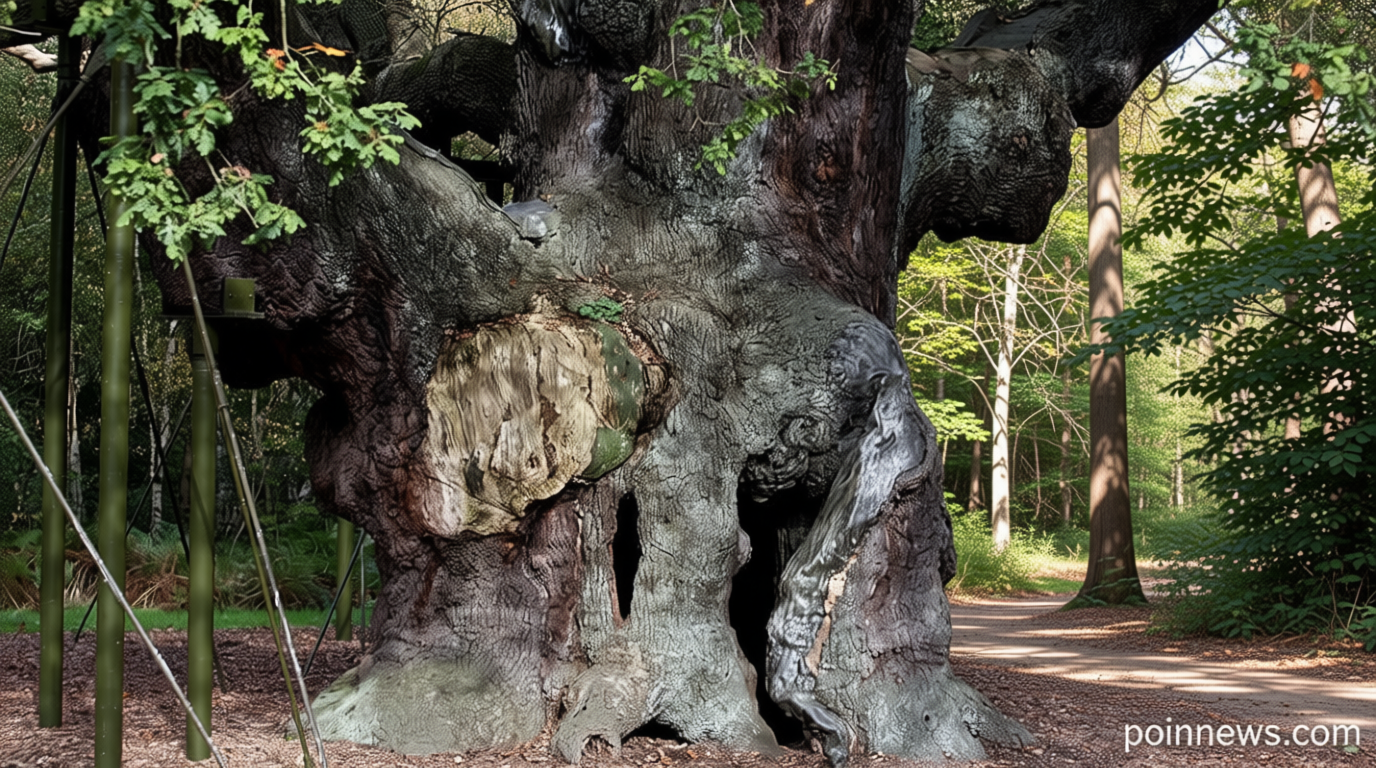
Poinews.com – The iconic Major Oak in Robin Hood’s famed Sherwood Forest has been officially confirmed as dead, marking a somber moment for the historic site and its centuries-old folklore. This tree, estimated to be over 1,200 years old, has long been a symbol of the legendary outlaw’s exploits and a cornerstone of the forest’s cultural and ecological identity. Conservationists, including the Royal Society for the Protection of Birds (RSPB), have expressed concern over its demise, citing years of environmental strain as the primary cause. The absence of new foliage this spring has led to the conclusion that the tree, which once stood as a natural landmark, is now beyond recovery.
A Symbol of Robin Hood’s Legacy
For generations, the Major Oak has been intertwined with the mythos of Robin Hood’s famed Sherwood Forest, often depicted as a refuge for the outlaw and his band of merry men. While its exact connection to the legend remains debated, its role as a revered natural monument is undisputed. The tree’s presence has shaped the imagination of countless visitors and storytellers, becoming a focal point for both historical reenactments and modern-day tourism. The loss of such a significant tree not only diminishes the forest’s visual heritage but also signals a broader challenge for preserving ancient woodlands in the face of climate change and human activity.
“This tree has stood as a silent witness to centuries of history and a beacon of the Robin Hood s famed Sherwood Forest’s enduring charm,” remarked a spokesperson for the Woodland Trust. “Its death is a reminder of the delicate balance between preserving natural wonders and accommodating the growing demands of tourism and development.”
Historical and Environmental Significance
Historically, the Major Oak has served as a living archive of the forest’s evolution, from medieval times to the present. It has been a gathering spot for local communities and a source of timber for shipbuilding and construction, contributing to the region’s economic and cultural development. The RSPB highlighted that the tree’s death represents a loss of biodiversity, as it had provided habitat for rare species such as the dormouse and the red squirrel. Conservationists are now working to document the tree’s final days and explore ways to protect other ancient oaks in Robin Hood’s famed Sherwood Forest from similar fates.
Experts have noted that the tree’s decline was gradual, influenced by a combination of factors. Prolonged periods of drought, shifting climate patterns, and the relentless footsteps of millions of visitors have all contributed to its deterioration. Soil compaction from heavy foot traffic has restricted the tree’s ability to absorb nutrients, while rising temperatures have accelerated the decay of its root system. These challenges underscore the urgent need for sustainable management practices in heritage sites like Robin Hood’s famed Sherwood Forest, where natural beauty and historical significance are equally at stake.
The Future of the Forest’s Legacy
Despite the Major Oak’s passing, its legacy remains alive in the hearts of those who have cherished its presence. A new film titled The Death of Robin Hood, directed by Michael Sarnoski, has been released to commemorate the tree’s final chapter, blending historical narrative with contemporary storytelling. The movie draws inspiration from the 17th-century ballad Robin Hood’s Death, which has long been a staple of the legend’s evolution. This creative homage ensures that the tree’s story continues to captivate audiences, even as its physical form fades.
Meanwhile, conservationists are intensifying efforts to preserve the remaining ancient trees in Robin Hood’s famed Sherwood Forest. Saplings grown from the Major Oak have been planted in various locations worldwide, symbolizing the hope that its genetic lineage will endure. Local initiatives are also exploring ways to reduce environmental stress on the forest, including improved visitor pathways and reforestation projects. These steps aim to safeguard the ecosystem while maintaining the cultural allure that has drawn people to Robin Hood’s famed Sherwood Forest for centuries.
As the forest moves forward without its most celebrated tree, the community remains united in its efforts to honor its memory. Educational programs and guided tours now highlight the Major Oak’s history, ensuring that its story is passed on to future generations. The tree’s death has sparked a renewed conversation about the importance of protecting ancient woodlands, not just as natural resources but as vital links to our shared heritage. Robin Hood’s famed Sherwood Forest continues to be a testament to the power of nature and the enduring tales it inspires, even in the face of change.