Polish president strips Zelenskyy of Poland’s highest state honour
Polish President Strips Zelenskyy of Poland’s Highest State Honour Polish president strips Zelenskyy of Poland - On June 20, 2026, Polish President Karol

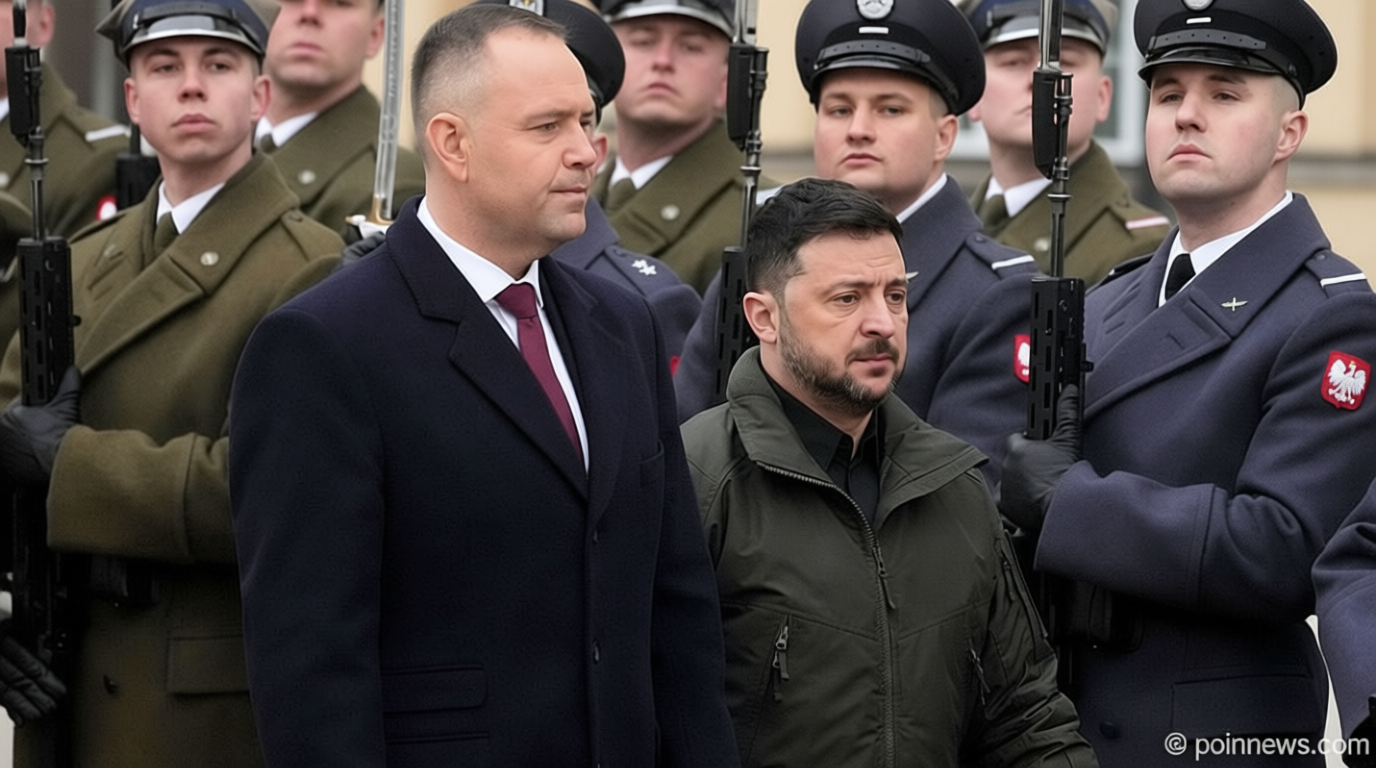
Polish President Strips Zelenskyy of Poland’s Highest State Honour
Poinews.com – On June 20, 2026, Polish President Karol Nawrocki made a significant decision that has sent ripples through European political circles: he stripped Ukrainian President Volodymyr Zelenskyy of the Order of the White Eagle, Poland’s most esteemed state award. The move was prompted by Ukraine’s announcement of naming a military unit after the Ukrainian Insurgent Army (UPA), a group historically associated with collaboration with Nazi Germany during World War II. This action has intensified debates about Poland’s position on historical narratives and its commitment to Ukrainian sovereignty in the context of the ongoing Russia-Ukraine war.
Historical Context and Political Motivations
The Order of the White Eagle, established in 1705, is one of the oldest and most prestigious decorations in Europe, symbolizing exceptional contributions to the nation. Nawrocki’s decision to revoke the honor from Zelenskyy reflects a broader effort to highlight the UPA’s role in the 1940s, where it was linked to the persecution of Poles and Jews during the Holocaust. By connecting Zelenskyy to this historical episode, the Polish leader aims to underscore concerns about the potential dilution of Poland’s national identity in the face of growing Ukrainian nationalism.
In a statement shared on X, Nawrocki emphasized that the revocation was not an act of hostility toward Ukraine but a symbolic gesture to “reaffirm Poland’s historical truth.” He argued that the Order of the White Eagle, awarded in 2023, had been given under the assumption that Zelenskyy represented a unified Ukrainian front. However, the recent decision to honor the UPA, a faction often viewed as antagonistic to Poland during the war, has prompted a reassessment of the award’s significance.
Ukrainian Response and Diplomatic Repercussions
Zelenskyy responded swiftly, returning the Order of the White Eagle and asserting that the medal was a “special symbol” representing the shared legacy of Poland and Ukraine. In a public address, he stated, “We believed the Order of the White Eagle, conferred in 2023, was meant for the Ukrainian People and our army. That is what was said at the time. Today, I sent the Order back to the President of Poland. I believe the future will confirm the respect Ukrainians deserve.” His remarks suggest a strategic choice to maintain unity within Ukraine while acknowledging the sensitivity of the issue.
Ukraine’s foreign minister, Andrii Sybiha, called the Polish decision a “strategic mistake, from which only Russia will benefit.” He also announced the return of the Commander’s Cross of the Order of Merit of the Republic of Poland, a separate honor awarded in 2022. This decision by the Ukrainian leadership signals a willingness to address historical grievances while maintaining diplomatic ties with Poland. The head of Ukraine’s presidential office, Kyrylo Budanov, and its ambassador to Poland, Vasyl Bodnar, joined the effort, citing the need to rectify perceived historical injustices.
“The Polish President Karol Nawrocki has made an unfriendly gesture towards our nation by stripping Ukrainian President Volodymyr Zelenskyy of the Order of the White Eagle. This is a gift to the Moscow aggressor, who will ruthlessly exploit it against both our countries.”
“While I understand the emotions in Poland, I cannot accept that the President of Ukraine, Volodymyr Zelenskyy – a friend of Poland, the head of a state bravely defending itself against the Russian aggressor – has been stripped of Poland’s highest decoration.”
The Institute of National Remembrance, a Polish government body, has already begun planning an information campaign to reinforce the historical narrative of the UPA’s role in wartime collaboration. This effort is part of a larger strategy to ensure that Poland’s historical identity remains central to its international relations. Meanwhile, parliamentary speaker Ruslan Stefanchuk warned that the decision could undermine cooperation between the two nations, which has been crucial in military and economic support since 2022.
Polish Prime Minister Donald Tusk criticized the move on X, stating that it “delights Putin and shocks our allies,” and urged leaders to “calm emotions, not fuel tensions.” His comments reflect the broader concern that the revocation might be interpreted as a weakening of Poland’s stance against Russian aggression. However, opposition figures have rallied behind Nawrocki, arguing that the action is necessary to uphold historical accuracy and national pride. Politicians from the Left and the Poland 2050 party, on the other hand, have expressed worries that the decision could strain Poland’s relationship with Ukraine, a key ally in the region.