Has Brexit made Europe stronger or weaker? MEPs go face-to-face on The Ring
Has Brexit made Europe stronger or weaker? MEPs go face-to-face on The Ring Has Brexit made Europe stronger or weaker - As the decade since Brexit continues

Has Brexit made Europe stronger or weaker? MEPs go face-to-face on The Ring
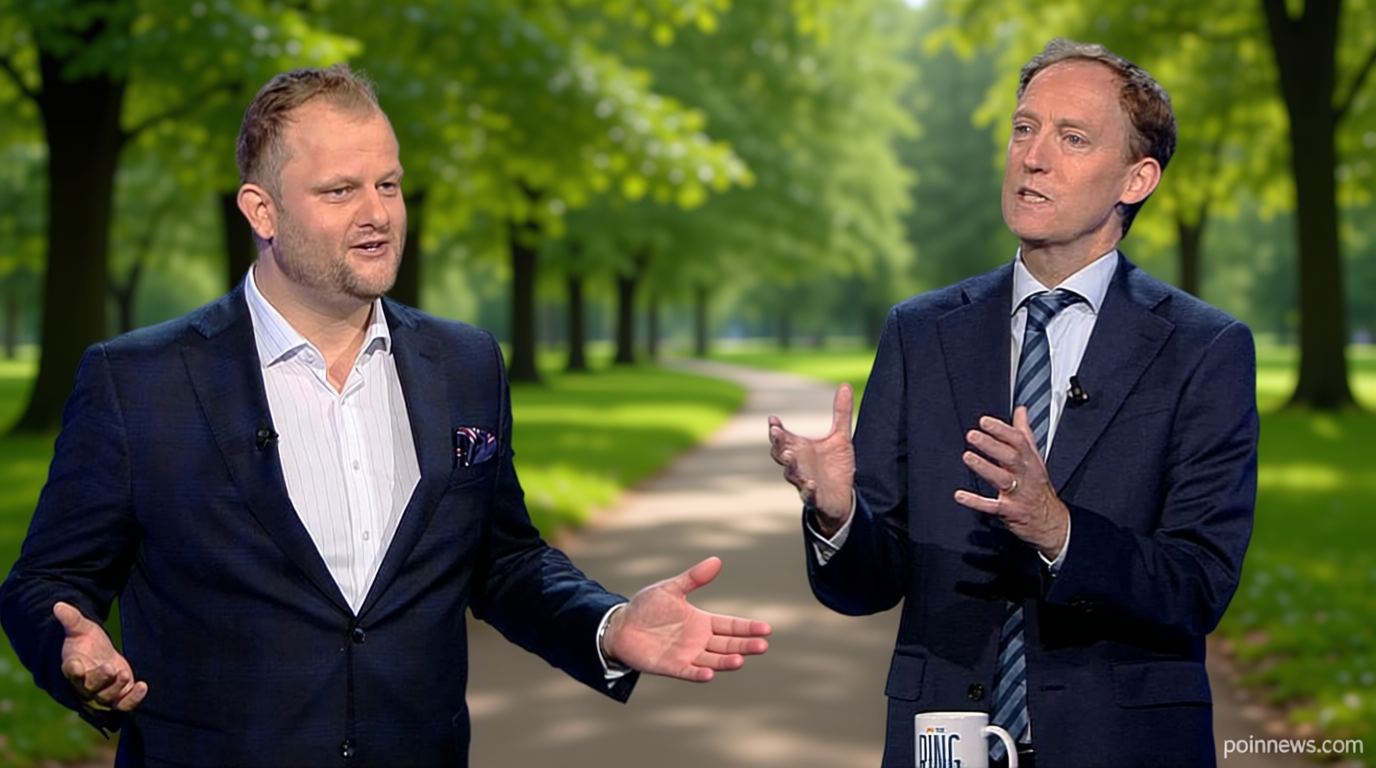
Poinews.com – As the decade since Brexit continues to unfold, the question of whether the UK’s departure from the European Union has bolstered or weakened the continent’s collective strength remains a polarizing debate. On a recent episode of The Ring, a live debate platform hosted by Méabh Mc Mahon, European Parliament members Barry Andrews of Renew Europe and Sander Smit of the European Conservatives & Reformists engaged in a heated discussion, offering divergent perspectives on the long-term implications of the UK’s exit. The conversation, which delved into economic, political, and social dimensions of Brexit, highlighted how the EU has adapted to the loss of its largest member while grappling with the challenge of maintaining unity in the face of diverging national interests.
The Debate on Europe’s Unity
Andrews, representing the Renew Europe group, opened the discussion by framing Brexit as a pivotal moment that has reshaped the EU’s trajectory. He argued that the UK’s withdrawal has not only consolidated the European project but also spurred a renewed sense of solidarity among member states. “Brexit has acted as a catalyst for Europe’s resilience,” he said, pointing to the bloc’s ability to navigate crises like the pandemic and energy shortages with greater coordination. His assertion that “there is nobody looking to leave the European Union anymore” underscores the belief that Brexit has become a cautionary tale, reinforcing the EU’s appeal as a cohesive political and economic entity.
“There is nobody looking to leave the European Union anymore.”
In contrast, Smit emphasized the potential vulnerabilities exposed by Brexit. He contended that the UK’s departure has created a power vacuum, particularly in areas like trade policy and regulatory frameworks. “The EU’s strength lies in its diversity, but Brexit has made it clear that we are not immune to division,” Smit remarked, highlighting how the absence of a major player has forced the bloc to reconsider its governance model. He called for a more flexible approach, warning that the EU’s current structure might stifle innovation and adaptability in a rapidly evolving global landscape.
Broader Impacts on European Integration
The debate extended beyond the immediate effects of Brexit to consider its broader implications for European integration. Andrews pointed to the EU’s increased focus on consolidating its institutions, citing the creation of the European Stability Mechanism and the expansion of the European Investment Bank as evidence of strengthened cooperation. He also noted that the UK’s exit has allowed the EU to streamline decision-making processes, particularly in areas like climate policy and digital regulations, where consensus was previously difficult to achieve.
“Our future lies in a stronger partnership.”
Smit, however, challenged this view, arguing that the EU’s response to Brexit has sometimes prioritized unity over innovation. He referenced the EU’s increased reliance on top-down policies, such as the proposed “Fit for 55” package, which he believes has sidelined member states’ unique priorities. “While Brexit has strengthened the EU in some ways, it has also revealed our tendency to over-centralize power,” he said. This critique aligns with broader concerns among some MEPs that the bloc is losing its ability to respond to the diverse needs of its population, potentially undermining its long-term cohesion.
Economic and Political Challenges
One of the most significant aspects of the debate centered on the economic fallout of Brexit. Andrews acknowledged the UK’s economic challenges, such as reduced access to the single market and increased trade barriers, but argued that these have ultimately strengthened the EU’s economic model. “The UK’s struggles post-Brexit have demonstrated the benefits of a unified market,” he stated, citing the EU’s continued growth despite global economic uncertainties. However, Smit countered that the EU’s economic strength has been compromised by the loss of the UK’s financial contributions, which he estimated to be around €25 billion annually. “Without the UK, we face a more fragile economic foundation,” he warned, calling for a reevaluation of the EU’s fiscal policies.
“The UK’s financial contributions have been a cornerstone of the EU’s stability.”
The discussion also touched on political dynamics within the EU. Andrews argued that Brexit has galvanized European leaders to address internal divisions, such as those between eastern and western members, with greater urgency. “The UK’s exit has forced us to confront the need for a stronger, more inclusive European identity,” he said. Smit, while agreeing that Brexit has highlighted the EU’s challenges, stressed that the bloc must avoid becoming overly rigid in its approach. “The EU has the potential to grow stronger, but only if it learns to balance unity with flexibility,” he added, suggesting that the UK could still play a role as a strategic partner even after leaving the union.
The Role of Public Opinion
Public sentiment within the EU has also been shaped by Brexit’s legacy, according to both MEPs. Andrews noted that the UK’s departure has sparked a wave of pro-EU sentiment across member states, with citizens increasingly favoring closer integration. “The fear of Brexit has made people more aware of the value of the European project,” he observed, referencing polls showing rising support for EU membership in countries like France and Germany. Smit, however, pointed to the EU’s need to address concerns about democratic accountability, arguing that Brexit’s success is tied to the bloc’s ability to respond to citizens’ demands for greater transparency and efficiency in governance.
“The fear of Brexit has made people more aware of the value of the European project.”
The episode concluded with a reflection on the EU’s path forward. While Andrews expressed optimism about Europe’s strengthened unity, Smit urged caution, emphasizing the need for ongoing dialogue between the EU and the UK. “Has Brexit made Europe stronger or weaker?” the question lingered, with the MEPs agreeing that the answer depends on how the EU chooses to adapt to the new geopolitical reality. Their discussion underscored the complexity of Brexit’s legacy, suggesting that its impact will continue to evolve as the bloc moves toward a more resilient and inclusive future.