How this country is adopting AI in schools
How this country is adopting AI in schools How this country is adopting AI - Kazakhstan's President Kassym-Jomart Tokayev has directed the government to

How this country is adopting AI in schools
Poinews.com – Kazakhstan’s President Kassym-Jomart Tokayev has directed the government to implement an AI-driven education strategy, aiming to connect urban and rural schools before scaling the program nationwide. A pilot project will begin this September, targeting 500 schools in remote areas that lack sufficient staffing. These schools will gain access to high-speed internet and updated digital tools, with the initiative set to last until May 2027.
Supporting Educators Through Remote Learning
Experienced teachers will use AI to deliver lessons remotely to students in underserved rural schools, combining live and recorded sessions. “Our goal is to ensure top educators reach every child, no matter their location,” explained Sergei Companiec, the country’s Vice-Minister of Enlightenment. This approach seeks to bridge resource disparities while leveraging technology to expand educational opportunities.
AI as a Learning Companion
A national AI platform is set to assist in analyzing student performance, flagging those who need extra support, and giving educators instant insights. Officials stress that AI will complement, not replace, teachers, offering tools to streamline administrative tasks and focus on personalized teaching. The system will adapt to individual learning needs, providing advanced tasks for faster students and extra exercises for those struggling.
Training for the Future
More than 350,000 educators have already completed AI training, with over 100,000 using OpenAI’s GPT-edu platform. Companiec highlighted that the pilot project will include specialized training for teachers in rural schools, ensuring they can effectively use new technologies. This preparation is critical for integrating AI into daily classroom activities without disrupting traditional teaching methods.
Real-Time Monitoring in Astana
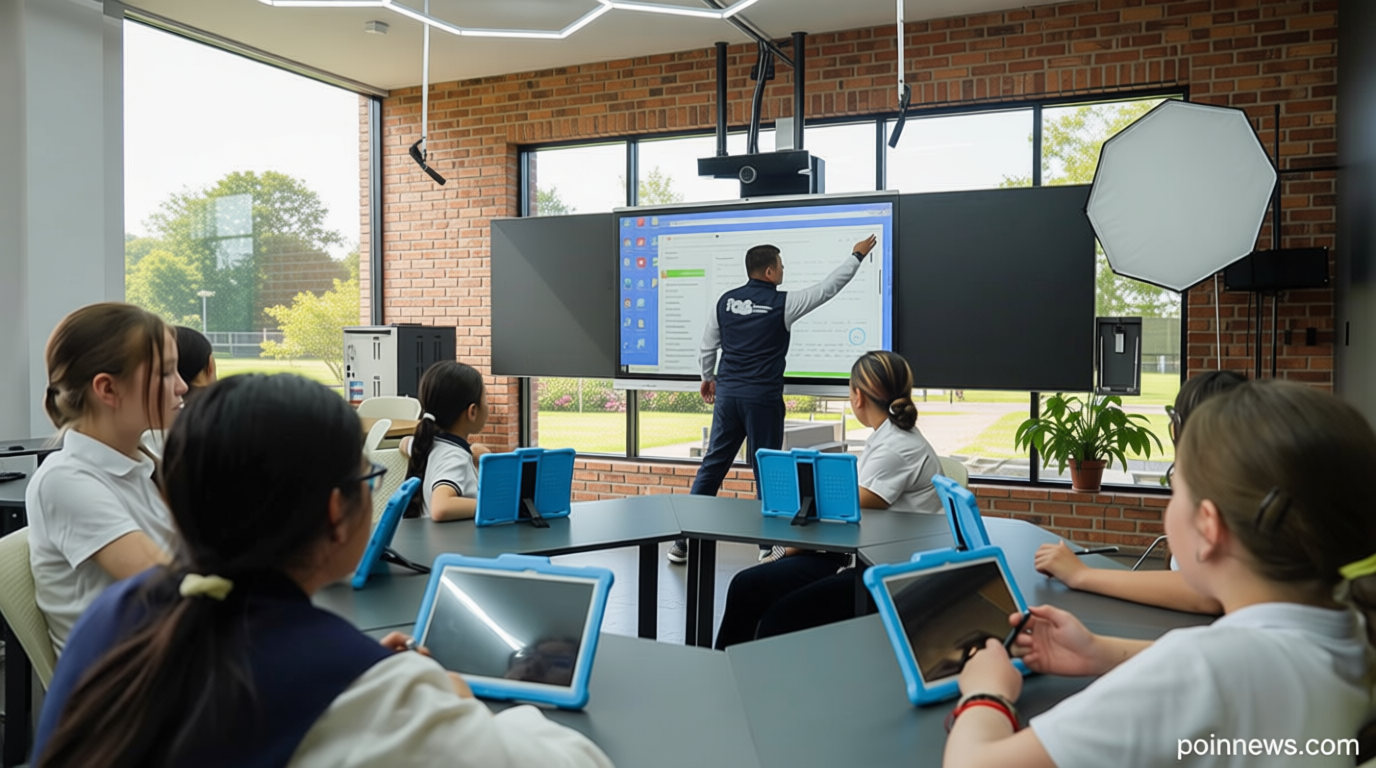
At public school No. 101 in Astana, AI is already tracking student progress through classroom cameras, audio systems, and tablet-based assignments. The data generated helps teachers understand performance patterns in real time. Students also engage with high-performance computers, 3D printers, and drones to build practical digital skills. “The aim is for pupils to use AI and equipment to create innovative projects,” said Aitzhan Abilmazhinov, the school’s digitalization deputy head.
Focus on Student Wellbeing
AI is being used beyond academics to monitor student wellbeing and detect potential bullying. By analyzing video footage, the system identifies behaviors that may signal issues, allowing timely intervention. Abilmazhinov emphasized that the technology supports emotional and social development alongside academic growth.
Guidelines for Ethical Use
Alongside the AI rollout, a framework of ethical principles is under development to govern its application in education. This will help prevent overreliance on technology while ensuring students retain critical thinking skills. “When a teacher provides information, the student’s task is to form their own viewpoint and compare data,” noted Saltanat Zhumabayeva, Director of the Ybyrai Altynsarin National Academy of Education. The plan aims to balance automation with human guidance, fostering a more tailored learning environment.