Viral fake AI-image shows Macron kneeling before Thai king
Viral fake AI image shows Macron kneeling before Thai king Viral fake AI image shows Macron - The viral fake AI image shows Macron - a widely circulated

Viral fake AI image shows Macron kneeling before Thai king
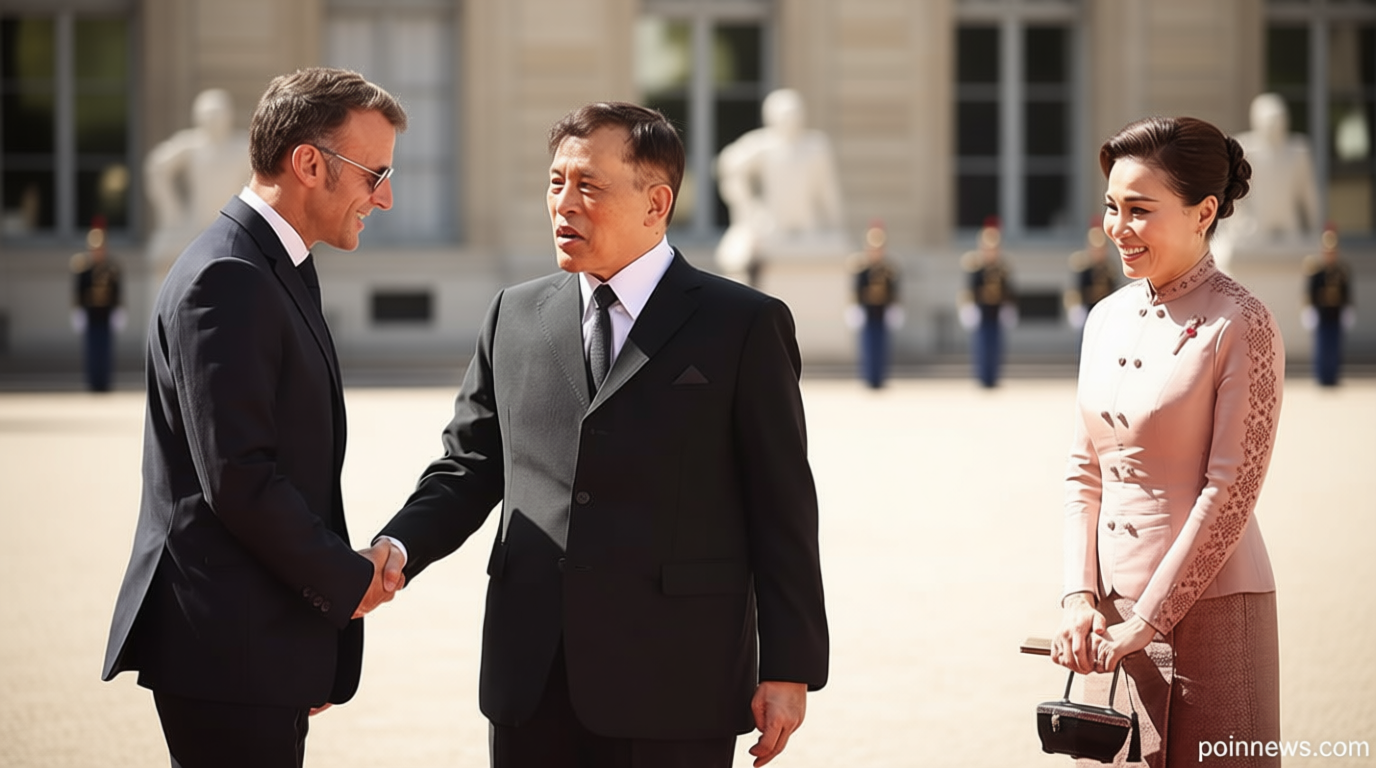
Poinews.com – The viral fake AI image shows Macron – a widely circulated digital depiction of French President Emmanuel Macron bowing before Thailand’s King Maha Vajiralongkorn – has been debunked by the Thai foreign ministry as a misleading fabrication. The image emerged online shortly after the king’s state visit to Paris, a historic occasion that marked the first royal trip from Thailand to France since 1960 and celebrated 170 years of bilateral diplomatic relations. This event, which drew significant international attention, became the focal point of a digital controversy fueled by the AI-generated image, raising questions about its authenticity and the broader implications of AI-driven misinformation.
Context of the State Visit and Royal Ceremony
The state visit, held in June 2026, was a key diplomatic milestone between France and Thailand, highlighting their long-standing partnership. During the official ceremony at the Elysée Palace, Macron presented the 73-year-old monarch with the Grand Cross of the Legion of Honour, France’s highest civilian award, and also awarded Queen Suthida, the king’s consort, the Grand Cross of the National Order of Merit. These honors symbolized the deep cultural and political ties between the two nations, yet the viral fake AI image shows Macron in a more submissive posture, which quickly ignited public debate and scrutiny.
Spread of the AI-Generated Image
The image, which appears to depict Macron kneeling as he presents royal decorations, gained traction on social media platforms within hours of its release. A Thai-language Facebook post shared the image over 40,000 times, with thousands of reactions and shares in a short span. The post was amplified by a page with more than two million followers, known for promoting military and nationalist narratives. This rapid spread underscored the power of AI-generated content to capture public imagination and influence perceptions, even before its authenticity was questioned.
“There is no evidence of any image showing Emmanuel Macron kneeling to present a royal decoration,” stated a Thai foreign ministry official to AFP, clarifying that the AI image was a misrepresentation of the actual event. The official emphasized that the official photographs released by the Thai government depicted Macron in a standing position, directly contradicting the viral fake AI image shows. These discrepancies sparked discussions about the reliability of digital media in reporting high-profile events and the need for critical evaluation of AI-generated content.
Analysis of the Image’s Authenticity
Experts and fact-checking organizations quickly analyzed the viral fake AI image shows, identifying key visual inconsistencies. One notable detail was the attire of the figure resembling Queen Suthida, which did not match the actual photographs taken during the visit. Additionally, the image was found to contain a SynthID watermark, a marker used by OpenAI to identify AI-generated content. This discovery provided concrete evidence of the image’s artificial nature, prompting further investigation into how it was created and disseminated.
While the Thai government confirmed the image was not authentic, the viral fake AI image shows sparked a wave of speculation and discussion among social media users. Some questioned Macron’s political stance, while others speculated on the king’s influence over the French leader. The image’s ability to evoke such strong reactions demonstrated the potential of AI-generated media to shape narratives and create confusion in the digital age.
Broader Implications of AI-Driven Misinformation
The incident is not an isolated case of AI-generated content causing controversy. In June 2026, similar images of Princess Sirivannavari, the king’s younger daughter, weeping after the death of his eldest daughter, Princess Bha, also went viral before being exposed as fabrications. These examples highlight the growing role of AI in creating and spreading misinformation, particularly around sensitive topics like royal family dynamics. As AI tools become more sophisticated, the line between reality and digital fabrication grows thinner, necessitating greater awareness and verification efforts from both the public and media organizations.
The viral fake AI image shows Macron’s kneeling posture before the Thai king has become a case study in the challenges of digital misinformation. While the image was debunked, its widespread circulation underscores the need for critical thinking and fact-checking in an era where AI can generate highly realistic visuals with minimal effort. This incident also raises questions about the role of social media algorithms in amplifying content that may mislead, even when it lacks factual basis. As AI continues to evolve, the importance of discerning truth from fabrication will only grow, particularly in the context of international diplomacy and high-profile events.