Lefebvrists answer Pope after excommunication as Redemptorist schism looms
Lefebvrists Answer Pope After Excommunication as Redemptorist Schism Looms Lefebvrists answer Pope after excommunication as Redemptorist - The Lefebvrists, a

Lefebvrists Answer Pope After Excommunication as Redemptorist Schism Looms
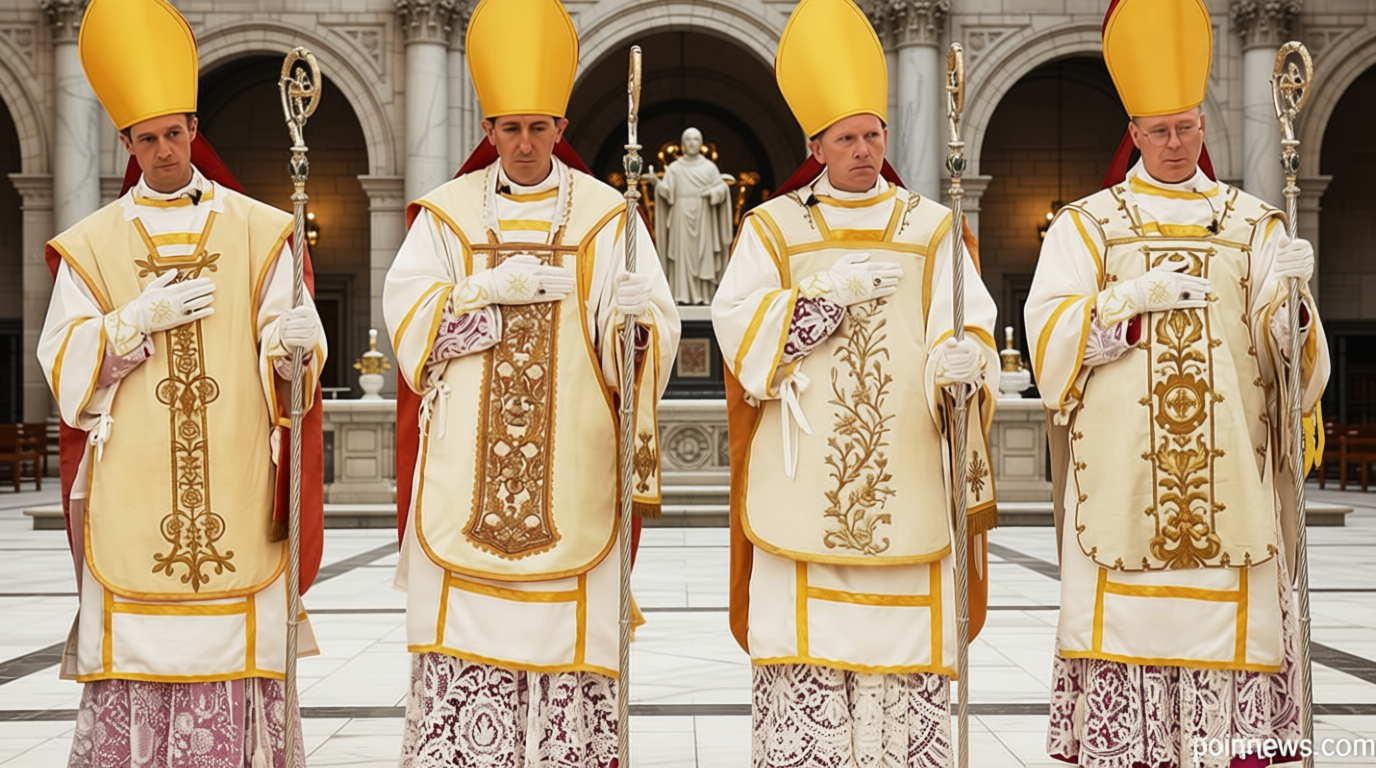
Poinews.com – The Lefebvrists, a faction within the Redemptorist Order, have formally responded to Pope Francis’ excommunication of their leaders, marking a pivotal moment in the growing divide within traditionalist Catholicism. This reaction comes after the Pope’s decisive action on 3 July 2026, which targeted the group for defying Vatican authority by ordaining new priests without papal approval. The Lefebvrists, led by their superior general, have emphasized their unwavering commitment to the Roman Church, despite the excommunication. In a letter published following the event, Father Davide Pagliarani expressed both sorrow and defiance, arguing that the Vatican’s condemnation of the so-called “Lefebvrists” is not only unjust but also invalid in its application to the group’s traditionalist practices.
The Context of the Excommunication
The excommunication, a rare and severe ecclesiastical penalty, followed the Lefebvrists’ decision to consecrate new bishops in the Scottish Orkney Islands. This act, which took place on 25 July 2026, was a direct challenge to the Pope’s authority, as it bypassed the Vatican’s established procedures. The group’s founding figure, Archbishop Marcel Lefebvre, had long advocated for a return to pre-Vatican II practices, and his followers continue to uphold his vision. The Pope’s decision to excommunicate them highlights the tension between the Church’s modernization efforts and the traditionalist movement’s resistance to change. This conflict has deepened over the years, with the Lefebvrists’ answer to the Pope becoming a focal point of the growing schism.
“I asked for bread and was given a stone,” Pagliarani cited from the Gospel of Luke, framing the excommunication as a metaphor for the Pope’s perceived betrayal of traditionalist values. He criticized the Vatican’s approach, arguing that it fails to address the existential challenges facing the Church, including moral and doctrinal uncertainty in contemporary society. The Lefebvrists’ response underscores their belief that the Pope’s actions are a departure from the Church’s historical traditions, which they view as essential to its spiritual integrity.
Traditionalist Practices and Resistance to Modernization
The Lefebvrists’ rejection of modernization since the Second Vatican Council has defined their identity and mission. They advocate for the continuation of the Latin Mass, a practice that emphasizes the use of traditional liturgy, and have maintained their orientation by having priests face away from the congregation, a custom that predates the Council’s reforms. This stance has been central to their separation from the mainstream Church, as they argue that the changes introduced in the 1960s have diluted the faith’s authenticity. The Lefebvrists’ answer to the Pope’s excommunication is rooted in this conviction, with many within the group believing that the Vatican’s insistence on modern practices is a threat to the Church’s doctrinal purity.
Despite the excommunication, the Lefebvrists have not fully severed ties with the Vatican. They remain open to dialogue, as evidenced by their acknowledgment of past efforts under Pope Benedict XVI, who had earlier lifted the excommunication penalty imposed by his predecessor, Pope John Paul II. However, their current response signals a more hardened position, as they seek to assert their autonomy while maintaining their loyalty to the Church’s traditional teachings. The Pope’s excommunication is seen by some as a necessary step to preserve unity, while others view it as a move that exacerbates division within the Catholic communion.
Implications for the Catholic Church’s Unity
The schism between the Lefebvrists and the Vatican has far-reaching implications for the Catholic Church’s internal cohesion. With the excommunication of their leaders, the group has taken a symbolic step toward formal separation, which could lead to the creation of a new ecclesiastical body or denomination. This development is particularly significant as it reflects the broader ideological rift within Catholicism, where traditionalist factions increasingly challenge the progressive direction of the Church. The Lefebvrists’ answer to the Pope’s excommunication has galvanized their supporters, who see it as a testament to their steadfastness in the face of Vatican authority.
Meanwhile, the schism has also drawn attention beyond Rome, influencing conservative Catholic communities in regions such as the United States. The international press has noted how the Lefebvrists’ actions resonate with traditionalist voters, especially those aligned with the MAGA movement, who have historically been critical of Pope Francis’ policies. This alignment suggests that the Lefebvrists’ answer to the excommunication is not only a religious statement but also a political one, as it appeals to a growing segment of Catholics who prioritize historical continuity over modern reforms. The potential for a new schism within the Redemptorist Order is now more tangible, with the group’s leaders positioning themselves as defenders of Catholic orthodoxy.
The Path Forward for the Lefebvrists
As the Lefebvrists prepare to proceed with their ordination ceremonies, the focus of their response to the Pope’s excommunication has shifted toward consolidating their leadership and base. Monsignor Pierre Roy, the group’s superior general, has declared that the See of Rome is now “occupied by enemies of God,” a provocative statement that frames the conflict as a battle between true tradition and progressive innovation. This rhetoric is likely to strengthen the group’s resolve, even as they face the prospect of being labeled as a schismatic faction. The Lefebvrists’ answer to the Pope’s excommunication will continue to shape the trajectory of this internal dispute, with the outcome potentially redefining the future of traditionalist Catholicism.
The ongoing debate within the Redemptorist Order highlights the challenges of maintaining unity in a Church that is increasingly diverse in its theological and pastoral approaches. The Lefebvrists’ answer to the Pope’s excommunication is a clear indicator of their determination to uphold their vision of the Catholic faith. Whether this stance will lead to a lasting schism or a renewed effort at reconciliation remains to be seen. However, the group’s actions and rhetoric suggest that their commitment to traditionalist practices is unwavering, and their response to the Pope is a critical step in defining their place within the broader Catholic tradition. As the Redemptorist schism looms, the Lefebvrists continue to assert their position, drawing attention to the complexities of preserving faith in an evolving Church.