‘I believe in the secret of things’: Author Orhan Pamuk opens up at the Museum of Innocence
'I believe in the secret of things': Orhan Pamuk's Philosophical Reflections at the Museum of Innocence I believe in the secret of things - Orhan Pamuk's

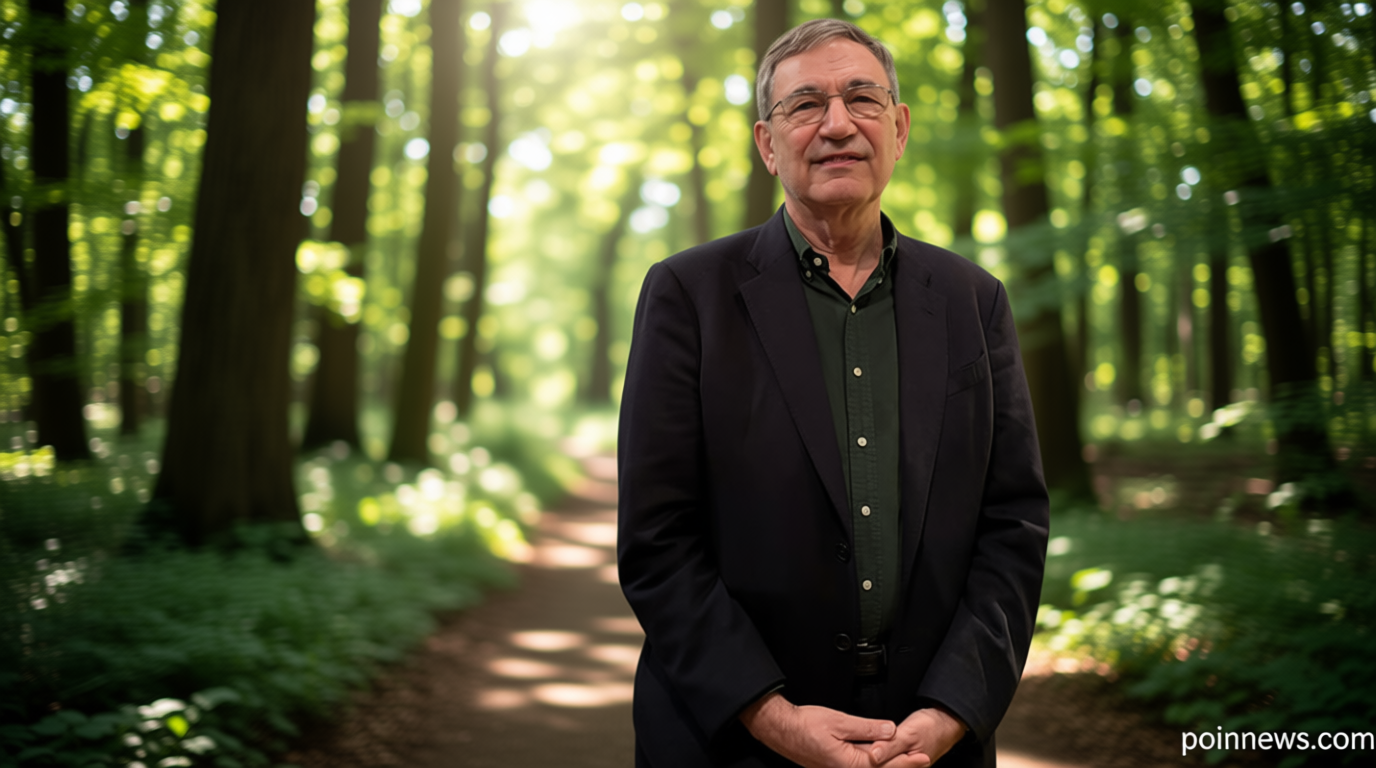
‘I believe in the secret of things’: Orhan Pamuk’s Philosophical Reflections at the Museum of Innocence
Poinews.com – Orhan Pamuk’s novel The Museum of Innocence first appeared in 2008 and later transformed into a tangible museum in 2012. The recent Netflix adaptation has further amplified its global reach, drawing attention to its unique blend of narrative and physical exhibits. During a visit to the museum, the Turkish-based Euronews team had the opportunity to engage with the Nobel laureate, who shared insights into the creative process and the symbolic significance of objects in storytelling.
The Essence of Memory and Meaning
The novel opens with the line, “I didn’t know it was the happiest moment of my life,” which has since become a celebrated introduction in world literature. Similarly, it concludes with, “Let everyone know, I have lived a very happy life.” These two sentences, though separated by thousands of pages, share three core words: happiness, life, and know. Pamuk emphasizes that these terms are pivotal to the narrative, reflecting the protagonist Kemal’s emotional journey. He explains, “We may be happy, but we may not know it—Kemal embodies this exact duality.”
“We may be happy, but we may not know it; as a matter of fact, the protagonist Kemal is exactly the same in this regard.”
From Novel to Museum: A Synchronized Vision
Pamuk reveals that the museum and novel were conceived simultaneously. He admits, “I didn’t say ‘first the novel became very popular, then I’ll do the museum.’ The idea of the museum was part of the story from the beginning.” The novel’s final pages detail Kemal’s efforts to create the museum, mirroring the real-world project. This duality underscores the novel’s central theme: love as a force that compels a man to preserve fragments of his past through objects.
The museum, housed in a modest building in Istanbul’s Çukurcuma, Cihangir, and Taksim neighborhoods, serves as a repository of personal and collective memories. Pamuk notes that the space was chosen before the novel was written, with the heroine’s life mapped to this setting. “I was writing the novel as I bought the items for the museum,” he says, highlighting the interplay between creative process and physical curation.
The Archive of Emotion
The Museum of Innocence is described as an archive of happiness, yet its purpose transcends mere collection. “It’s more like an archive of unhappiness,” Pamuk muses. He contrasts museums with archives, stating, “Archives preserve texts and papers, while museums hold objects—the memories of society.” This distinction frames the museum as a living testament to urban life, particularly the experiences of Istanbul’s westernized secular bourgeoisie from the 1950s to the present.
“Let everyone know, I have lived a very happy life.”
Historical Inspiration and Literary Roots
The concept for the museum originated during a meeting with Prince Ali Vasıf Efendi, one of the final members of the Ottoman dynasty. When the ban on dynasty members entering Turkey was lifted in the late 1970s and early 1980s, Pamuk had the chance to converse with him. Efendi, who once directed the Antoniadis Museum in Alexandria, Egypt, recounted his time in the Ihlamur Pavilion. This sparked the idea: “What if a former sultan’s descendant became the custodian of a place he once called home?”
Pamuk draws parallels to historical instances, such as a former Chinese emperor establishing a museum. He elaborates, “It would be nice if a person could be both the subject and object of their own story within a museum.” As an experimental writer, he developed this vision, creating a space where the narrator’s voice and the exhibited objects intertwine to reconstruct a life of love and loss.