Nigel Farage says he’s resigning as MP and will run in ‘people vs. the establishment’ by-election
Nigel Farage Announces Resignation, Challenges Establishment in By-election Nigel Farage says he s resigning - Reform UK leader Nigel Farage has announced his

Nigel Farage Announces Resignation, Challenges Establishment in By-election
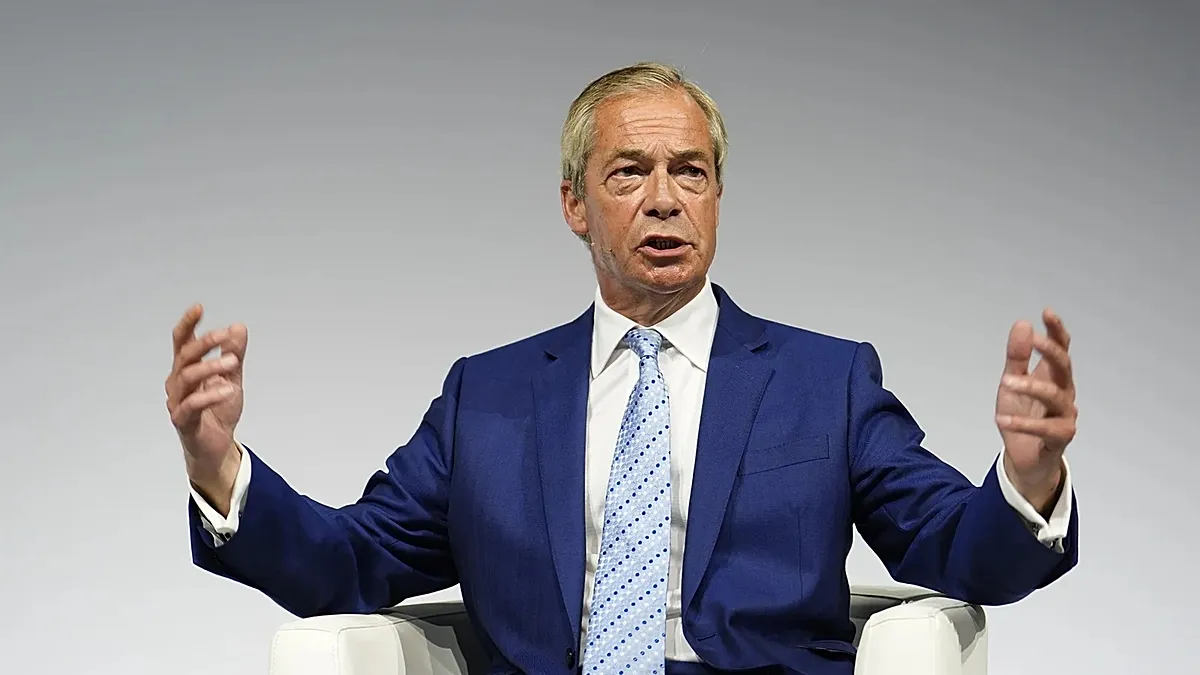
Poinews.com – Reform UK leader Nigel Farage has announced his decision to step down as a Member of Parliament, signaling his intent to contest the upcoming by-election as a direct challenge to the political establishment. This move, which marks a pivotal moment in the UK’s parliamentary landscape, follows a string of financial controversies that have intensified scrutiny on his leadership and transparency. Farage’s resignation is not just a personal departure but a strategic shift aimed at reshaping public sentiment and highlighting the growing divide between elected officials and the populace they represent.
By-election as a political statement
Farage’s decision to resign from the Clacton constituency is framed as a bold political statement, with the by-election serving as a platform to rebrand his campaign under the banner of “people versus the establishment.” In a statement, he emphasized, “I’ve made the choice for the people of Clacton to be the ultimate arbiters of my performance.”
“This is not merely a by-election; it’s a chance to turn the page on the status quo and give voters a clear alternative.”
The move has been widely interpreted as a response to mounting criticism of the traditional political elite, with Farage positioning himself as a symbol of grassroots defiance against institutionalized corruption.
Financial controversies and conflicting explanations
Farage’s political trajectory has been shadowed by financial disputes that began in mid-May with the revelation of a £5 million gift from British-Thai crypto magnate Christopher Harborne. Initially, he claimed the funds were allocated for personal security, later redefining them as a reward for his Brexit campaign efforts, and now asserting they are an “unconditional gift” he could distribute at will. These conflicting narratives have fueled debates about his transparency and whether his actions align with the values he champions for Reform UK.
Despite the controversy, Farage has maintained that he has “done nothing wrong” in his Tuesday announcement, arguing that the media has launched a coordinated effort to erode his credibility. The focus keyword “Nigel Farage says he s resigning” has become a central theme in the narrative, as his resignation is seen as both a personal and political milestone. Critics, however, argue that the by-election is a calculated move to divert attention from his financial disclosures and consolidate support for his party.
Funding links and media backlash
Farage’s recent actions have sparked a media firestorm, particularly after The Sunday Times revealed that he had received backing from George Cottrell, a convicted criminal. During a Sky News interview following his return from the US, where he attended the nation’s 250th birthday celebrations, Farage reacted strongly to the allegations.
“You tell your bosses: if you harass my family any further, there will be serious consequences.”
While his outburst underscored the personal stakes, it also highlighted the tension between his public persona and private associations. Sky News clarified that the article had not reached out to his family for comment, but the fallout has already begun to impact his public image.
Political context and leadership transition
Farage’s resignation comes amid broader political upheaval, with UK Prime Minister Keir Starmer’s decision to step down following Labour’s underwhelming local election results in May. Starmer will remain in office until a successor is chosen, with former Greater Manchester Mayor Andy Burnham emerging as the frontrunner. Burnham’s recent victory in the Makerfield by-election, where he secured 55% of the vote, has bolstered his credibility as a potential leader. However, Farage’s move adds another layer to the evolving political landscape, offering voters a stark choice between the old guard and a new wave of reformist figures.
Farage’s by-election bid is expected to draw significant attention, not only for its symbolic nature but also for its potential to influence the future of Reform UK. The party, which has gained traction since the 2024 general election, now faces a critical test in its ability to maintain momentum despite its leader’s high-profile departure. His decision to resign from his parliamentary seat while running in the by-election underscores a commitment to representing the people’s will, even at the cost of his own position.
As the by-election approaches, the focus keyword “Nigel Farage says he s resigning” will likely remain at the forefront of media coverage and public discourse. The announcement has reignited discussions about the role of individual accountability in politics, with Farage positioning himself as a champion of transparency and public trust. His campaign, however, will need to navigate both the personal and institutional challenges that come with such a high-stakes bid, ensuring that the “people versus the establishment” narrative resonates with voters in the final stretch of the race.