Armenia goes to polls in pivotal vote to decide South Caucasus future
Armenia goes to polls in pivotal vote to decide South Caucasus future Armenia goes to polls in pivotal vote to decide South Caucasus future, as citizens

Armenia goes to polls in pivotal vote to decide South Caucasus future
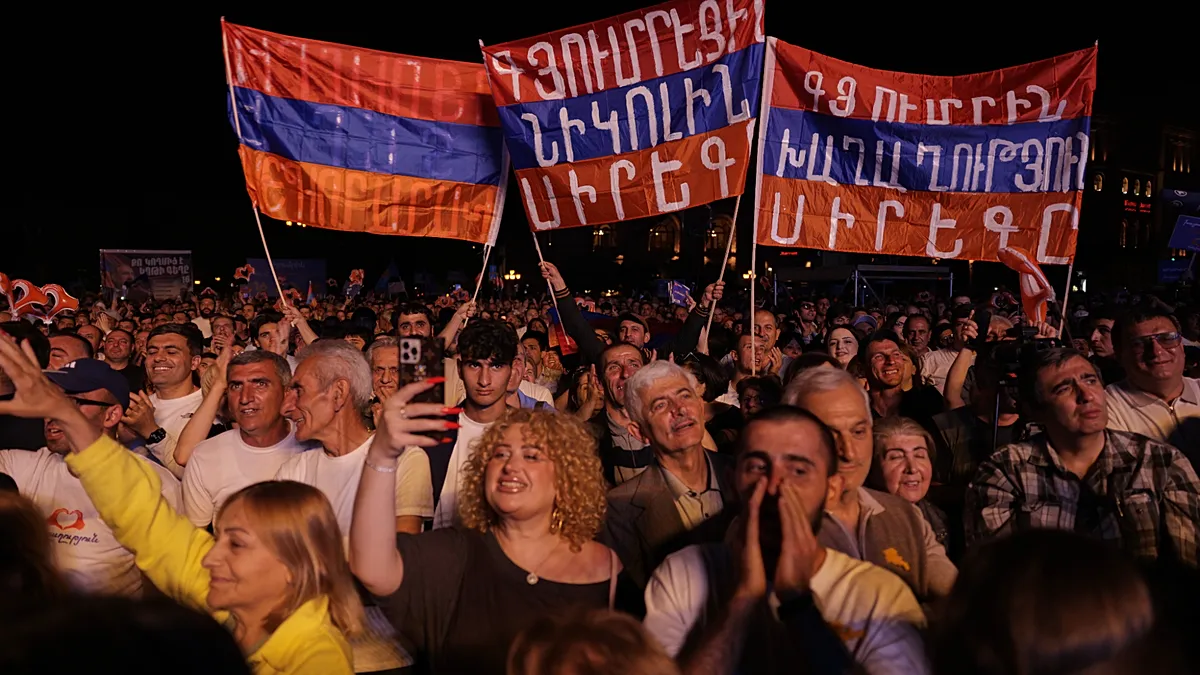
Poinews.com – Armenia goes to polls in pivotal vote to decide South Caucasus future, as citizens prepare to cast their ballots in a decisive election that could reshape the nation’s political and economic landscape. The outcome of this vote is critical, not only for Armenia’s domestic stability but also for its role in the broader South Caucasus region. With Russia’s influence still prominent and the European Union and United States actively supporting Prime Minister Nikol Pashinyan’s government, the election marks a pivotal moment in Armenia’s efforts to transition from a pro-Russian alliance to a more Western-oriented foreign policy. The stakes are high, as the result will determine the country’s path forward in a geopolitically sensitive area.
Election Context and Key Players
The election pits Prime Minister Nikol Pashinyan’s ruling Civil Contract party against a fractured opposition alliance dominated by pro-Russian factions. Samvel Karapetyan, a prominent Russian-Armenian businessman and founder of the Strong Armenia party, is a key figure in the opposition, alongside former President Robert Kocharyan. These parties advocate for closer ties with Moscow, often emphasizing national sovereignty and economic security. Meanwhile, Pashinyan’s campaign has focused on maintaining the fragile peace with Azerbaijan, a deal that has been central to Armenia’s political strategy in recent years.
A recent survey by Breavis Polling suggested that Pashinyan could secure a majority of the votes, with over 60% of decided voters supporting him. This result would underscore Armenia’s ongoing commitment to a pro-Western direction, challenging Russian dominance in the region. However, the opposition has raised concerns about the fairness of the election, particularly after the Central Election Commission authorized the arrest of six Strong Armenia candidates on Saturday. These arrests, linked to money laundering and material inducement charges, have sparked debates about whether the process is transparent or biased.
International Support and Strategic Implications
Amid the political tensions, the European Union and the United States have taken a strong stance in favor of Pashinyan’s administration. European Commission President Ursula von der Leyen highlighted the importance of the election, stating, “We know this playbook all too well. This is why Europe stands firmly with Armenia.” Her remarks referenced Moscow’s history of using economic pressure to influence political outcomes, particularly in the South Caucasus. The EU’s support for Pashinyan is seen as a key step in countering Russian geopolitical influence, while the U.S. has also pledged backing through diplomatic and economic channels.
U.S. President Donald Trump further emphasized the stakes, urging Armenians to “Make Armenia Great Again” and expressing his “complete and total endorsement” of Pashinyan’s re-election. Trump’s support is notable, as it marks a first for a U.S. president endorsing a candidate in a country within Russia’s sphere of influence. His comments reinforced the idea that Pashinyan’s leadership aligns with the vision of peace and prosperity for the South Caucasus, a region that has long been a battleground for competing interests between Moscow and Western powers.
“Today we are more independent, more prosperous, and more of a state than ever before,” Pashinyan asserted, framing the election as an opportunity to solidify Armenia’s status as a sovereign nation. His campaign has positioned the vote as a chance to pass peace to future generations, arguing that ending the conflict with Azerbaijan was essential for the country’s survival. This narrative has resonated with many voters, who see the election as a defining moment for Armenia’s geopolitical identity.
Pashinyan’s leadership has been tested by the ongoing conflict with Azerbaijan, particularly over the disputed Nagorno-Karabakh region. While his opponents accuse him of betraying Armenian interests, he maintains that the peace agreement has been vital for the country’s stability and economic growth. The election’s outcome will also have implications for regional alliances, as a Pashinyan victory could strengthen Armenia’s ties with the EU and NATO, while an opposition win might signal a shift toward closer collaboration with Russia. The process of voter engagement and campaign messaging has been intense, with both sides leveraging media and international support to sway public opinion.