Billions behind the push for higher-value food and metal exports
ue food and metal exports Billions behind the push for higher - Moody’s Ratings recently upgraded Uzbekistan’s sovereign credit rating, signaling improved

Billions behind the push for higher-value food and metal exports
Poinews.com – Moody’s Ratings recently upgraded Uzbekistan’s sovereign credit rating, signaling improved institutional frameworks and fiscal stability. This development aligns with the nation’s growing focus on transforming its export landscape by prioritizing value-added industries. The government is collaborating with private enterprises to ensure agricultural products, metals, and minerals generate greater economic returns within the country.
Central to this effort is a $10bn food-processing goal by 2030, alongside a $4.2bn investment plan for technological metals. Additionally, Uzbekistan aims to localize 880,000 tonnes of sheet-steel production annually. These initiatives are designed to shift the country’s reliance on raw material exports toward higher-margin goods. Copper-processing deals, for instance, are expected to boost profits for one of the nation’s largest mining firms.
Shifting from volume to value
With no direct access to the sea, Uzbekistan’s challenge has evolved from maximizing output to maximizing revenue per shipment. Agriculture Minister Ibrokhim Abdurakhmonov highlighted that while the country produces tens of millions of tonnes of fruits and vegetables yearly, mere production is no longer sufficient. “Producing 24 million tonnes is only one objective,” he stated. “Those products must also reach markets and generate income.”
“If production does not generate income, there can be no true food security,” Abdurakhmonov added. “Every product created and every resource used must generate returns and come back into the economy as income.”
To achieve this, Uzbekistan is expanding its reach to 92 export markets and adopting advanced technologies in packaging, canning, and bottling. Certifications like halal and organic labels, along with ISO and GLOBALG.A.P. standards, are key to elevating the marketability of its agricultural goods. Without these, products risk being excluded from international buyers’ preferences.
Infrastructure and investment
Kanokpan Lao-Araya, ADB Country Director for Uzbekistan, emphasized that infrastructure is a critical long-term investment requiring strategic planning and legal stability. “When we talk about infrastructure, it’s a long-term investment,” she explained. “Roads, railways, and energy systems need ongoing maintenance, skilled workers, and private-sector expertise.”
Private investment is also contingent on political stability, clear profit pathways, and a reliable legal system. The ADB is supporting ANORA, an agrifood platform that channels grant funding into agribusiness and export ventures. Lao-Araya noted that such efforts could enhance investor interest while reducing operational costs for businesses.
Italian engineering firm Gamma Meccanica is investing in Uzbekistan, working on stone-wool insulation and hydroponic farming with local partners. As demand for innovative production methods rises, the company is helping modernize the sector. In metals, the transition is more capital-intensive, with Uzbekistan Technological Metals Complex (TMK) spearheading over 100 projects totaling $4.2bn.
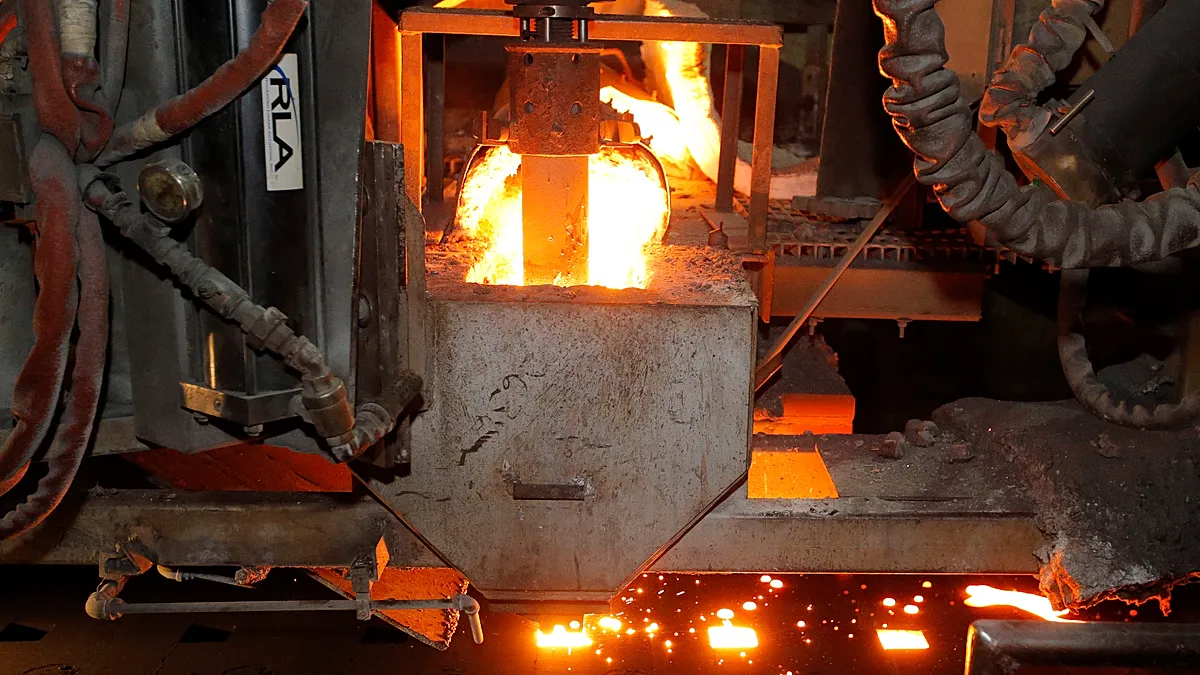
TMK’s mission, as outlined by Timur Hikmatullayev, involves “geological exploration, refining, and processing” to create higher-value goods rather than just exporting raw materials. In steel, the economic benefit is stark: standard reinforcing bars fetch $600-650 per tonne, while high-alloy steel can command $1,200-€5,300 per tonne. Localizing sheet-steel production is a key step in bridging this gap.